Old photographic negatives can often be identified by their physical size, perforations, frame shape and the way they were originally supplied. A standard 35mm negative is about 35mm wide and normally has sprocket holes along both edges. Older roll-film formats such as 116 and 616 are much larger, while 127, 120, 126, 110 and APS each have their own recognisable characteristics.
If you have inherited a box of negatives, start by looking for:
- Overall film width – measure the complete strip, not just the image.
- Image or frame dimensions – this can distinguish formats using similar film stock.
- Sprocket holes – their presence, absence and position are useful clues.
- Individual sheets or strips – large-format negatives may be separate sheets rather than roll film.
- Cartridges, spools or envelopes – these can provide stronger evidence than the negative alone.
- Edge markings – manufacturer names, film stocks and frame numbers can help narrow down the identification.
The distinction matters when negatives are being scanned. Different formats require different holders, capture areas and handling techniques, and an unusually large negative should not automatically be treated as ordinary medium-format film.
This guide concentrates particularly on 35mm, 116 & 616 film, while also helping you recognise the other negative formats commonly found in British family collections. The original brief specifically calls for an identification guide centred on these formats rather than simply reproducing the source article. Pasted markdown
Quick Negative Identification Chart
| Negative format | Approximate identifying feature | Perforations | Useful clue |
|---|---|---|---|
| 35mm / 135 | Film approximately 35mm wide | Yes, normally both edges | Very common strips of several frames |
| 110 | Very small negatives | Usually one registration perforation per frame | Originally supplied in a small cartridge |
| 126 | Square-ish images on cartridge film | One perforation associated with each frame | Often associated with Instamatic cameras |
| 127 | Film approximately 46mm wide | No | Larger than 35mm, smaller than 120 |
| 120 | Film approximately 61mm wide | No | Image size varies according to camera |
| 116 | Approximately 70mm-wide roll film | No | Very large, elongated negatives |
| 616 | Same basic film/image format as 116 | No | Different, slimmer spool from 116 |
| Large-format sheet film | Individual sheets in several sizes | Usually no | Not supplied as a continuous roll |
Measurements should be treated as identification clues rather than the sole test. Film can be trimmed, curled or separated from its original spool, while cameras using the same roll-film stock can expose different frame sizes.
How Do You Identify 35mm Negatives?
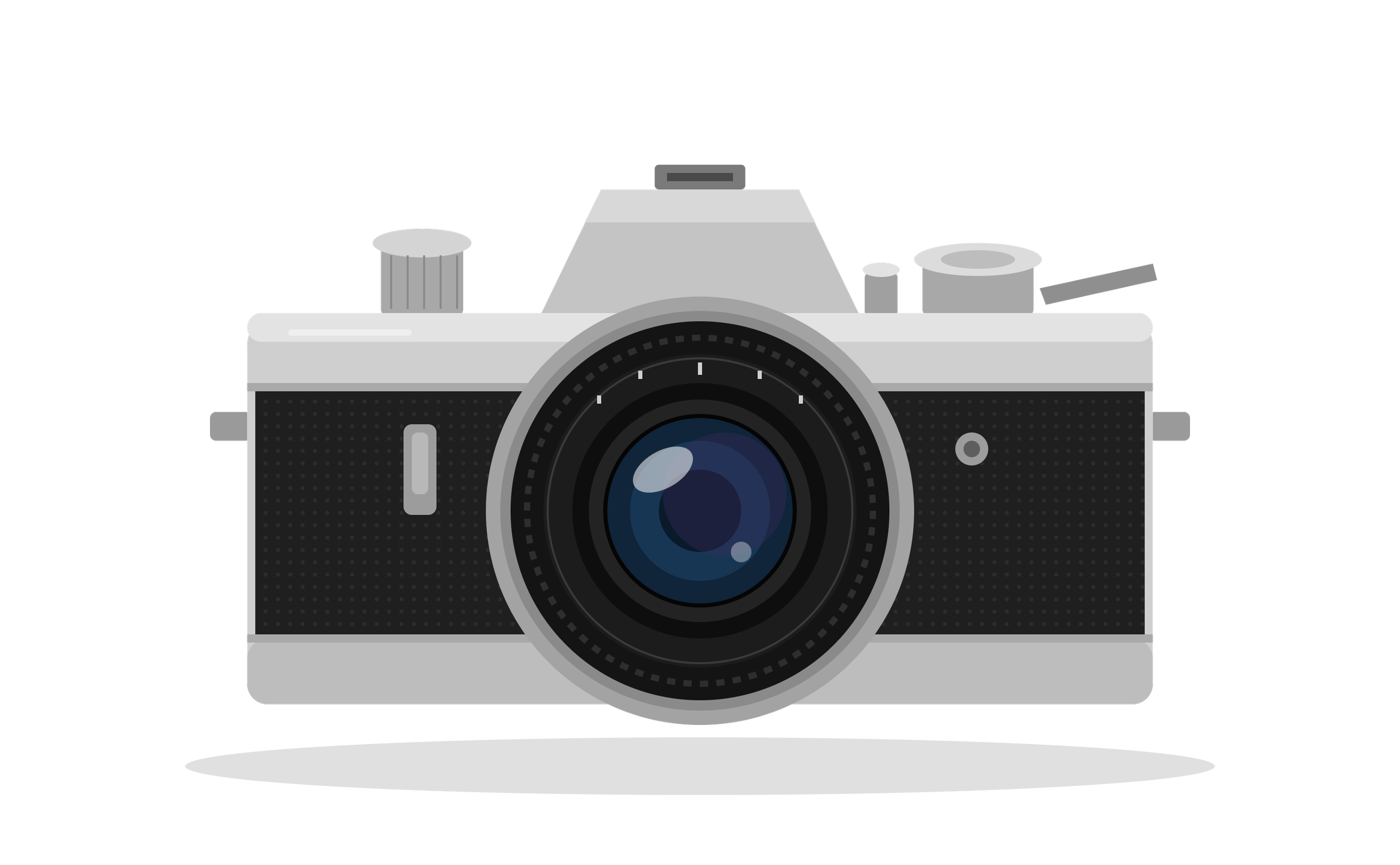
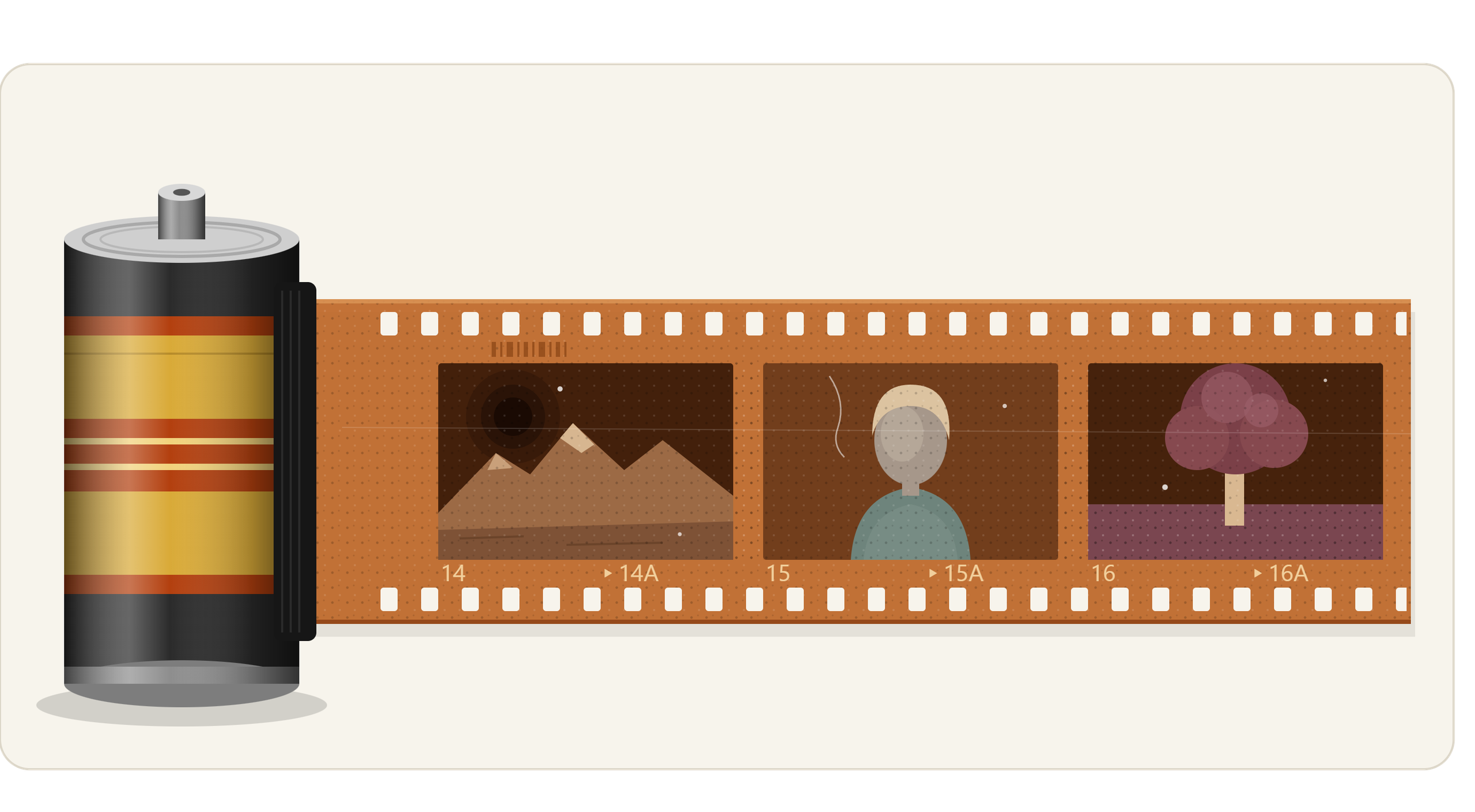
35mm is usually one of the easiest formats to recognise. The film itself is approximately 35mm wide, with regular perforations running along both sides. Standard still-camera 35mm film is also known as 135 film.
A conventional full-frame still photograph occupies an image area of approximately 24 × 36mm. You may also encounter half-frame photographs and other less common variations, so measuring only the exposed image can occasionally be misleading.
The combination of the film width and sprocket holes is therefore more useful than frame dimensions alone.
35mm became enormously important because a comparatively compact strip could accommodate numerous photographs while producing negatives large enough for practical enlargement. As a result, boxes of family photographs from the mid-to-late twentieth century frequently contain strips of 35mm negatives.
When sorting a collection, don’t cut long strips merely to make them fit a scanner. Original sequences and frame numbers can help establish chronology, and unnecessary cutting increases handling.
What Are 116 and 616 Film Negatives?
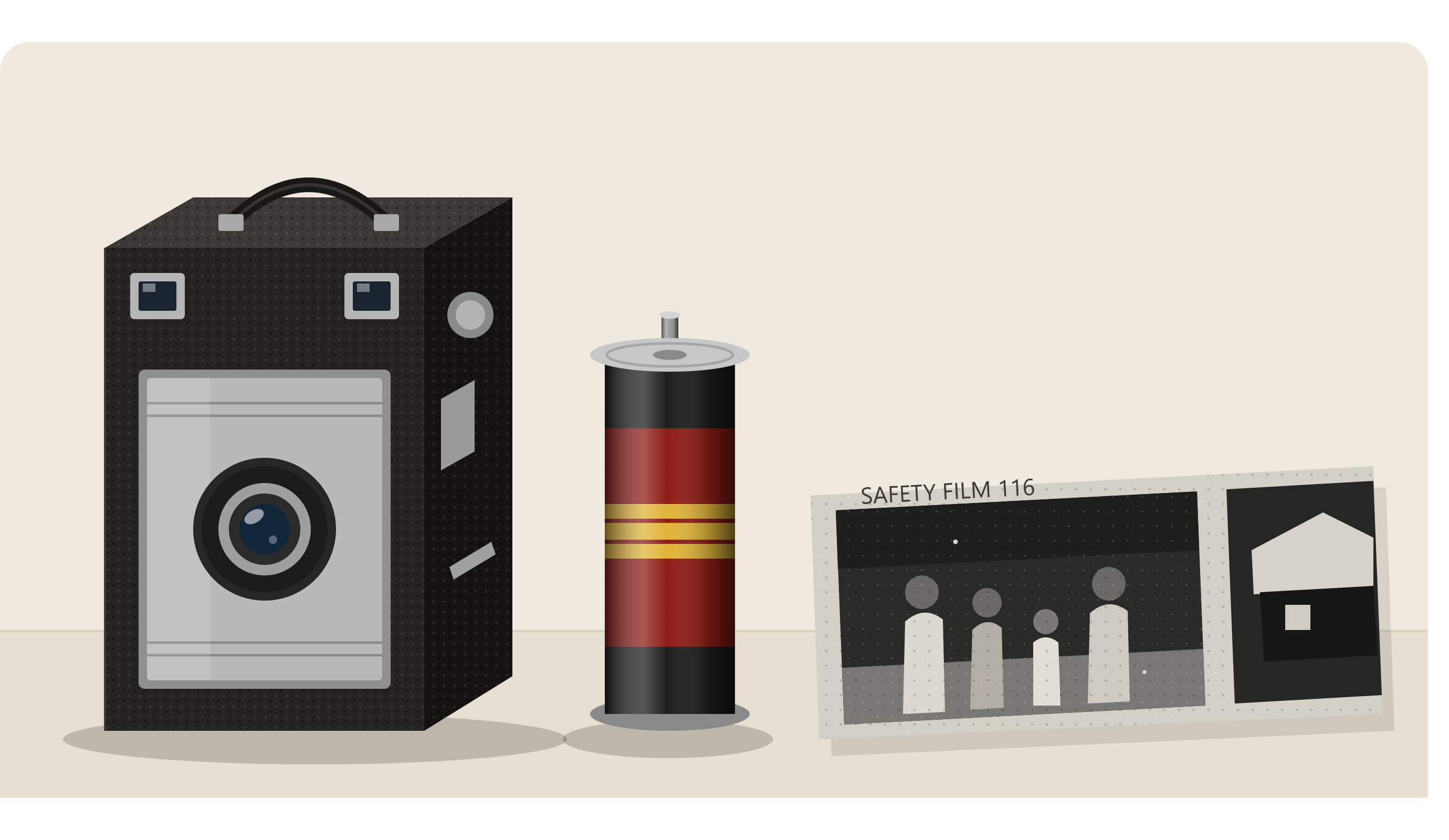
116 and 616 are particularly distinctive because they are considerably larger than 35mm film. They use roughly 70mm-wide film and can produce an image around 65 × 110mm, although quoted dimensions vary slightly according to how the image area is measured. 116 was introduced by Kodak in 1899; 616 followed in the early 1930s. Both were eventually discontinued in 1984. 35mmc
The important point when identifying an existing negative is that 116 and 616 use essentially the same film/image format. The major difference lies in the spool: 616 used a slimmer spool arrangement. 35mmc
Consequently, if somebody gives you a loose 70mm-wide negative without its original spool or packaging, it may be difficult—or impossible—to determine from the negative alone whether it originated as 116 or 616.
That is an important distinction between identifying a negative size and identifying the original roll-film format.
35mm vs 116 and 616 Film
| Feature | 35mm / 135 | 116 / 616 |
|---|---|---|
| Film width | Approx. 35mm | Approx. 70mm |
| Edge perforations | Normally yes | No |
| Typical image | Approx. 24 × 36mm | Around 65 × 110mm |
| Appearance | Small rectangular frames | Very large elongated frames |
| Original supply | Cartridge | Roll on spool |
| Identification difficulty | Usually straightforward | 116 vs 616 may require the original spool |
A 116 or 616 negative can therefore look enormous beside a conventional 35mm frame.
Why Are Some Old Negatives So Large?
Large negatives were not unusual in early and mid-twentieth-century photography. Before today’s high-resolution digital sensors—and before small-format photography became dominant—larger pieces of film provided a substantial image area.
This can be advantageous when digitising them today. A physically large original can contain considerable photographic detail, although the amount actually recoverable depends on the original camera, lens, focus, exposure, film, processing and subsequent deterioration.
Do not assume that a larger negative automatically needs the highest possible scanning resolution. Resolution should be chosen according to the physical dimensions of the original and the intended digital output.
A small 35mm frame normally requires substantially more pixels per inch to produce a useful digital image than a very large 116 negative if both are intended to produce a similarly sized finished image.
How Can You Recognise 120 Film?
120 is another format frequently confused with older roll films. Unlike 35mm, it has no sprocket holes and is approximately 61mm wide.
The complication is that “120” does not describe one single negative frame size. Different cameras expose different areas across the same roll. Common examples include approximately:
- 6 × 4.5cm
- 6 × 6cm
- 6 × 7cm
- 6 × 9cm
There are also panoramic variations.
This means a square negative measuring roughly 56mm across and a long rectangular negative can both originate from 120 film.
116/616 is noticeably wider. If you are deciding between them, measure the entire film width rather than estimating from the picture.
What Is 127 Film?
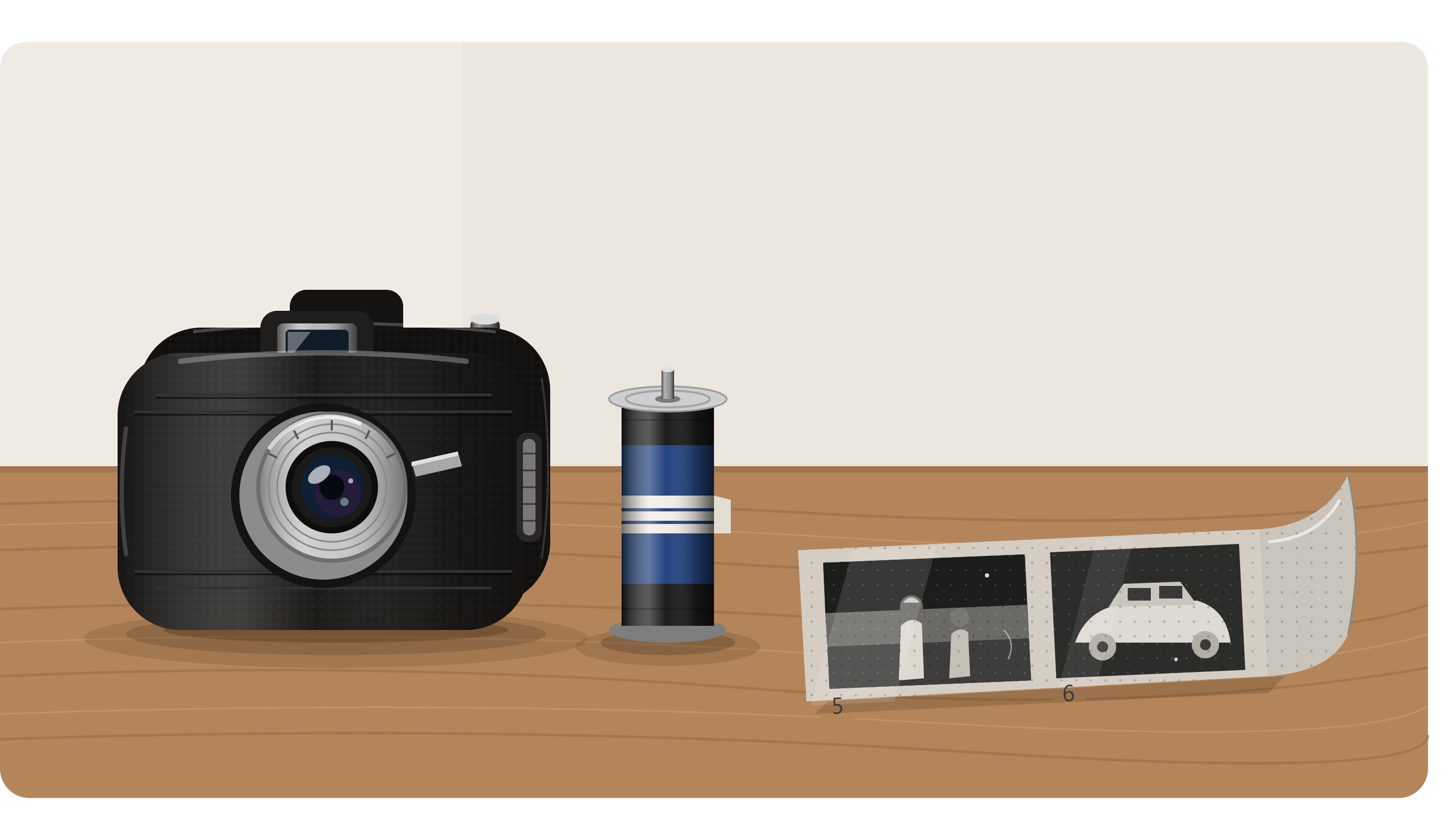
127 is an older roll-film format sitting physically between 35mm and 120. The film is approximately 46mm wide and lacks the continuous rows of perforations associated with 35mm.
It appeared in cameras producing different frame dimensions, so once again the width of the film itself is an important identification clue.
127 negatives often turn up in family archives without their original packaging. At first glance they can look like unusually large 35mm negatives or unusually small medium-format negatives.
Place the negative on a clean surface beside a ruler rather than holding it repeatedly while trying to identify it. Measure both the overall film width and individual image area and record those measurements before investigating further.
What About 110 and 126 Negatives?
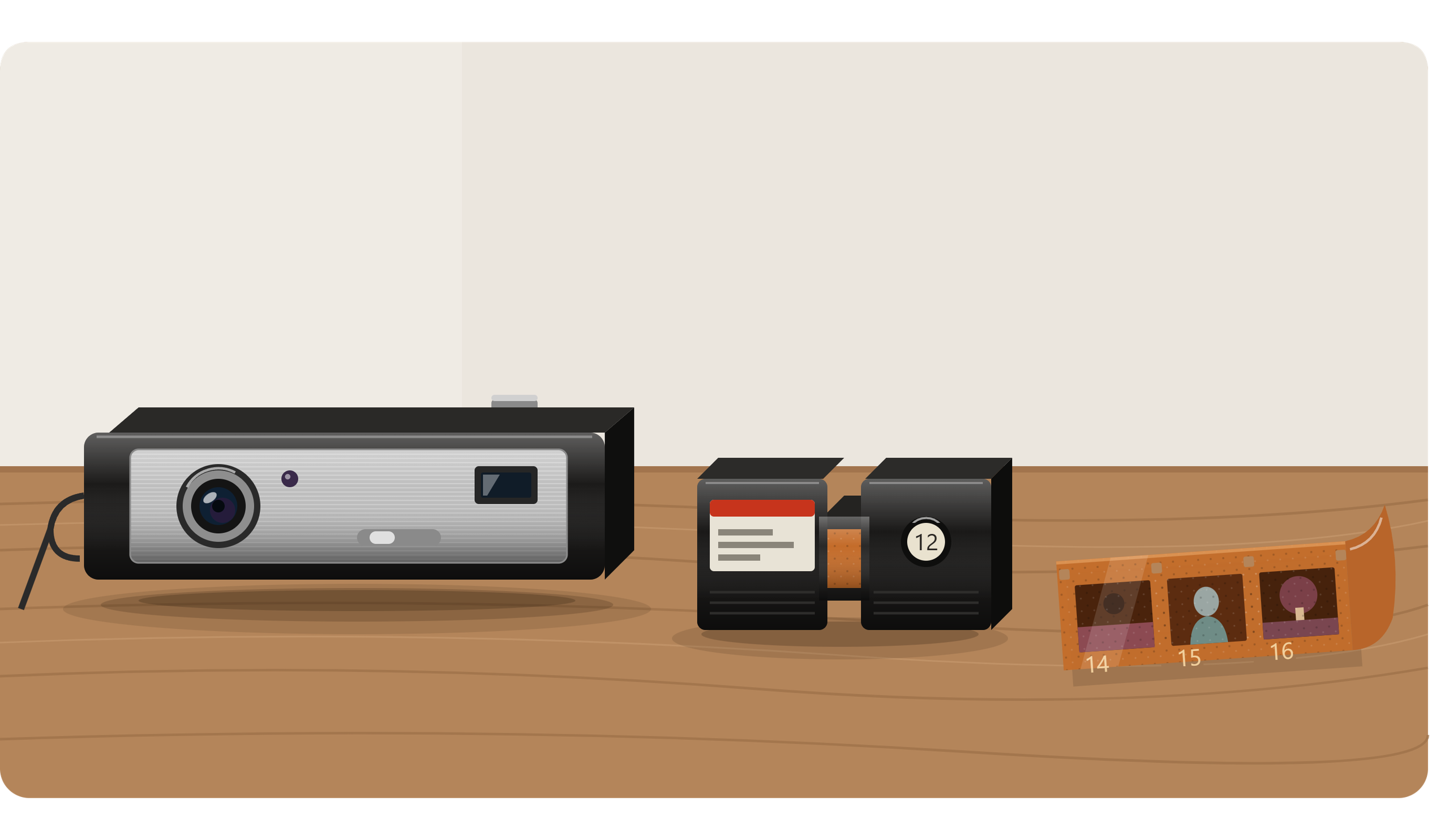
These cartridge formats are associated particularly with convenient consumer cameras.
110 film produces a very small negative, approximately 13 × 17mm. Its diminutive image size makes it immediately distinguishable from 35mm once the two are compared directly.
126 film, strongly associated with Instamatic-style cameras, normally produces approximately square images and uses a characteristic perforation arrangement rather than the continuous double rows seen on conventional 35mm.
If the original cartridge survives, keep it with the negatives. Packaging, camera information and processing envelopes can all provide valuable evidence about the original format and date.
Don’t Confuse Photographic Negatives with Cine Film
Perforated photographic material can occasionally create confusion because 35mm film was historically important in both still photography and motion pictures.
A strip of still-camera negatives normally contains separate photographs. Cine film contains a succession of closely related frames designed to reproduce movement when shown sequentially.
Smaller motion-picture formats such as 8mm and Super 8 are particularly easy to distinguish once their scale and perforations are examined.
If what you have is actually motion-picture film rather than photographic negatives, the appropriate workflow is different. We cover the digitisation of old films rather than treating it as a sequence of ordinary photographic negatives.
A Simple Way to Identify Unknown Negatives at Home
If you have a mixed box containing dozens or hundreds of negatives, avoid trying to identify every frame individually. Sort them systematically.
- Don’t clean them first. Identification should come before intervention.
- Separate obviously different widths.
- Check for perforations.
- Measure the complete film width in millimetres.
- Measure a representative image frame.
- Keep strips from the same envelope together.
- Look for edge markings and frame numbers.
- Retain original spools, cartridges and processing wallets.
- Record uncertain formats rather than guessing.
- Digitise fragile material before unnecessary repeated handling where appropriate.
If you find one unusual format amongst hundreds of conventional negatives, place it in a separate protective enclosure rather than forcing it into an unsuitable sleeve.
How Should Old Negatives Be Handled?
Handling matters because fingerprints aren’t simply cosmetic. The National Archives notes that photographic image layers are vulnerable to abrasion and that oils and salts from skin can react with photographic materials. For loose photographic material, it recommends appropriate nitrile or vinyl gloves. The National Archives
Its guidance on handling photographic materials also recommends keeping material in its existing order and limiting unnecessary exposure to light. The National Archives
Avoid:
- touching the image or emulsion surface;
- wiping negatives with household cleaning products;
- applying sticky tape;
- forcing curled film flat;
- separating material that has become firmly stuck;
- storing negatives loose where surfaces can rub together.
The National Archives advises against attempting to clean photographs using water, solvent-based household cleaners or similar improvised treatments. National Archives
What If a Negative Is Curled, Brittle or Stuck?
Stop before trying to flatten or separate it.
Older film bases and emulsions can deteriorate. Warning signs include severe curling, brittleness, discolouration, stickiness, unusual bubbling or a strong smell. The National Archives advises separating deteriorating film negatives from the remainder of a collection and seeking specialist advice where appropriate. National Archives
Photographs or negatives that have stuck to other material can also be damaged by forced separation. National Archives guidance specifically cautions against forcing photographic material apart where it does not release readily. The National Archives
For valuable family photographs, the safest decision may therefore be to leave the original untouched until its condition has been assessed.
Should You Scan Old Negatives?
Usually, yes—provided their condition allows safe handling.
Digitisation creates an accessible copy that can be viewed, enlarged and shared without repeatedly handling the original. The British Library identifies preservation and wider access as two important benefits of digitisation. British Library
However, a scan does not make the physical negative redundant. Keep the original after digitisation because future equipment and processing methods may recover information differently.
Professional archival digitisation also involves more than simply placing an item in a scanner. The National Archives describes quality assurance as an integral part of its image-capture process and emphasises careful handling of fragile originals. The National Archives
Frequently Asked Questions About Negative Formats
Can you identify a negative just from its size?
Often you can narrow it down considerably, but not always identify it conclusively. Measure film width, image dimensions and perforations, then consider any surviving spool, cartridge, camera or processing envelope.
Are 116 and 616 negatives different sizes?
The underlying film/image format is essentially the same; the important difference is the spool design. 616 uses a slimmer spool than 116. 35mmc
Is 116 film the same as 120 film?
No. 116 uses wider film—around 70mm compared with approximately 61mm for 120—and traditionally produced a much larger elongated image.
Why doesn’t my negative fit a normal scanner holder?
It may simply be a format the holder was not designed for. 127, 116, 616 and various sheet-film sizes require different handling from standard 35mm strips.
Should I throw negatives away after scanning?
No. Digital copies provide convenient access, but the negative remains the original photographic source. Properly stored originals can also be rescanned in future.
Preserve the Format as Well as the Photograph
Identifying an old negative is partly detective work. Begin with measurable evidence—film width, frame dimensions, perforations and physical construction—then use original packaging, spools and camera information to confirm the answer.
The distinction becomes particularly important with unusual formats. A 70mm-wide family negative may be 116 or 616, while a strip that initially looks like 35mm could represent a less familiar photographic or cine format.
Once identified, keep the originals protected in suitable enclosures and preserve any labels or contextual information with them. The photograph matters, but so does the information explaining where it came from. For irreplaceable, fragile or unusually formatted material, ultimately it makes sense to choose a professional company with years of experience dealing with such orders, such as Supaphoto Ltd.