
Top Tips for Storing Cine Reels
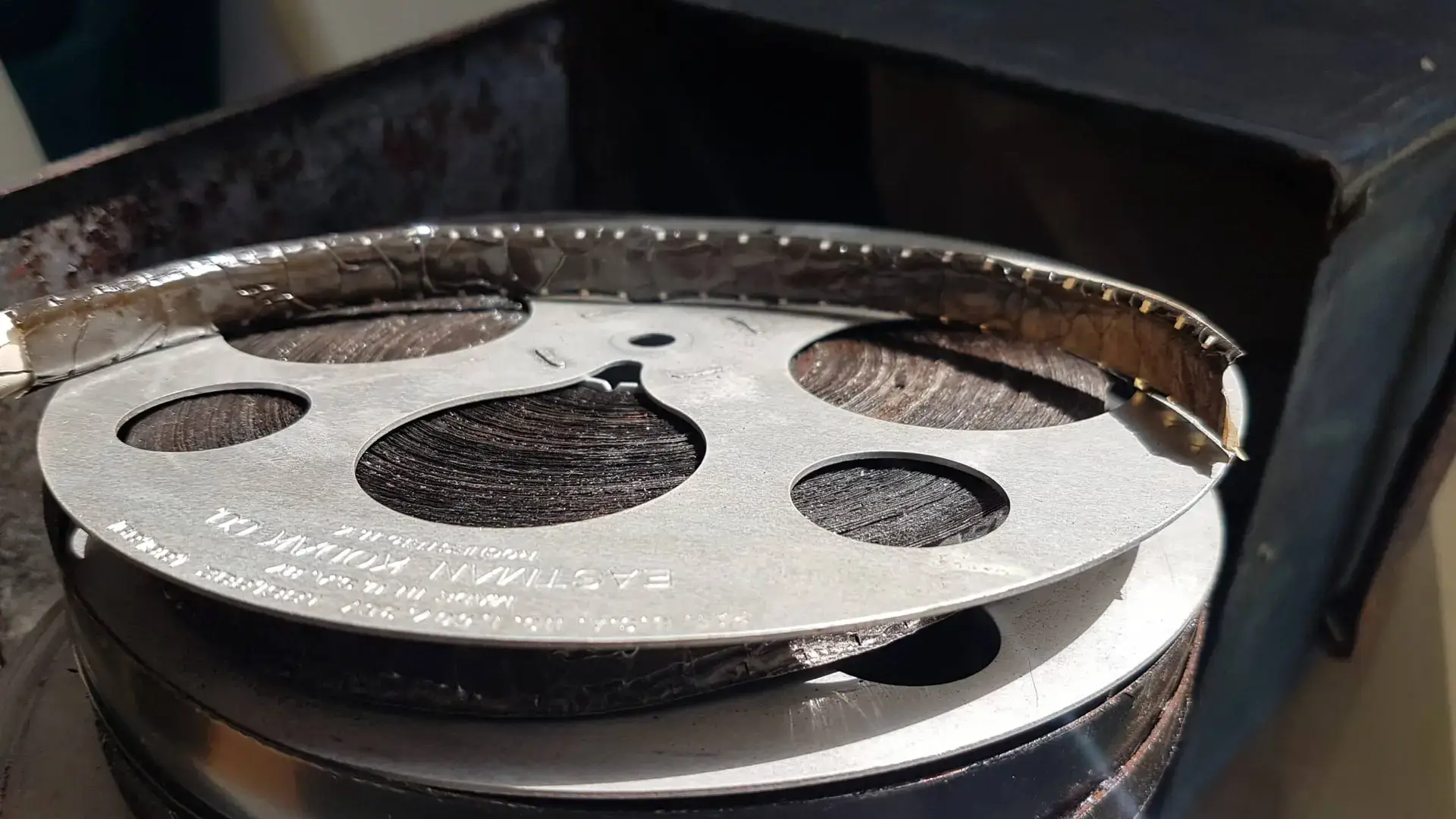
Proper storage can significantly slow the deterioration of cine film and help preserve the images recorded on your reels. Keep cine film cool, dry, stable, clean and protected from light, while avoiding attics, garages, sheds and other places with large temperature or humidity changes. The right approach depends on the film base and its condition, so inspect older or deteriorating reels before attempting to project or handle them extensively.
For most home collections, the key principles are:
- Store reels somewhere cool, dry and environmentally stable.
- Keep film away from direct sunlight, radiators, damp and dust.
- Use suitable containers that protect the reel while allowing appropriate ventilation.
- Handle film by its edges and avoid touching the image-bearing surface.
- Check regularly for mould, brittleness, shrinkage, warping and vinegar odour.
- Separate seriously deteriorating reels from healthy film.
- Consider digitisation before deterioration makes the footage difficult or impossible to access.
Why Cine Film Needs Careful Storage
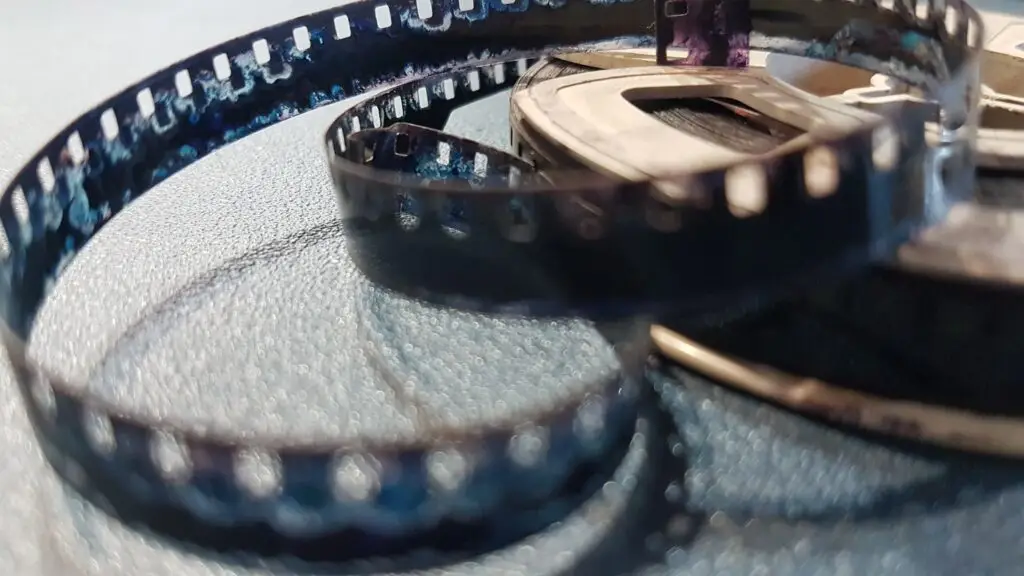
Cine film combines a physical film base with an image-forming emulsion. Both components can deteriorate over time, and different film bases respond differently to heat, moisture, light and chemical ageing.
The British Film Institute explains that older cellulose nitrate film presents serious chemical and fire risks, while later acetate film can develop vinegar syndrome when heat and moisture accelerate deterioration.
Most domestic cine collections use acetate-based safety film, although the exact film stock can vary. Polyester film offers greater chemical stability, but its image layer can still suffer physical damage, mould and scratching.
This means that simply putting a reel back in its original box and storing it in a cupboard does not necessarily provide adequate long-term protection.
Where Should You Store Cine Reels?
Choose a location with stable conditions rather than simply the coolest room available.
A normal living area can provide a much better environment than an attic, loft, garage or shed because these spaces can experience substantial temperature and humidity fluctuations. The National Archives specifically advises against storing archival material in locations such as attics where environmental conditions can change significantly.
Avoid storing cine reels:
- Beside radiators, boilers or heating pipes
- In direct sunlight
- Against external walls prone to condensation
- In damp basements
- In lofts and attics
- In garages, sheds or outbuildings
- Near sinks, washing machines or other water sources
- In areas where dust, insects or mould can accumulate
A clean internal cupboard in a consistently cool part of the home will usually provide a safer environment than an exposed storage area.
For larger collections or particularly valuable films, specialist environmental control can offer considerably better preservation conditions.
What Temperature and Humidity Should Cine Film Have?
Temperature and relative humidity have a major influence on film ageing. Cooler conditions generally slow chemical deterioration, while excessive moisture can accelerate problems such as mould and vinegar syndrome.
Archival guidance uses considerably cooler conditions than most homes. The US National Archives, for example, recommends approximately 35% relative humidity, with a tolerance of ±5%, while recommended temperatures vary according to film base, colour and preservation requirements.
You do not necessarily need to recreate a professional film archive at home. The most important practical step is to avoid heat, damp and large environmental fluctuations.
A small digital thermometer and hygrometer can help you monitor the room where you keep your reels. If readings regularly show high humidity or substantial changes, consider moving the collection to a more suitable location.
Should You Put Cine Film in a Fridge or Freezer?
Cold storage can greatly extend the life of film, particularly acetate and colour materials, but do not simply put valuable cine reels into a domestic freezer without appropriate preparation.
Cold storage requires suitable packaging and controlled acclimatisation when film returns to warmer conditions. Poor handling can allow condensation to form on the film. The National Archives recommends consulting a preservation specialist before using refrigeration or freezing for film collections.
For a family collection, controlled room-temperature storage may be a safer and more practical option unless a specialist has assessed the reels.
Use the Right Cine Film Containers
The container should protect the reel from dust, light, accidental damage and environmental contamination without creating an unsuitable microclimate.
Archival guidance favours chemically stable materials such as polypropylene for film containers. The National Archives also warns that plastic enclosures can trap moisture if the surrounding environment has high relative humidity.
Keep each reel in a container that fits properly and does not crush or distort the film. Avoid unsuitable materials that can deteriorate, corrode or interact with the film.
For older collections, replacing damaged or inappropriate containers can form part of a wider cine reel preservation programme.
How Should Cine Reels Be Wound?
Store film in a neat, even roll rather than allowing it to become loose or distorted.
Do not wind a reel excessively tightly. Excessive tension can place unnecessary stress on the film, while a very loose roll can allow the edges to become vulnerable to damage.
Keep the reel supported on its core or reel and avoid pressing the film unnecessarily. When handling it, hold the reel by its edges rather than touching the emulsion.
The National Archives advises winding film tightly enough to prevent it unravelling but loosely enough to permit some airflow.
Protect Cine Film From Light and Dust
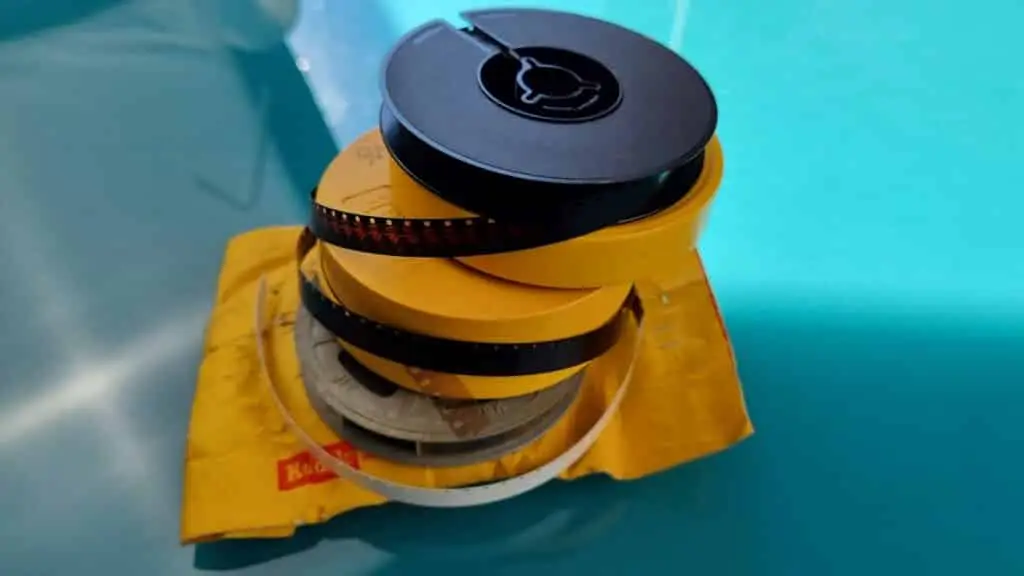
Light can contribute to deterioration, particularly with colour materials, while dust and dirt can scratch the film or interfere with playback and scanning.
Store reels in their containers and keep them in a dark location. Avoid leaving an open reel on a desk, shelf or windowsill for extended periods.
When handling film:
- Wash and thoroughly dry your hands first.
- Handle the reel by its edges.
- Avoid touching the emulsion.
- Keep food and drinks away from the work area.
- Keep pets away from loose film.
- Use a clean surface when inspecting reels.
- Return the film to its container promptly.
The National Archives notes that oils and salts from skin can react with photographic image layers and that the image layer remains vulnerable to abrasion.
Check for Vinegar Syndrome
One of the most important things you can do is check older acetate film for signs of vinegar syndrome.
Vinegar syndrome occurs when an acetate film base undergoes chemical deterioration and releases acetic acid. The characteristic vinegar-like smell gives the condition its name. As deterioration progresses, film can shrink, warp, become brittle and eventually stick together.
Look for:
- A strong vinegar-like odour
- Shrinkage
- Warping or distortion
- Brittleness
- Crystalline or powdery deposits
- Film that no longer lies flat
- Layers sticking together
- A reel that develops unusual gaps or a “spoked” appearance
If you notice these symptoms, do not repeatedly project the film to see whether it still works. Mechanical playback can place additional stress on deteriorating film.
The National Archives advises that films showing significant deterioration should receive professional assessment before mechanical playback or transfer.
What About Mould or Damp Cine Film?
Mould can cause serious damage to film and can spread to other materials stored nearby.
If a reel has visible mould, white residue or evidence of previous water exposure, isolate it from unaffected films rather than placing everything together.
Do not assume that wiping the outside of the reel will solve the problem. Mould can affect the film itself, and aggressive cleaning can damage the image layer.
For badly contaminated or water-damaged reels, specialist advice is preferable. Emergency film guidance from the National Archives highlights the need for different approaches depending on whether the film has mould, water damage or pre-existing acetate deterioration.
When Should You Consider Cine Reel Restoration?
Storage can slow deterioration, but it cannot reverse damage that has already occurred.
If a reel has suffered shrinkage, broken perforations, tears, brittle sections, mould, severe warping or other physical problems, avoid putting it straight onto a projector.
This is where cine reel restoration becomes relevant. Restoration may involve assessing the film’s physical condition, cleaning it appropriately, repairing damage and determining whether the reel can safely pass through specialist transfer equipment.
The priority should always remain preservation of the recorded images rather than simply making the reel playable again.
Is Digitisation Part of Film Preservation?
Yes. Digitisation creates an accessible copy without requiring you to repeatedly handle or project the original reel.
This matters because every mechanical playback carries some physical risk, particularly when film has already weakened through age or chemical deterioration. The BFI describes digitisation as particularly important for film affected by advanced vinegar syndrome because preservation storage can slow deterioration but cannot reverse it.
A professional transfer can also provide a practical way to share family films without repeatedly exposing the original reels to handling and projection.
However, digitisation does not mean you should throw away the original film. Keep the original reels in suitable storage after transfer. The physical film remains an important source object and may be valuable for future preservation work.
What Should You Do With Valuable or Deteriorating Reels?
If your cine film contains irreplaceable family memories, historical events or unique footage, avoid experimenting with questionable cleaning methods or repeatedly running the reels through old projectors.
Instead:
- Identify the reel and record any information written on its container.
- Inspect the reel without forcing it to unwind.
- Look for mould, shrinkage, brittleness and physical damage.
- Check for a vinegar-like odour if you suspect acetate deterioration.
- Separate seriously deteriorating reels from unaffected material.
- Move the collection away from heat, damp and unstable environments.
- Seek professional advice before attempting difficult repairs or playback.
- Consider digitising important footage while the film remains recoverable.
The National Archives’ condition guidance specifically warns against running questionable film through playback equipment before establishing whether it can withstand mechanical handling.
Common Cine Film Storage Mistakes
Even well-intentioned owners can accidentally shorten the life of their films.
| Mistake | Why it matters |
|---|---|
| Storing reels in an attic | Temperature fluctuations can accelerate deterioration |
| Keeping film beside a radiator | Heat speeds up chemical ageing |
| Leaving reels in damp conditions | Moisture encourages mould and deterioration |
| Handling the emulsion | Oils and abrasion can damage the image |
| Using unsuitable containers | Materials can trap moisture or deteriorate |
| Repeatedly projecting old film | Mechanical stress can damage weakened film |
| Ignoring a vinegar smell | Acetate deterioration can progress over time |
| Freezing film without preparation | Condensation and poor acclimatisation can cause damage |
| Throwing away original reels after digitisation | The original remains an important preservation source |
A Practical Cine Reel Storage Checklist
Before putting your collection away, check the following:
- Environment: Is the storage area cool, dry and stable?
- Location: Have you avoided lofts, garages, sheds and damp areas?
- Containers: Does every reel have suitable protective housing?
- Film: Does each reel remain neatly wound?
- Handling: Have you avoided touching the emulsion?
- Condition: Have you checked for mould, brittleness and physical damage?
- Odour: Have you noticed any vinegar-like smell?
- Access: Have you avoided unnecessary projection of fragile reels?
- Preservation: Have you considered digitising irreplaceable footage?
- Originals: Will you continue to preserve the physical reels after transfer?
For additional background on how archives approach long-term collection care, The National Archives’ preservation guidance explains how controlled temperature, relative humidity, packaging and monitoring help reduce the risk of deterioration.
Its archive storage guidance also highlights the importance of stable environmental conditions and avoiding locations such as attics where temperatures can fluctuate significantly.
Preserve Your Cine Memories Before They Deteriorate
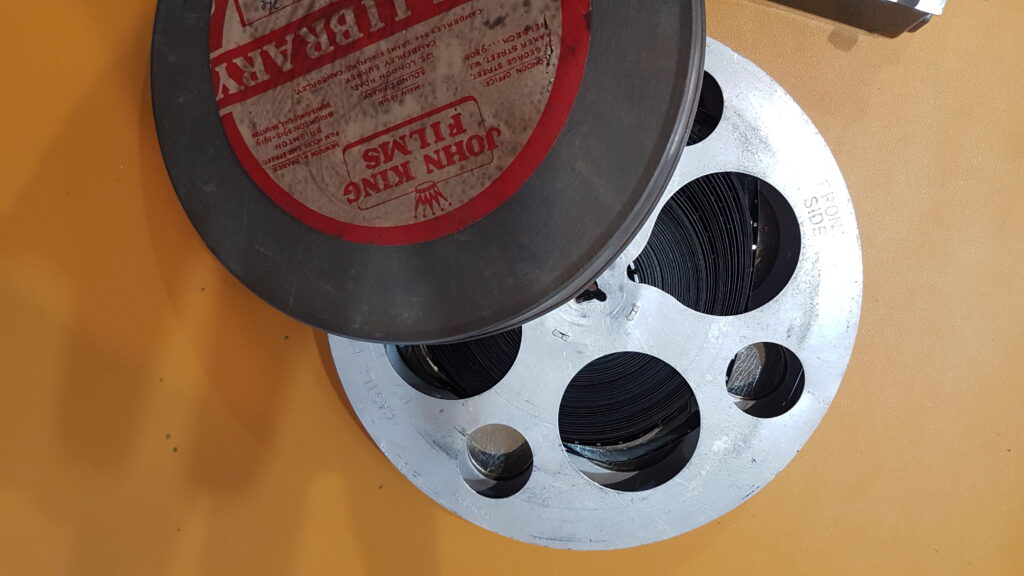
Good storage gives cine film a better chance of surviving, but it cannot stop ageing indefinitely. Heat, moisture, chemical deterioration, mould and physical damage can gradually make historic footage harder to access.
If a reel contains something you cannot replace, treat its condition seriously. Store it appropriately, minimise unnecessary handling and consider professional digitisation while the film remains in a condition that allows its images to be captured.
For collections already showing signs of deterioration, professional cine film digitisation can make an important difference. The aim is not simply to make an old reel playable again; it is to preserve the images and memories recorded on it for future generations.