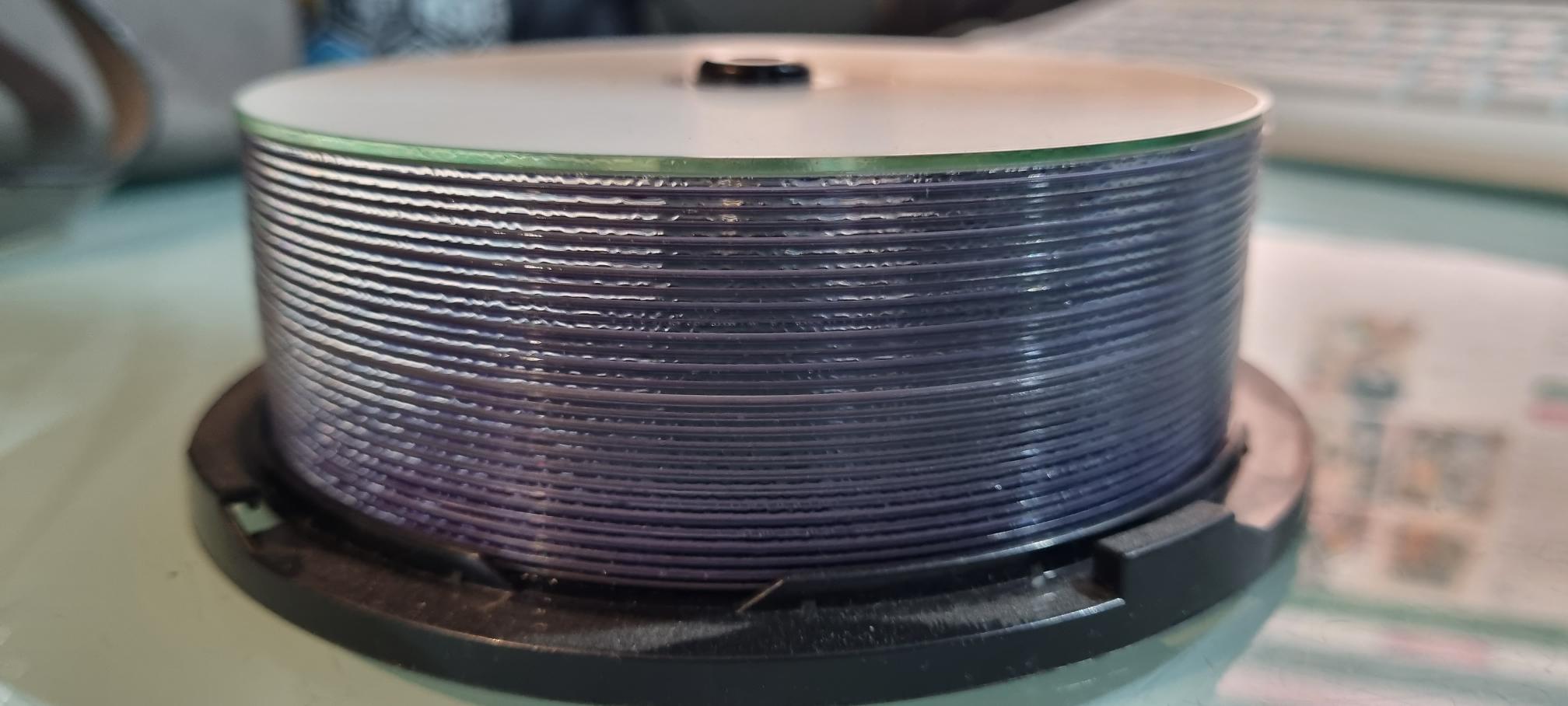

How long will a DVD last for? A DVD can remain readable for anything from a few years to several decades, depending on whether it is a factory-pressed, recordable or rewritable disc, its manufacturing quality and how it has been stored. For valuable recordings, it is safer to make a digital backup than rely on the disc surviving indefinitely.
As a practical guide:
| Type of DVD | Typical preservation outlook | Main concern |
|---|---|---|
| Factory-pressed DVD | Often decades | Layer separation, corrosion and physical damage |
| DVD-R / DVD+R | Roughly 10–50+ years depending on construction | Recording dye and reflective layer deterioration |
| DVD-RW / DVD+RW | Generally less suitable for archiving | Rewritable recording layer |
| Poor-quality or badly stored disc | Potentially only a few years | Heat, humidity, sunlight and manufacturing defects |
These figures should never be treated as expiry dates. Two apparently identical DVDs stored in the same cupboard can deteriorate at very different rates.
Why Is There No Simple DVD Life Expectancy?
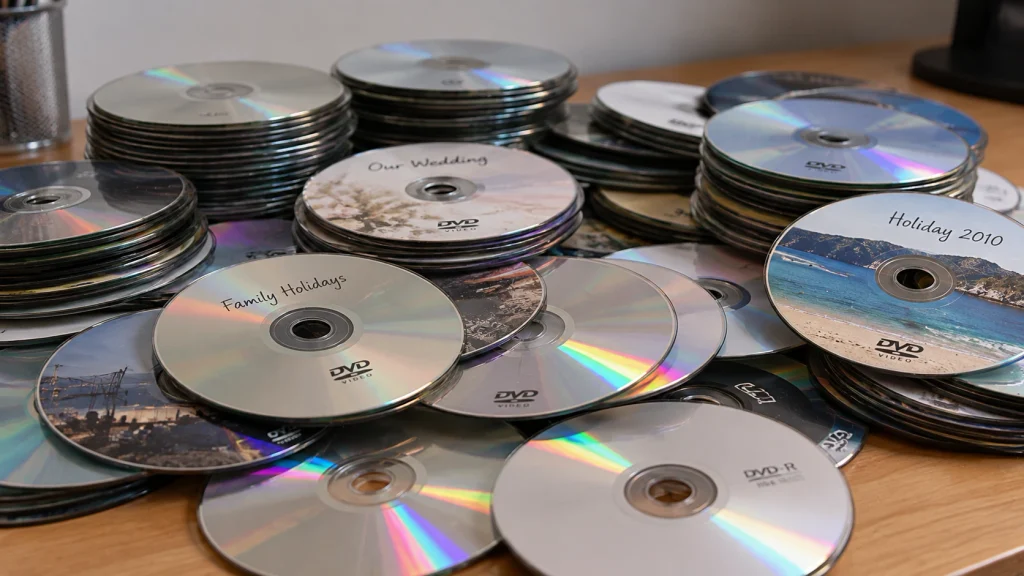
Unlike a tin of food, a DVD does not have a predictable date at which it suddenly becomes unusable. Its useful life depends upon the materials inside the disc, how accurately it was manufactured and recorded, and everything that has happened to it since.
Research into recordable optical media has produced an exceptionally broad range of predicted lifespans. The Canadian Conservation Institute notes that research, manufacturers’ information and practical experience have produced estimates ranging from only a couple of years to more than 200 years for recordable optical discs.
That enormous range is exactly why claims such as “DVDs last 100 years” should be treated cautiously.
A better question is: how secure is the information on my DVD today?
If it contains a wedding, children’s videos, family photographs or footage of somebody who is no longer alive, its theoretical maximum lifespan matters much less than whether you have another accessible copy.
Pressed DVDs and Recordable DVDs Age Differently
One of the most important distinctions is how the DVD was made.
Factory-Pressed DVDs
Commercial film DVDs and other mass-produced discs are normally replicated rather than individually recorded. During manufacture, microscopic physical structures representing the data are formed in the disc.
Because these discs do not depend on the same organic recording dye found in many recordable DVDs, they can be comparatively durable.
That does not make them indestructible. Their internal layers can still deteriorate, adhesives can fail and reflective layers can be affected by environmental conditions.
DVD-R and DVD+R Discs
A recordable DVD works differently. A DVD recorder or computer burner uses a laser to alter a recording layer within the disc.
These are particularly relevant to family archives because DVD-R and DVD+R were widely used for:
- home-video transfers
- camcorder recordings
- photograph collections
- computer backups
- copied family films
- personal documents
- recordings made on DVD recorders.
The recording layer and reflective layer can deteriorate with age. Manufacturing quality also varies considerably between brands, batches and types of disc.
If you have important material stored on older recordable discs, Supaphoto’s disc conversion service provides a way of moving the contents onto more convenient modern storage rather than leaving the DVD as the only copy.
What About DVD-RW and DVD+RW?
Rewritable DVDs use a different recording technology that allows information to be erased and recorded again.
That flexibility made them useful for temporary storage, but rewritable optical media should not be regarded as an ideal permanent family archive.
For memories you genuinely want to retain, create additional copies elsewhere.
What Actually Causes a DVD to Fail?
People often use the expression disc rot for deterioration that eventually prevents an optical drive from reading a disc correctly.
The underlying causes can vary.
A DVD is constructed from several layers rather than being one solid piece of plastic. Age, moisture, heat, poor manufacturing and chemical deterioration can eventually affect those layers.
Problems can include:
- deterioration of the recording layer
- corrosion or deterioration of reflective materials
- separation or delamination between layers
- warping caused by heat
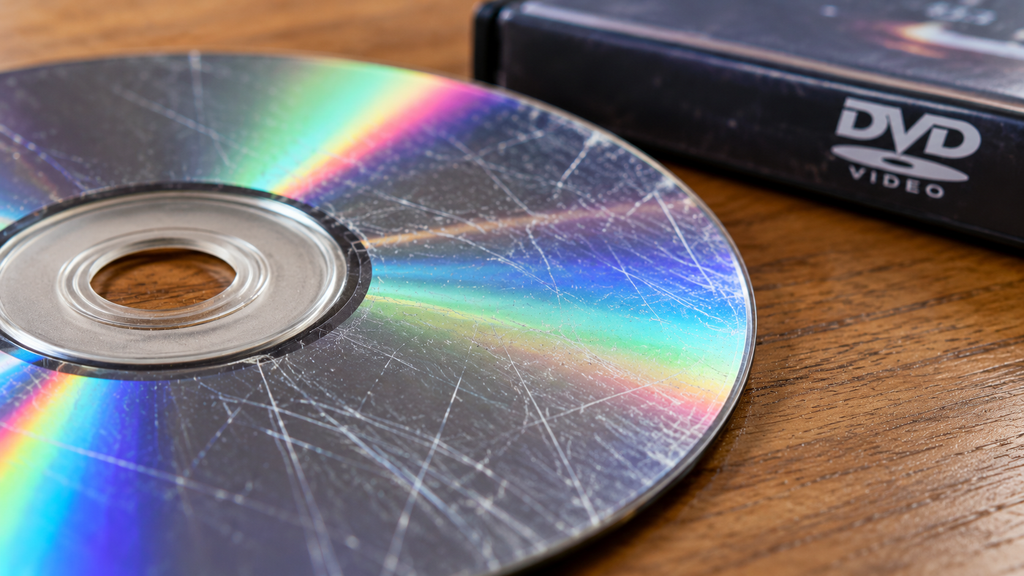
- scratches on the reading surface
- contamination and fingerprints
- damage caused by inappropriate labels
- manufacturing defects.
Recordable optical discs are also dependent upon the stability of their recording materials. The Library of Congress research into recordable optical discs explains the distinction between write-once discs using photosensitive organic dye and rewritable media using a phase-changing alloy.
The important point is that a DVD does not have to look damaged to be deteriorating.
How Can You Tell If an Old DVD Is Starting to Fail?
Do not wait for a disc to become completely unreadable. Early playback problems can provide useful warning signs.
Watch for:
- unusually long loading times
- video freezing unexpectedly
- skipping or jumping
- picture breakup
- sections that refuse to play
- files that cannot be copied
- a computer repeatedly attempting to read the disc
- visible discolouration, cloudiness or separation of layers.
A single playback problem does not automatically mean the disc itself is failing. Dirty optical drives, incompatible players and scratches can produce similar symptoms.
Try an important disc in another compatible drive if necessary. If it reads successfully, make a backup while you have the opportunity.
Repeatedly testing a troublesome disc without making a copy achieves little.
Does Playing a DVD Wear It Out?
Not in the same way that playing a VHS cassette or vinyl record can create mechanical wear.
DVD players use a laser to read information without physically contacting the recording surface. Normal playback therefore does not gradually scrape away the recording.
Handling is another matter.
Taking a disc in and out of cases can introduce fingerprints, dirt and scratches. Hold it by the outer edge or centre hole rather than placing fingers across the surfaces.
This distinction is useful: reading a DVD is contactless, but handling a DVD is not risk-free.
How Should DVDs Be Stored to Make Them Last Longer?
Good storage cannot make a poorly manufactured disc immortal, but it can remove several avoidable causes of deterioration.
The NIST guidance on caring for CDs and DVDs was specifically developed to address the preservation and handling of optical media.
For a collection at home:
- keep discs in proper protective cases
- store cases vertically
- avoid direct sunlight
- keep them away from radiators and other heat sources
- avoid lofts with large temperature fluctuations
- avoid damp garages, sheds and basements
- handle discs using their edges and centre holes
- return discs to their cases after use
- avoid bending or flexing them.
Heat and high humidity are particularly undesirable because chemical deterioration generally progresses more quickly under poor environmental conditions.
A bedroom cupboard or interior storage cabinet in a normally heated home is therefore generally preferable to a loft that becomes extremely hot during summer and cold during winter.
Should You Clean an Old DVD Before Playing It?
If necessary, but gently.
Loose dust should be removed without scratching the surface. When wiping is required, use a clean, soft, lint-free cloth and work from the centre towards the outer edge, rather than repeatedly polishing around the circumference.
Avoid aggressive household cleaning products.
Deep scratches, cracks and layer separation are different problems and may require specialist attention.
Most importantly, never assume that cleaning will reverse chemical deterioration inside the disc. It can remove contamination; it cannot restore a recording layer that has physically degraded.
How Long Will a Home-Recorded DVD Last For?
Home-recorded DVDs deserve particular attention because they frequently contain the material that cannot be replaced.
A commercial film can usually be purchased or streamed again. A DVD containing your parents’ wedding or footage of your children cannot.
The Canadian Conservation Institute gives DVD-R longevity ranges that vary substantially according to the metal layer and construction. Its preservation guidance also warns that ignoring appropriate handling and storage practices can result in premature failure.
That uncertainty makes proactive copying more sensible than trying to predict the remaining lifespan of an individual disc.
A DVD recorded 20 years ago that works perfectly today should not automatically be assumed to have another 20 years remaining.
What Is the Best Way to Preserve Important DVDs?
Think about preserving the content, rather than preserving the DVD itself.
For important family material, a sensible approach is:
- Check whether the DVD remains readable.
- Copy or extract its contents while it is working reliably.
- Check the resulting files rather than assuming the transfer succeeded.
- Keep more than one copy.
- Store those copies in different places.
- Periodically check and migrate important files as technology changes.
A particularly useful preservation principle is the 3-2-1 approach: maintain three copies, using at least two types of storage, with one copy kept elsewhere.
This protects against more than deterioration. A perfect DVD is little help after theft, fire or accidental loss.
Will DVD Players Disappear Before Some DVDs Fail?
Possibly – and this is one of the most overlooked aspects of DVD preservation.
Physical survival and technological accessibility are different things.
A disc could remain chemically readable while suitable DVD drives become less common. The same problem has affected numerous older recording formats: sometimes the recording survives but convenient playback equipment does not.
This is why digital preservation involves migration, not simply putting media into a cupboard indefinitely.
The history of the format also explains why so many family archives ended up on optical media. Supaphoto’s guide to how DVDs became a mainstream home-entertainment format provides useful background to their rapid adoption.
Is USB Better Than DVD for Long-Term Storage?
USB is more convenient, but it should not become your sole archive either.
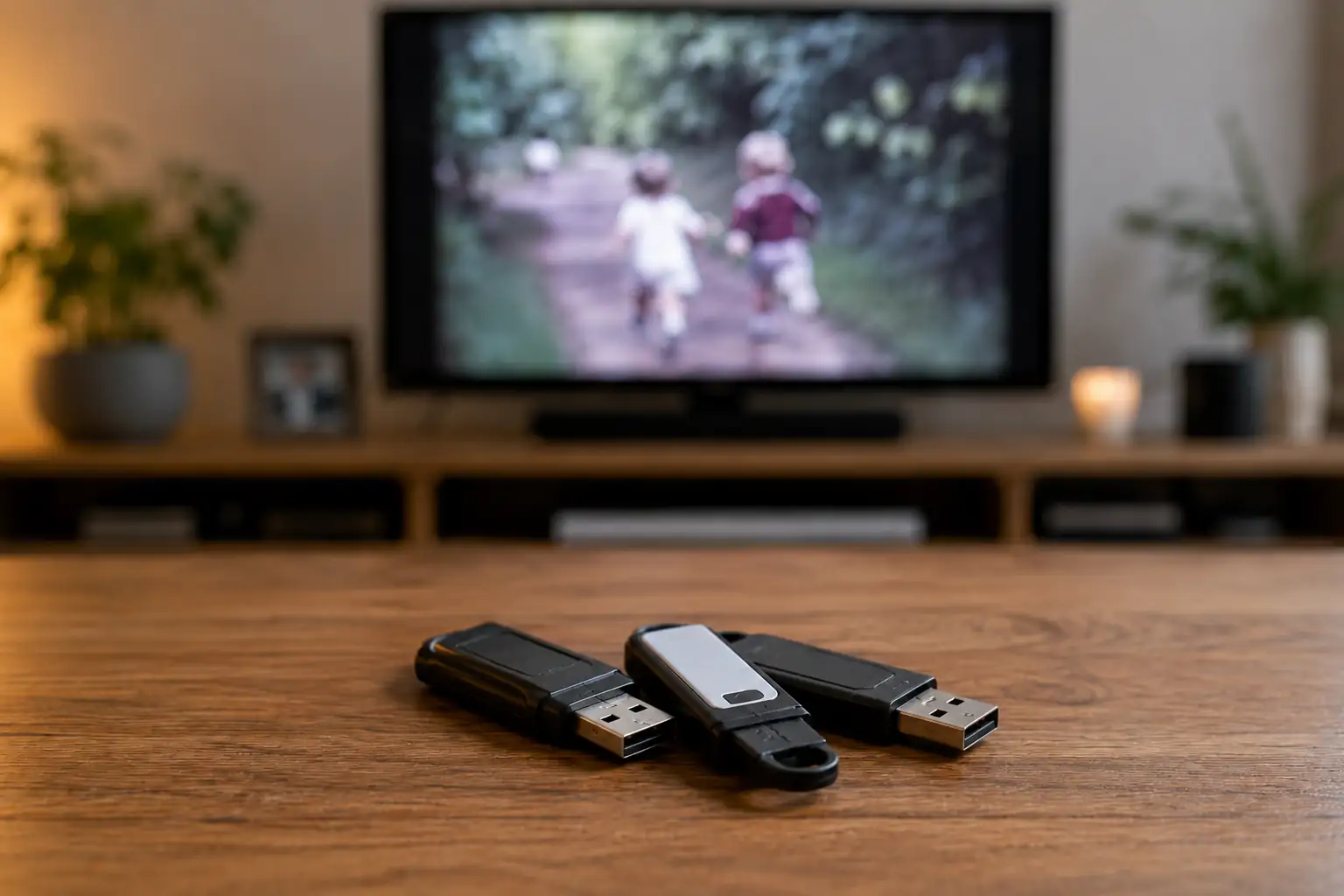
A USB drive makes files much easier to copy, view and transfer between devices. Digital files can subsequently be moved to another USB drive, computer, external drive, NAS or cloud service without needing to re-read the original DVD.
The important improvement is therefore not simply DVD versus USB.
It is the ability to maintain multiple verified copies of the files.
No single physical storage device should be regarded as permanent.
Frequently Asked Questions About DVD Lifespan
Can a DVD Last 100 Years?
Potentially, under favourable circumstances, but you should not assume that an ordinary DVD will remain readable for a century. Published longevity estimates vary enormously according to disc construction, manufacturing quality, recording quality and storage.
For valuable personal material, a predicted lifespan is no substitute for a backup.
Do DVDs Deteriorate If They Are Never Played?
Yes. Chemical and physical ageing can continue while a disc is sitting untouched in its case. Not playing a DVD prevents some handling damage but does not stop its materials ageing.
Are Scratched DVDs the Same as Disc Rot?
No. A scratch is physical surface damage. Disc deterioration refers to changes within the materials or layers of the optical disc. Both can cause reading errors, but the causes are different.
Should I Throw Away DVDs After Copying Them?
Not necessarily. If an original disc remains readable and occupies little space, keeping it gives you another copy. Store it properly even after creating digital versions.
When Should I Transfer Old DVDs?
If a DVD contains irreplaceable material and it is currently readable, now is generally a better time than waiting for visible deterioration. There is little preservation benefit in waiting until playback problems begin.
The Sensible Approach to Protecting Old DVDs
So, how long will a DVD last for? Potentially decades, but there is no dependable countdown that tells you how much life remains in a particular disc. Pressed, recordable and rewritable DVDs have different constructions, while manufacturing quality, heat, humidity, sunlight, handling and storage all influence their survival.
The safest approach is therefore not to predict the exact year a treasured DVD will fail. Check important discs while they still work, transfer the contents, verify the resulting files and maintain more than one copy. For large collections, ageing discs or DVDs containing irreplaceable family recordings, ultimately it makes sense to choose a professional company with years of experience dealing with such orders, such as Supaphoto Ltd.