
If you are comparing providers, the best fine art scanning company is one that accurately captures every detail, colour and texture of your artwork without introducing distortion or unnecessary editing. Look beyond resolution alone and assess colour management, equipment, operator experience, file formats and quality control.
Before choosing a provider, check they offer:
- Professional colour-managed workflows.
- High-resolution capture suitable for future printing.
- Support for original artwork of different sizes and media.
- Non-contact or low-risk handling where appropriate.
- Archival-quality digital files.
- Experienced technicians rather than automated copy-shop scanning.
Why Choosing the Right Company Matters
A digital copy of your artwork is often far more than a photograph. It may become the master file used for:
- Limited edition prints
- Exhibition catalogues
- Insurance records
- Online portfolios
- Licensing
- Publishing
- Long-term preservation
Once an original painting has been sold or deteriorates naturally with age, the digital master may become the only perfect reference.
For that reason, quality should never be judged purely by price.
Many inexpensive scanning services simply produce a large image file. A specialist creates a faithful digital representation of the original artwork, ensuring colours, tonal transitions and fine brush detail remain true to the piece.
What Makes Professional Fine Art Scanning Different?
Professional artwork digitisation combines specialist equipment with skilled colour management.
High-end systems are designed to capture subtle tonal transitions, delicate pencil marks, fine ink lines and textured paint surfaces while minimising reflections and distortion. Modern professional imaging systems can achieve significantly higher fidelity than standard office scanners when used correctly.
A professional workflow typically includes:
| Feature | Professional Service | Office Scanner |
|---|---|---|
| Colour calibration | ✓ | Rarely |
| High bit-depth capture | ✓ | Limited |
| Minimal distortion | ✓ | Variable |
| Large artwork support | ✓ | Usually no |
| Archival TIFF files | ✓ | Often JPEG/PDF only |
| Quality control | Multiple stages | Minimal |
Experience Matters Just as Much as Equipment
Many companies advertise impressive scanner specifications, but hardware alone does not guarantee outstanding results.
An experienced technician understands how different media behave, including:
- Oil paintings
- Watercolours
- Charcoal drawings
- Pastels
- Pencil sketches
- Acrylic paintings
- Mixed media
- Prints
- Textile artwork
Each requires different handling techniques and sometimes different lighting or capture methods.
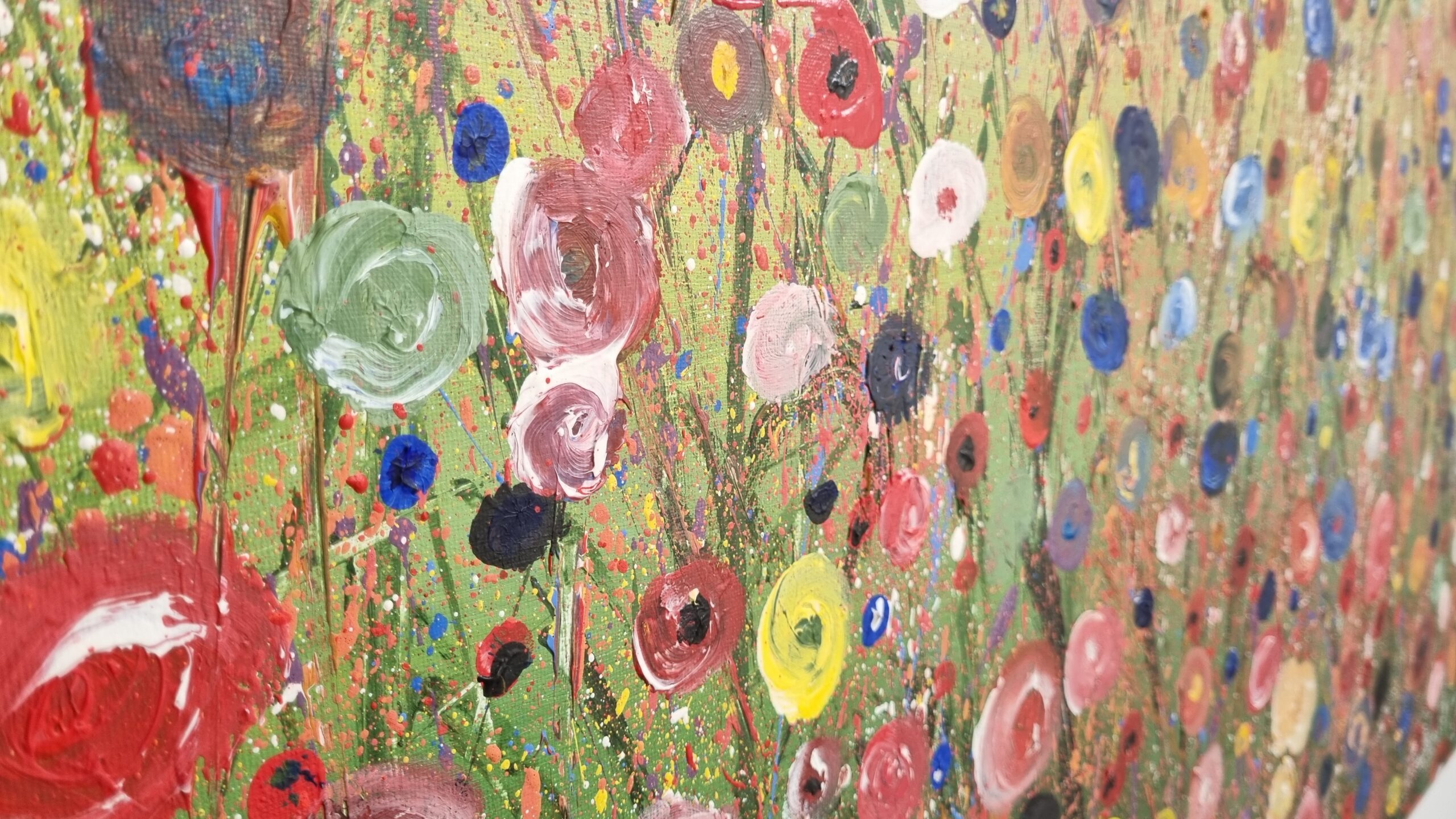
A textured oil painting, for example, needs a different approach from a smooth graphite drawing.
Questions Worth Asking Before Booking
Choosing a provider becomes much easier if you ask a few practical questions.
What file formats will I receive?
Ideally, ask for:
- TIFF master files
- High-quality JPEGs
- Optional PNG files where appropriate
TIFF remains widely recognised as an excellent archival format because it preserves maximum image quality without lossy compression.
Is colour calibrated?
Professional companies regularly calibrate monitors, scanners and workflows.
Without calibration, the artwork you see on screen may differ noticeably from the original.
Can they handle large artwork?
Some providers only scan A4 or A3 originals.
If your work includes oversized paintings, architectural drawings or exhibition pieces, look for specialists who also provide digital capture for larger originals and oversized documents through services such as large-format document imaging.
Are originals insured?
Ask:
- How artwork is stored
- Whether items are insured
- How originals are packaged
- Whether tracked return delivery is available
These practical considerations are often overlooked but are extremely important.
Resolution Is Important—but Not Everything
Many customers immediately ask:
“How many DPI do I need?”
Resolution certainly matters, but it is only one part of image quality.
A professionally colour-managed 600 dpi capture can outperform a poorly produced 1200 dpi scan if colour accuracy, sharpness and tonal range are superior.
Image quality depends upon:
- Optical resolution
- Bit depth
- Dynamic range
- Lens quality
- Colour profiling
- Lighting consistency
- Operator expertise
Professional imaging specialists frequently emphasise that colour accuracy and faithful reproduction are just as important as pixel count.
Signs of a High-Quality Digital Capture
When reviewing sample work, look for:
- Crisp fine detail
- Neutral whites
- Deep blacks without losing shadow detail
- Smooth colour gradients
- Natural-looking brush textures
- No visible reflections
- No stitching lines
- No barrel distortion
Zoom into 100%.
The smallest pencil marks should remain sharp.
Should You Photograph Artwork Instead?
Photography certainly has its place.
For highly textured paintings, framed artwork or exceptionally large originals, professional camera capture may produce better results than traditional scanning.
For flatter originals such as illustrations, watercolours and drawings, specialist scanning often delivers extremely consistent colour and geometric accuracy.
A good company will recommend the most suitable capture method rather than forcing every artwork through the same workflow.
Consider Future Uses
Think beyond today’s project.
Ask yourself:
- Will I sell prints later?
- Might a gallery request publication-quality files?
- Could I enter competitions?
- Will I need insurance documentation?
- Do I want to preserve family artwork permanently?
Choosing higher-quality digital files today avoids having to repeat the scanning process in the future.
Copyright and Ownership
Professional companies should respect copyright ownership.
If you are scanning artwork created by someone else, ensure you have permission before reproducing or commercially printing it.
The UK Intellectual Property Office provides useful guidance on copyright and artistic works through the GOV.UK copyright guidance.
Preservation Is About More Than Printing
Digitisation is increasingly used by artists, collectors, museums and archives to protect valuable originals.
Institutions including The National Archives and the British Library demonstrate how careful digitisation improves access while reducing unnecessary handling of fragile originals.
The same principles apply whether preserving a family watercolour or a professional exhibition piece.
If your collection includes historical documents, maps or fragile collections alongside artwork, specialist heritage preservation services can ensure each item is digitised using an appropriate workflow.
Red Flags to Watch For
Avoid companies that:
- Only advertise DPI figures
- Cannot explain colour management
- Only provide compressed JPEG files
- Do not show genuine sample work
- Use office photocopiers for artwork
- Cannot advise on future printing
- Rush handling procedures
Low prices can sometimes indicate a simplified workflow that sacrifices colour accuracy or quality control.
Checklist Before Choosing
- Ask to see genuine artwork samples.
- Check whether the company uses colour-managed workflows.
- Find out which TIFF files it provides for long-term archival storage.
- Check the maximum artwork size available for scanning.
- Ask how long the scanning process usually takes.
- Make sure the company provides insured handling.
- Clarify who owns the digital files.
- Find out how the company will safely return your originals.
Frequently Asked Questions
Is professional scanning worth it?
Yes, particularly if your artwork has commercial, sentimental or archival value. A professionally produced master file can be used repeatedly without rescanning.
Can textured paintings be scanned?
Yes, although some heavily textured works are better captured using specialist photographic systems designed for fine art reproduction.
What file format should I keep?
TIFF is generally the preferred archival master format, while JPEG copies are ideal for websites and email.
Can old artwork be digitised safely?
In most cases, yes. Experienced operators assess each piece individually and use suitable handling methods for delicate or valuable originals.
Final Thoughts
Choosing a fine art scanning company is about far more than comparing prices or scanner specifications. The best providers combine technical expertise, colour-managed workflows, careful handling and an understanding of how artists, collectors and institutions use digital reproductions.
Whether you are preserving a treasured original, building a professional portfolio or preparing artwork for exhibition-quality printing, investing in a high-quality digital master gives you confidence that your work has been captured faithfully for future generations.