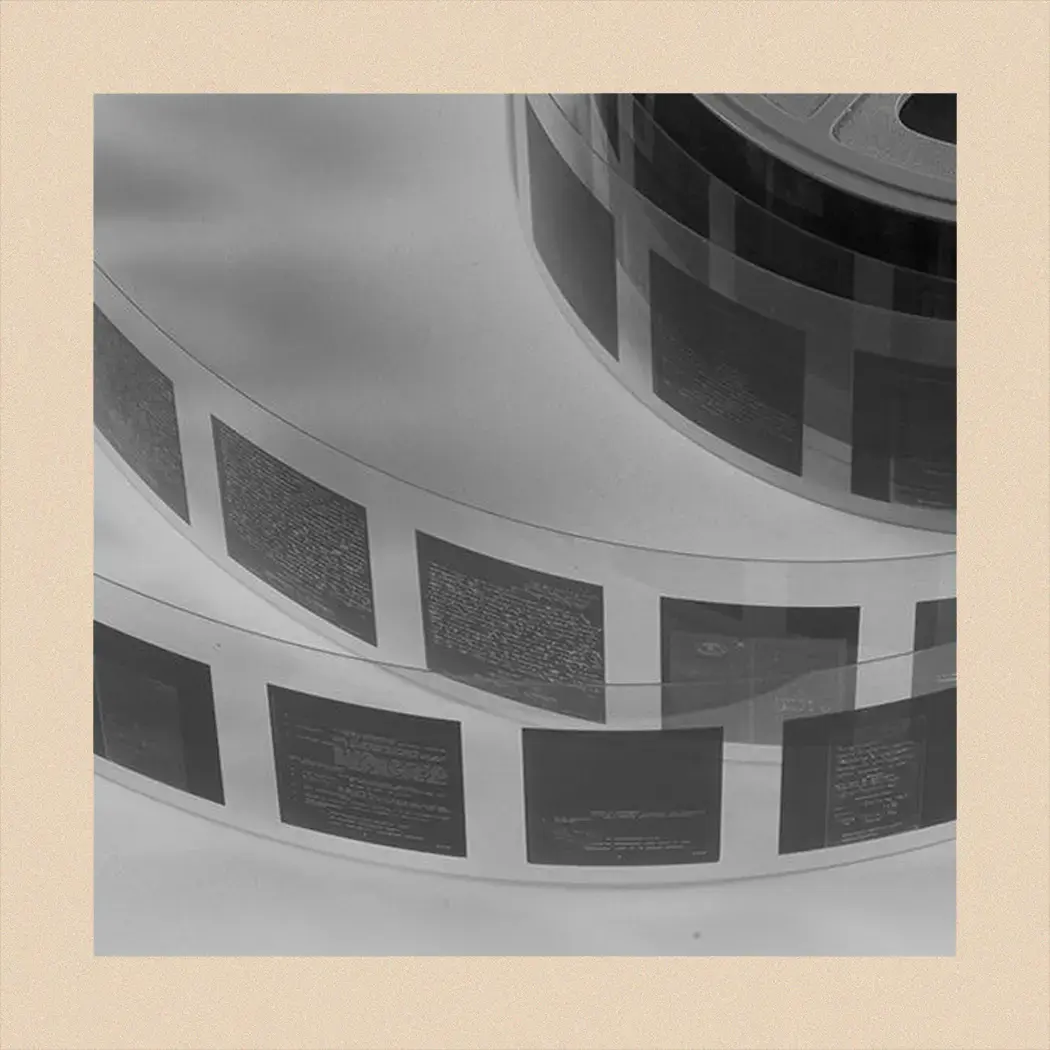

If you need to preserve ageing microfilm, selecting the right Microfilm Scanning service is essential. A professional provider should protect fragile originals, produce high-quality digital files, offer OCR where appropriate, and create formats that are easy to search, store and share for years to come.
When comparing providers, look for:
- Professional archival scanning equipment
- Careful handling of fragile reels
- OCR (Optical Character Recognition) where suitable
- Multiple output formats including PDF, TIFF and JPEG
- Secure handling of confidential archives
- Thorough quality assurance throughout the project
Why Digitise Microfilm?
People have used microfilm for decades to preserve newspapers, historical records, engineering drawings, legal documents and business archives. While it remains an excellent long-term storage medium, many collections are becoming increasingly difficult to access as reader machines become obsolete and replacement parts harder to obtain.
Digitising collections improves accessibility while protecting valuable originals from unnecessary handling. Researchers can search, share and retrieve information far more efficiently, helping organisations preserve knowledge for future generations.
Many organisations combine microfilm projects with broader heritage preservation and archive digitisation services to manage multiple archive formats within a single digital collection.
What Makes a Professional Service?
The quality of a digital archive depends on much more than simply scanning each frame.
A reputable provider should offer:
| Feature | Why It Matters |
|---|---|
| Specialist microfilm scanners | Sharp, distortion-free images |
| Careful cleaning | Removes dust that can obscure information |
| Experienced technicians | Minimises handling risks |
| OCR where appropriate | Makes documents searchable |
| Multiple file formats | Supports preservation and everyday use |
| Quality assurance | Checks every reel before delivery |
If your archive also contains oversized engineering plans or historical maps, integrating large document digitisation into the same project can create one consistent digital archive.
Image Quality Matters
High-quality Microfilm Scanning is about capturing every possible detail from the original film.
Professional operators adjust:
- Focus
- Exposure
- Contrast
- Image density
- Frame alignment
- Orientation
These adjustments can significantly improve the readability of faded documents and ageing newspapers.
Where text remains sufficiently clear, OCR technology can often create searchable PDFs, allowing users to locate names, places and dates within seconds instead of manually scrolling through reels.
Questions to Ask Before Choosing a Company
Before sending valuable archives, consider asking:
- Is scanning completed entirely in the UK?
- How will the company handle fragile reels?
- Are originals cleaned before scanning?
- What quality checks are performed?
- Is OCR available?
- Which file formats do you supply.
- Will my originals be safely returned?
A professional company should answer these questions clearly and explain its workflow before work begins.
Avoid These Common Mistakes
Many organisations regret choosing a supplier based solely on price.
Instead, avoid:
- Accepting low-resolution scans.
- Choosing companies without archive experience.
- Forgetting to request searchable files.
- Overlooking quality assurance procedures.
- Failing to maintain backup copies after digitisation.
Paying slightly more for experienced specialists often results in a digital archive that remains useful for decades.
Preserving Archives Beyond Digitisation
Digitisation does not replace proper storage of original microfilm. You should still preserve the originals in suitable environmental conditions with stable temperature and humidity.
The National Archives’ guidance on caring for archive collections provides practical advice on long-term preservation of historical records.
For organisations managing heritage collections, the British Library’s collection care resources explain many of the challenges involved in preserving paper-based and photographic materials.
Institutions responsible for public records should also follow The National Archives guidance on records management and long-term digital preservation.
Frequently Asked Questions
Can you still digitise damaged microfilm?
Often, yes. Scanning can usually accommodate minor scratches, dust and age-related deterioration, although severely damaged reels may require specialist conservation before digitisation.
What file format should I choose?
For long-term preservation, choose TIFF files because they retain maximum image information.Searchable PDFs are ideal for everyday access, while JPEG files are suitable where smaller file sizes are important.
Is OCR always accurate?
OCR performs best with clear, well-exposed printed text. Older film, handwritten documents or poor-quality originals may reduce recognition accuracy, so some manual indexing may still be beneficial.
Should you keep the original reels?
Yes. Even after digitisation, you should keep the original microfilm as the master archive and store it appropriately for future reference.
Conclusion
Choosing the right Microfilm Scanning provider is about far more than converting film into digital images. Specialist equipment, experienced technicians, careful handling and thorough quality control all contribute to producing an archive that will remain accessible for years to come. By investing in professional digitisation, organisations can protect irreplaceable historical information while making it significantly easier to search, share and preserve.