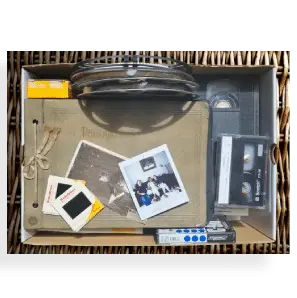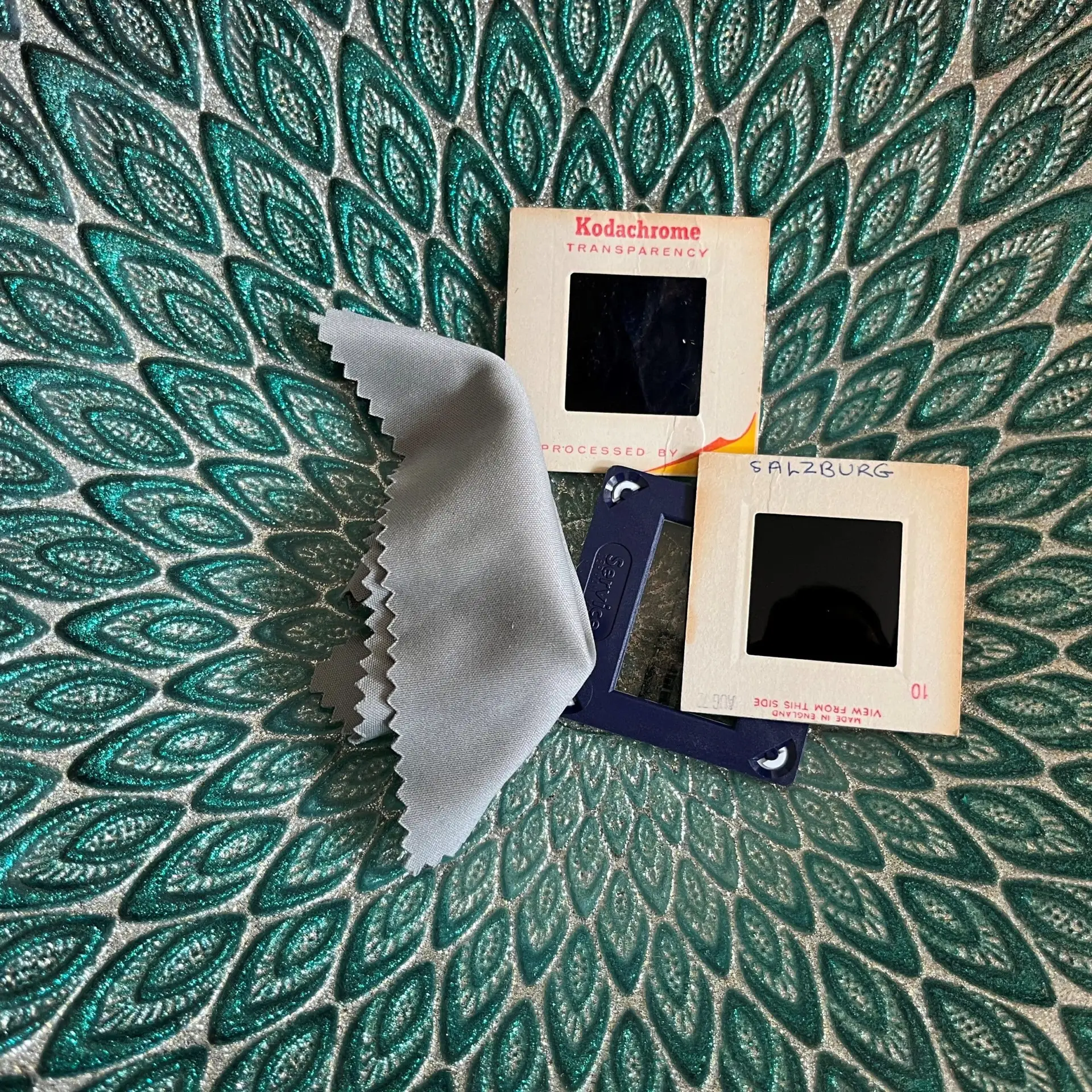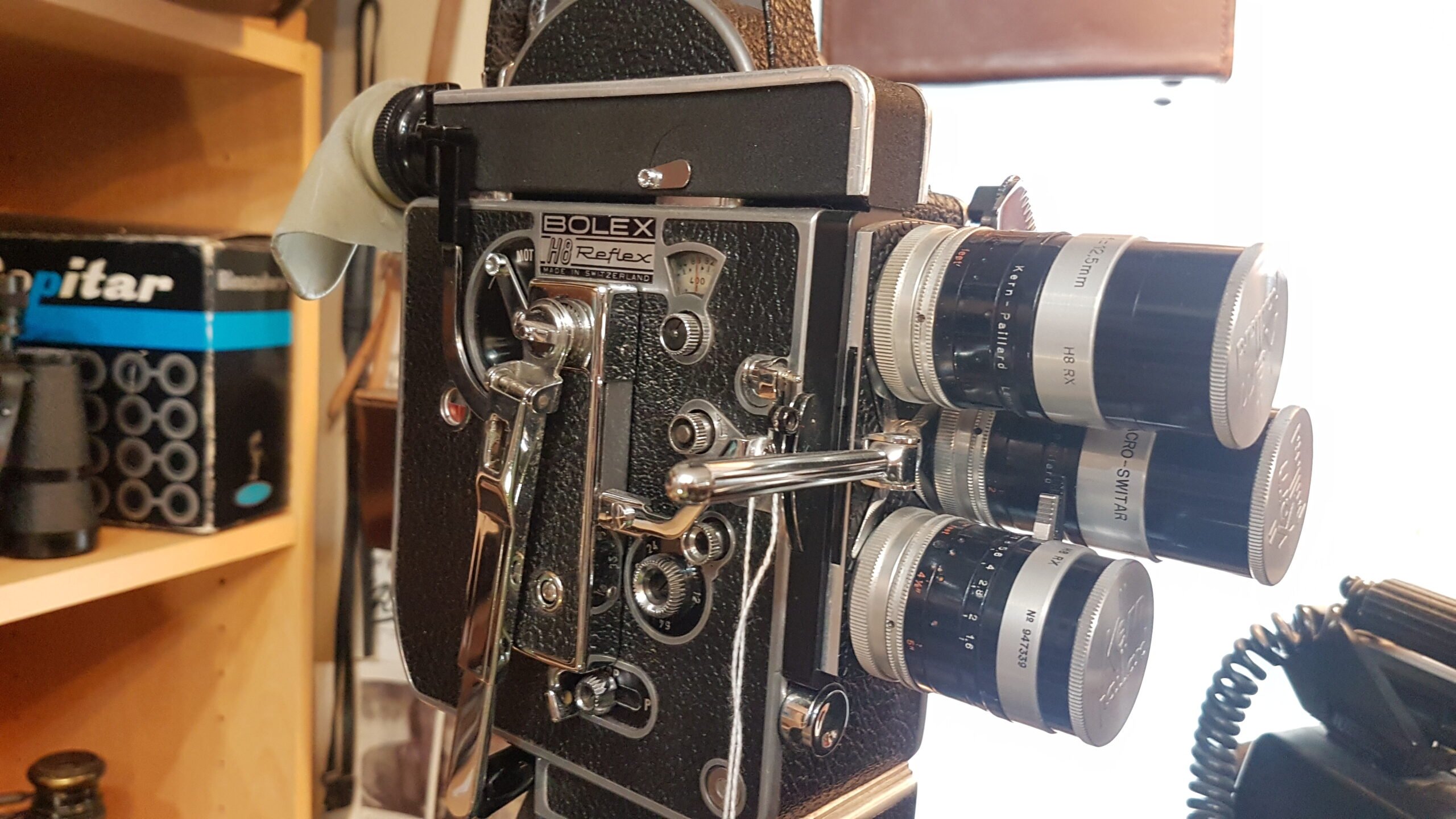

16mm film is a motion-picture format introduced by Eastman Kodak in 1923 as a smaller, safer and more economical alternative to 35mm. Although originally intended for amateur filmmakers, its portability transformed home movies, education, documentary production, news reporting and British television. More than a century later, the format remains culturally important and is still used by filmmakers.
Its story can be understood through five major developments:
- 1923: Kodak launches the format with a camera, projector and acetate safety film.
- 1920s–30s: Home moviemaking expands, followed by educational and institutional use.
- 1940s–60s: Portable filmmaking makes the gauge valuable for training, documentary and news.
- Post-war television: British broadcasters make extensive use of it for location filming.
- Today: Archives preserve historic reels while filmmakers continue to value the format’s distinctive visual character.
What began as an alternative to professional cinema stock ultimately changed who could make moving pictures, where films could be shown and what subjects a camera could realistically follow.
Why Was 16mm Film Invented?
Before 16mm arrived, 35mm dominated professional motion-picture production. It could produce excellent projected images, but the cameras, projectors and film itself were relatively expensive and cumbersome for ordinary enthusiasts.
Kodak saw an opportunity for a smaller system.
The company introduced 16mm reversal film alongside the Cine-Kodak camera and Kodascope projector in 1923. Kodak’s own historical record confirms that the film used a cellulose acetate safety base rather than highly flammable cellulose nitrate.
The crucial innovation was therefore bigger than simply reducing the width of the film.
16mm made filmmaking more practical outside the established cinema industry.
According to the Science Museum Group’s surviving Cine-Kodak records, the original hand-cranked camera held 100 feet of film, providing around four minutes of footage. The complete Cine-Kodak outfit was introduced in Britain in 1924.
That early equipment was hardly a pocket camera, but compared with professional 35mm production it represented a substantial move towards portable filmmaking.
What Makes 16mm Different from Other Cine Film?
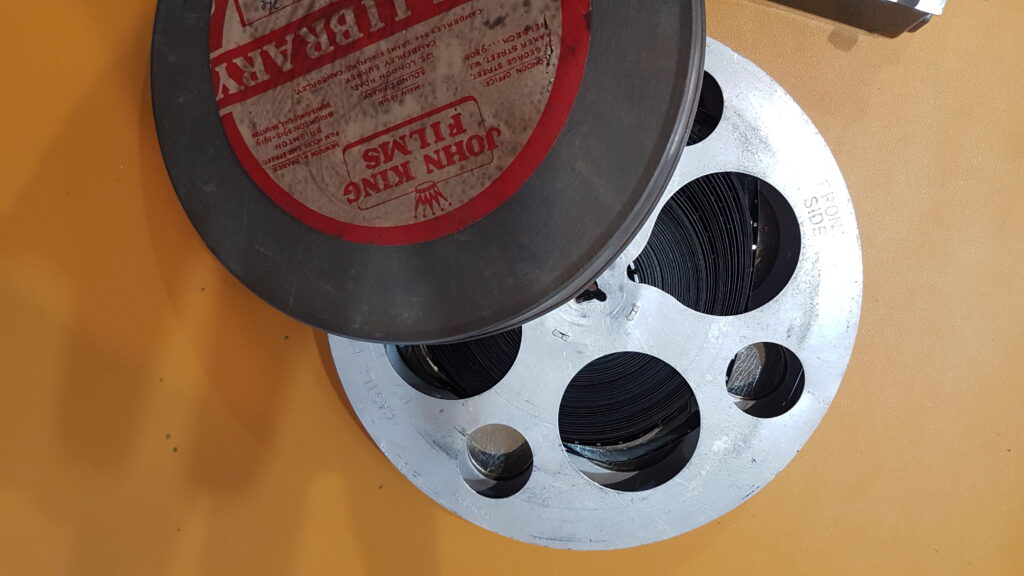
The “16mm” name describes the approximate width of the film strip. That puts the gauge between the smaller amateur formats that followed and professional 35mm stock.
| Format | Typical historical role | Notable characteristic |
|---|---|---|
| 8mm | Home movies | Small, economical amateur format |
| Super 8 | Home movies and enthusiasts | Larger image area than Regular 8 and convenient cartridges |
| 16mm | Amateur, educational, documentary and television work | Strong balance of image quality and portability |
| 35mm | Professional cinema | Larger frame and established theatrical standard |
Standard 16mm can have perforations along both edges or along one edge. Single-perforation film leaves space that can be used for a soundtrack.
The BFI notes that the gauge has always been manufactured on safety bases such as acetate and, later, polyester rather than nitrate. That distinction matters because nitrate film presents a serious fire risk.
Acetate should not, however, be mistaken for indestructible film. Its particular preservation problems become important when dealing with reels that have spent several decades in cupboards, lofts or garages.
The Unexpected Revolution Was Portability
One reason 16mm became so influential is easily overlooked: filmmakers could take it to places where conventional filmmaking had previously been difficult or prohibitively expensive.
Smaller cameras and projectors meant moving images could leave dedicated studios and cinemas.
Film could be shot in streets, workplaces, schools, laboratories, homes and remote locations. A portable projector could then take those pictures to audiences in classrooms, village halls, workplaces, clubs and community organisations.
This created what the BFI describes as an extensive non-theatrical culture of film exhibition.
The format consequently served purposes far beyond entertainment:
- education and classroom teaching;
- scientific and medical recording;
- industrial training;
- government information;
- military instruction;
- documentaries and ethnographic filmmaking;
- news and current affairs;
- political campaigning;
- experimental filmmaking;
- family and amateur movies.
In effect, 16mm helped separate moving pictures from the cinema building. That is one of its most important contributions to media history.
From Family Movies to Education and Public Information
Kodak initially envisaged its smaller gauge as a way of making amateur moviemaking more accessible.
Reversal film helped simplify matters because processing could produce a positive image suitable for projection rather than requiring the conventional negative-and-print workflow associated with much professional production.
Yet the format soon found an even broader audience.
Schools, businesses, governments and other organisations recognised that portable film could communicate information to groups of people without needing a cinema.
This became particularly significant from the 1930s onwards. Educational films could demonstrate processes that were difficult to explain using textbooks alone, while organisations could circulate the same programme between different locations.
When Kodak introduced the still smaller 8mm format in 1932, home moviemakers gained another economical choice. Meanwhile, 16mm increasingly established itself as a versatile semi-professional and professional medium.
How War Expanded the Role of Portable Film
The Second World War demonstrated just how useful compact motion-picture technology could be.
Film could teach procedures, record events, communicate information and provide entertainment. Military and government organisations made extensive use of portable projection because material could be carried to audiences rather than requiring audiences to attend conventional cinemas.
This period helped establish an important characteristic of 16mm: it was not simply a cheaper imitation of theatrical film.
It was a distribution system.
A reel, projector and screen could turn an improvised space into a temporary cinema or training room. That ability helped the format thrive after the war in schools, factories, institutions, clubs and public organisations.
The result was an enormous body of everyday moving-image history that does not necessarily resemble conventional feature cinema.
How 16mm Film Shaped British Television
The rise of television gave the format another major role.
Early television studios could use electronic cameras, but location production created different problems. Large television equipment was far less convenient when crews needed to work outdoors or travel.
Portable film cameras provided an effective answer.
The BFI records that Britain became particularly important in the development and use of 16mm for television, with the BBC working with Kodak on improving the technology for broadcasting. Across the post-war decades, huge quantities of British television material were photographed on the gauge.
Documentaries, natural-history programmes, drama and exterior sequences all benefited.
The format proved especially well suited to factual television because camera operators could follow events rather than constructing everything around a fixed studio setup. This flexibility also contributed to observational documentary techniques in which filmmakers followed real people and situations as events unfolded.
British collections still demonstrate the scale of this legacy. The Science Museum Group’s moving-image collection, for example, holds hundreds of items in the format, including original material connected with British transport and television history.
Standard 16mm and Super 16 Explained
An important later development was Super 16.
Standard 16mm traditionally uses an image area suited to the older, relatively square screen proportions. Super 16 expands the usable picture area into space that would otherwise accommodate a soundtrack, producing a wider image better suited to widescreen production.
| Feature | Standard 16mm | Super 16 |
| Image area | Conventional frame | Wider frame area |
| Traditional use | Projection, television, documentary and education | Widescreen television and film production |
| Soundtrack space | Can accommodate soundtrack on suitable prints | Image extends into that area |
| Projection compatibility | Conventional 16mm equipment | Requires suitable equipment or digital finishing |
This adaptation helped keep the gauge useful as television moved towards widescreen presentation.
Its importance also illustrates a recurring theme in the history of 16mm: instead of disappearing whenever technology changed, the format repeatedly found another role.
Why Does 16mm Have Such a Recognisable Look?
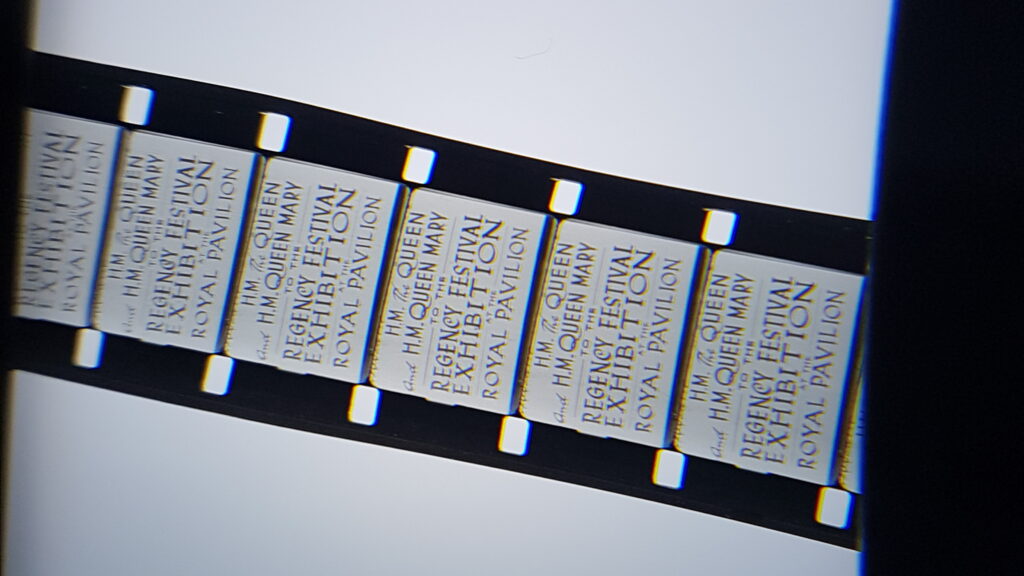
People often describe old cine footage as “grainy”, but grain alone does not explain its appearance.
The image comes from a relatively small photographic frame. Film stock, lens, exposure, processing, lighting and scanning all influence the finished result. Older colour stocks may also have faded differently depending on their chemistry and storage history.
A well-exposed original can contain considerably more useful visual information than a poor projection or ageing video copy suggests.
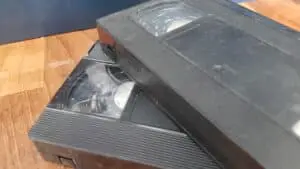
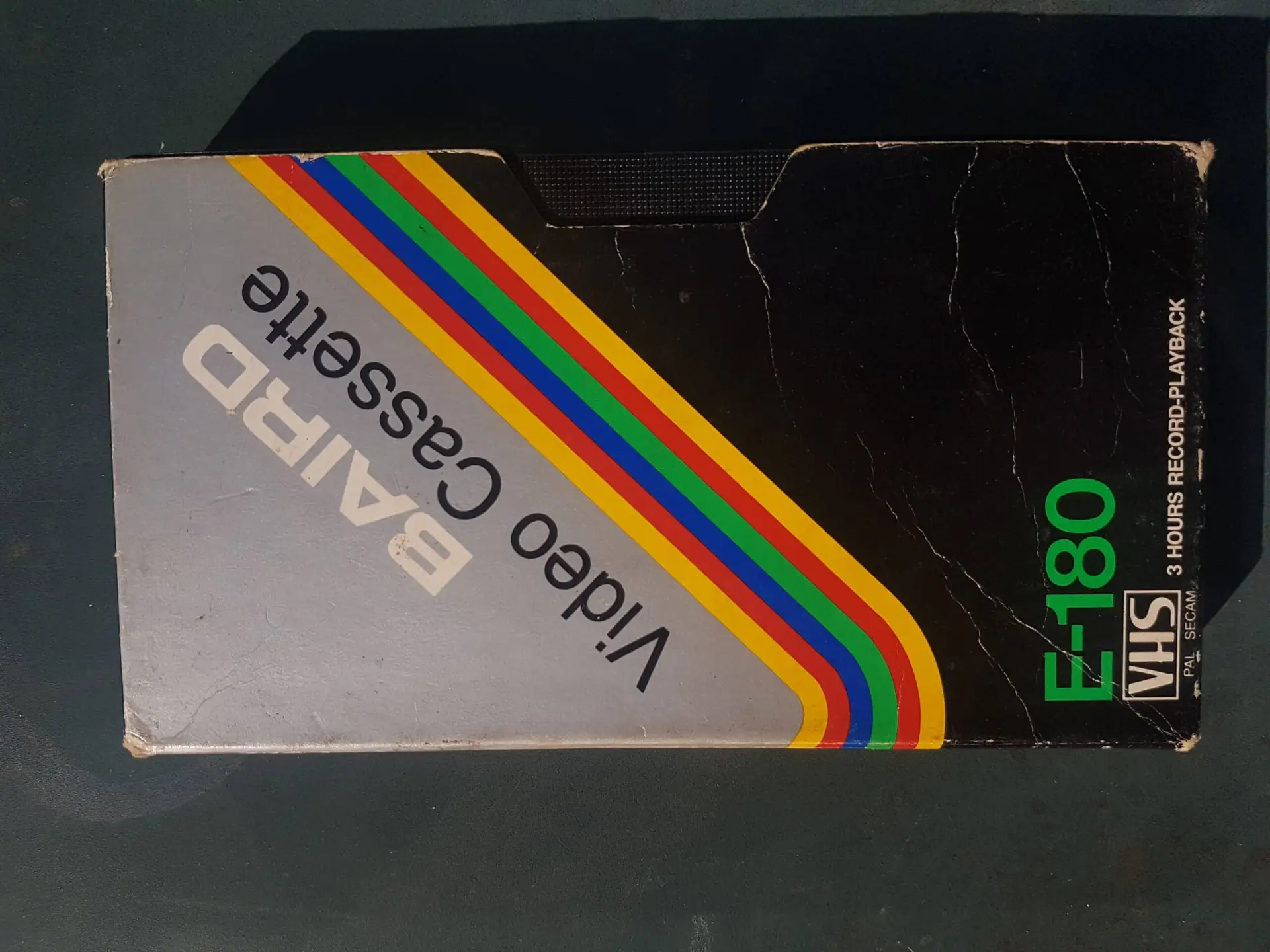
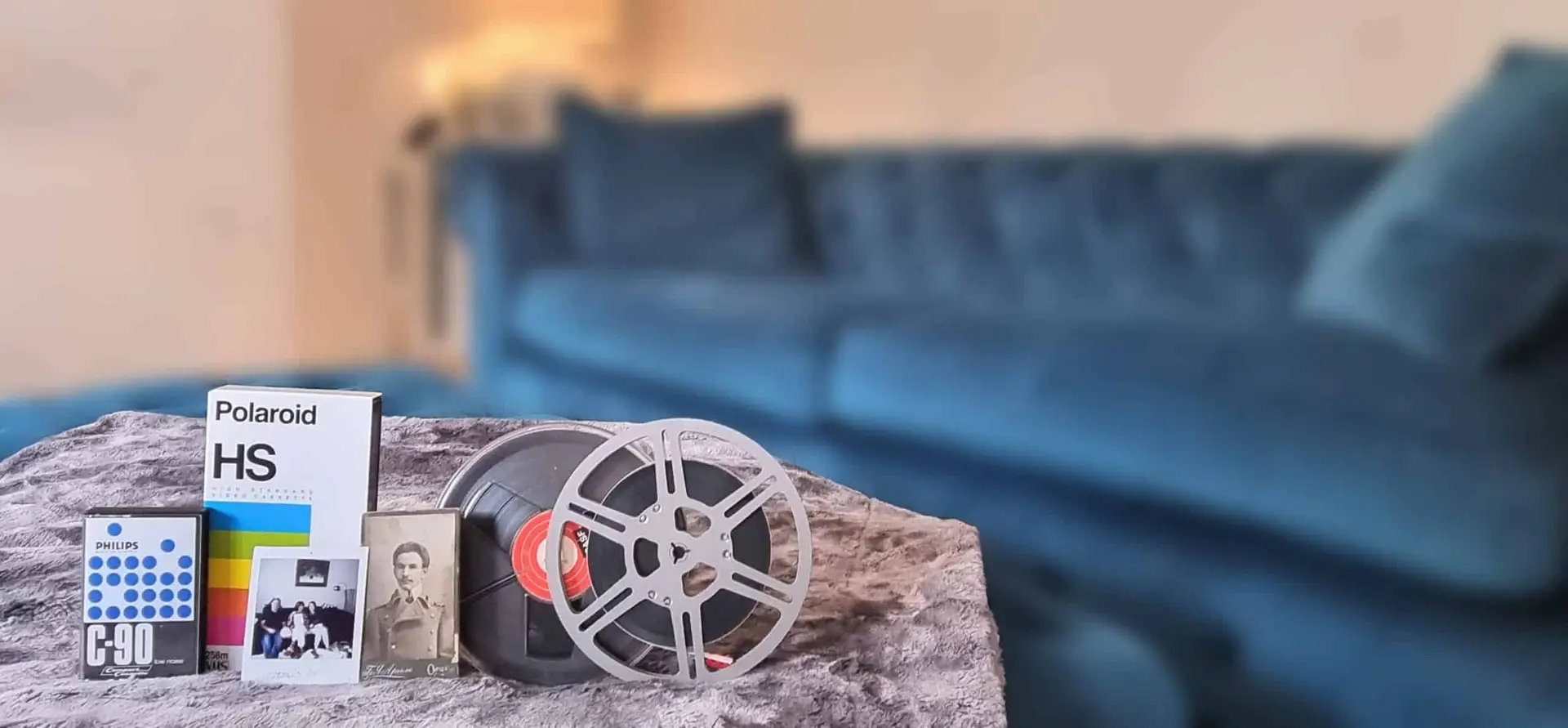
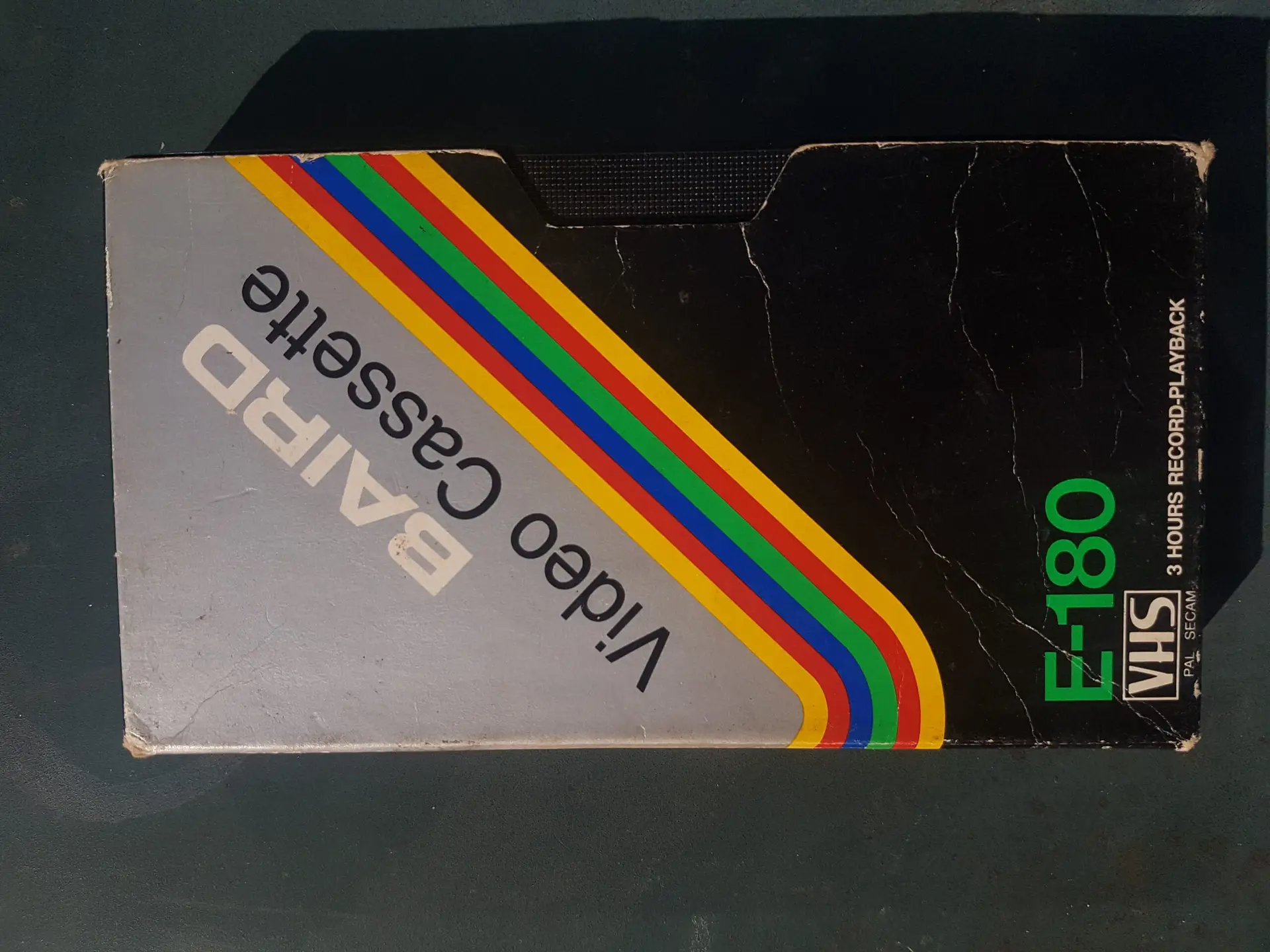
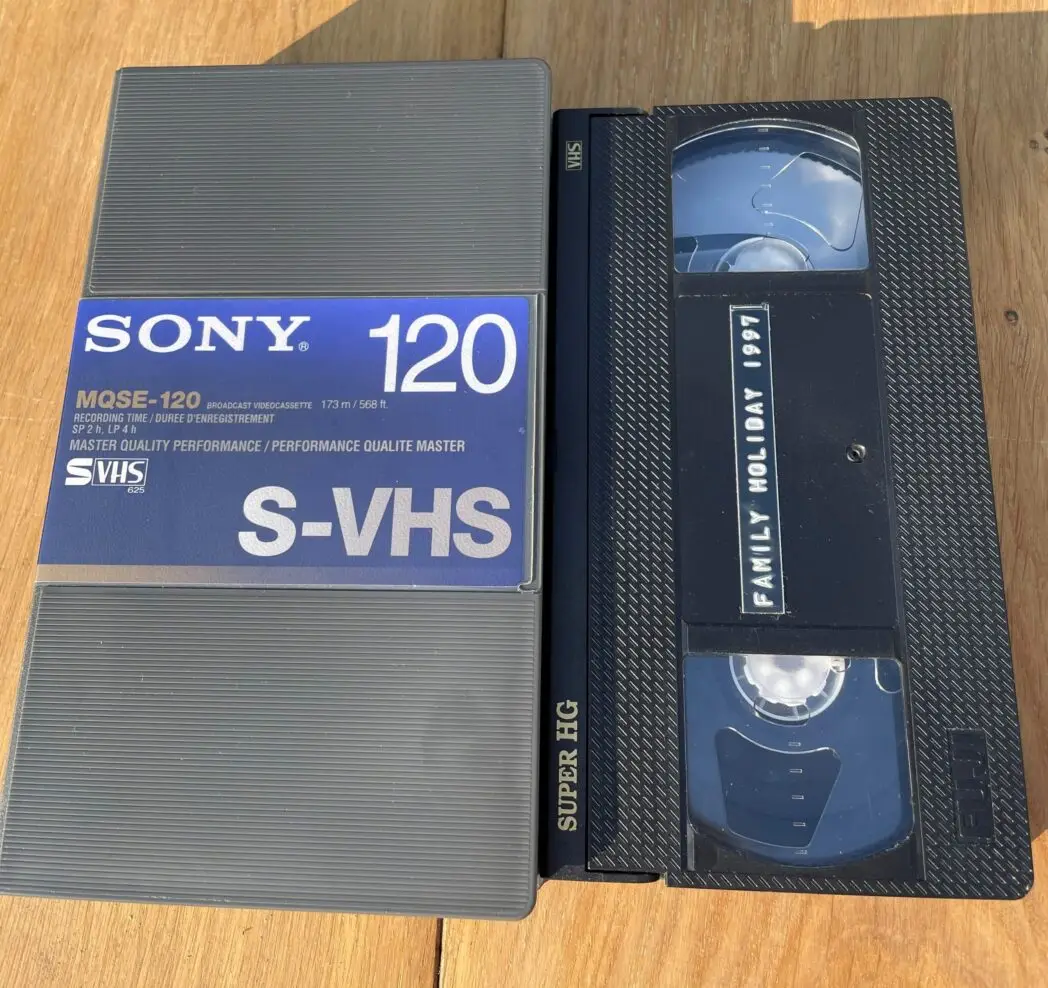
That matters when viewing family archives. If your only experience of a reel comes from an old VHS transfer, the tape is not necessarily showing everything contained in the original film.
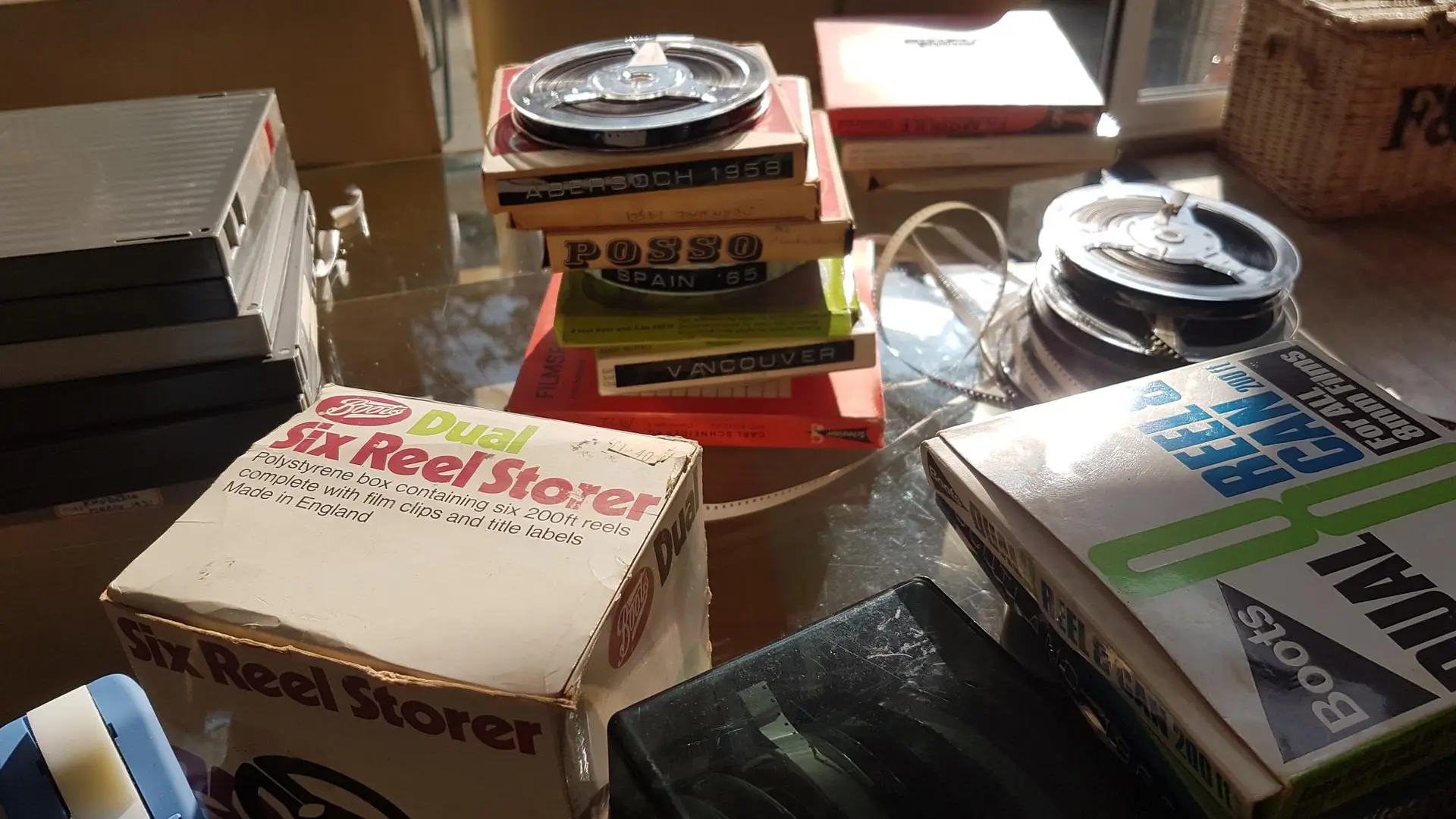
Modern frame-by-frame scanning can create a new digital version directly from the reel. Supaphoto’s approach to bringing inherited cine reels into a modern viewing workflow explains the considerations involved when dealing with unidentified reels, different reel sizes and possible soundtracks.
Why Old 16mm Reels Need Care
The fact that 16mm avoided nitrate does not mean every reel is chemically stable.
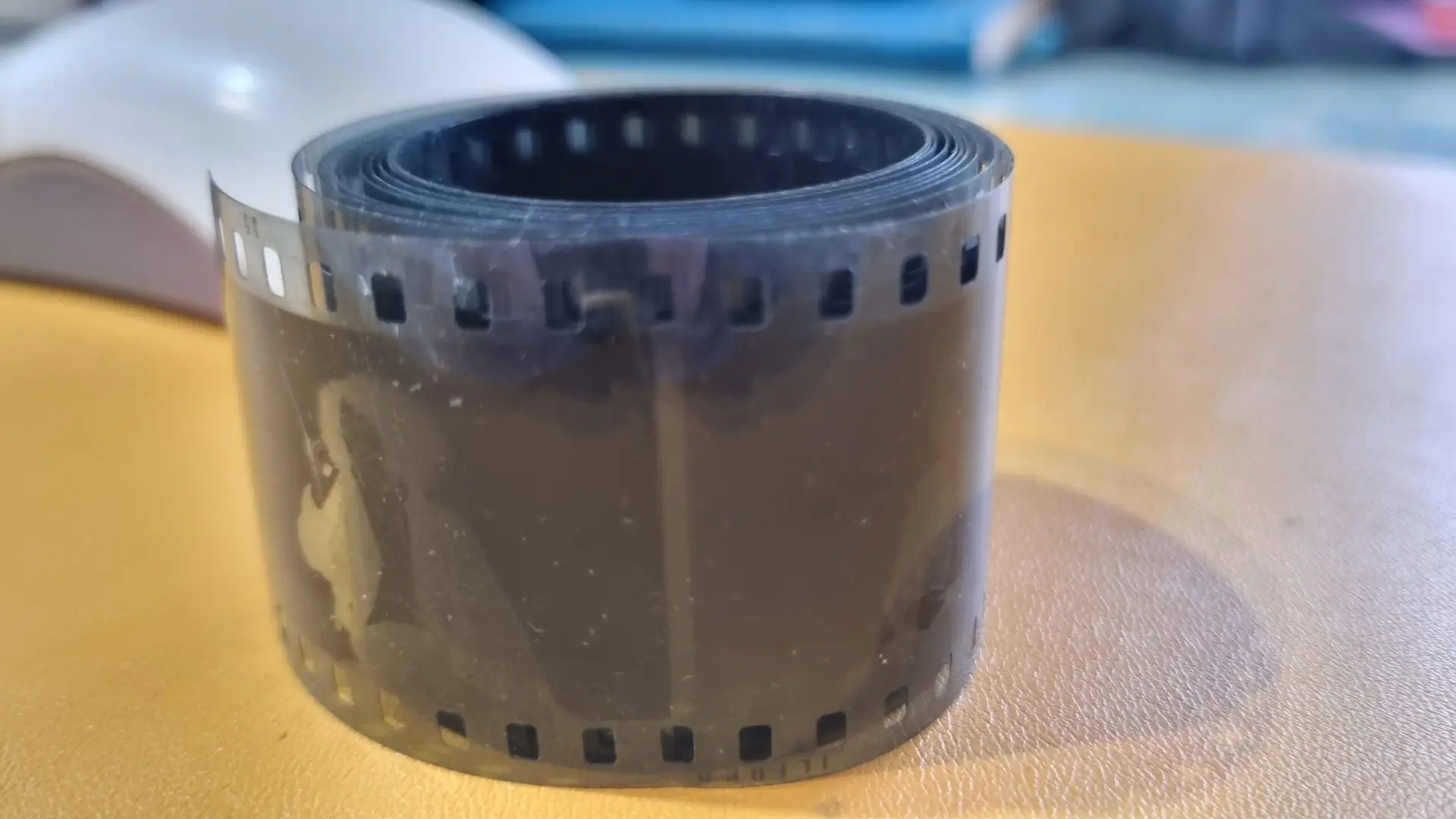
Much historic stock uses a cellulose acetate base. As acetate deteriorates, it can develop what conservators call vinegar syndrome. The name comes from the acetic-acid smell produced during deterioration.
Warning signs can include:
- a noticeable vinegar-like odour;
- shrinkage or distortion;
- brittleness;
- curling;
- damaged or weakened perforations;
- colour fading;
- mould or surface contamination.
The US Library of Congress describes acetate deterioration as an irreversible process that can eventually cause shrinkage, embrittlement and loss of the image. Its guidance for caring for motion-picture film recommends cool conditions and controlled relative humidity for acetate material.
For valuable family reels, the practical lesson is simple: do not repeatedly run questionable film through an old projector just to find out what is on it.
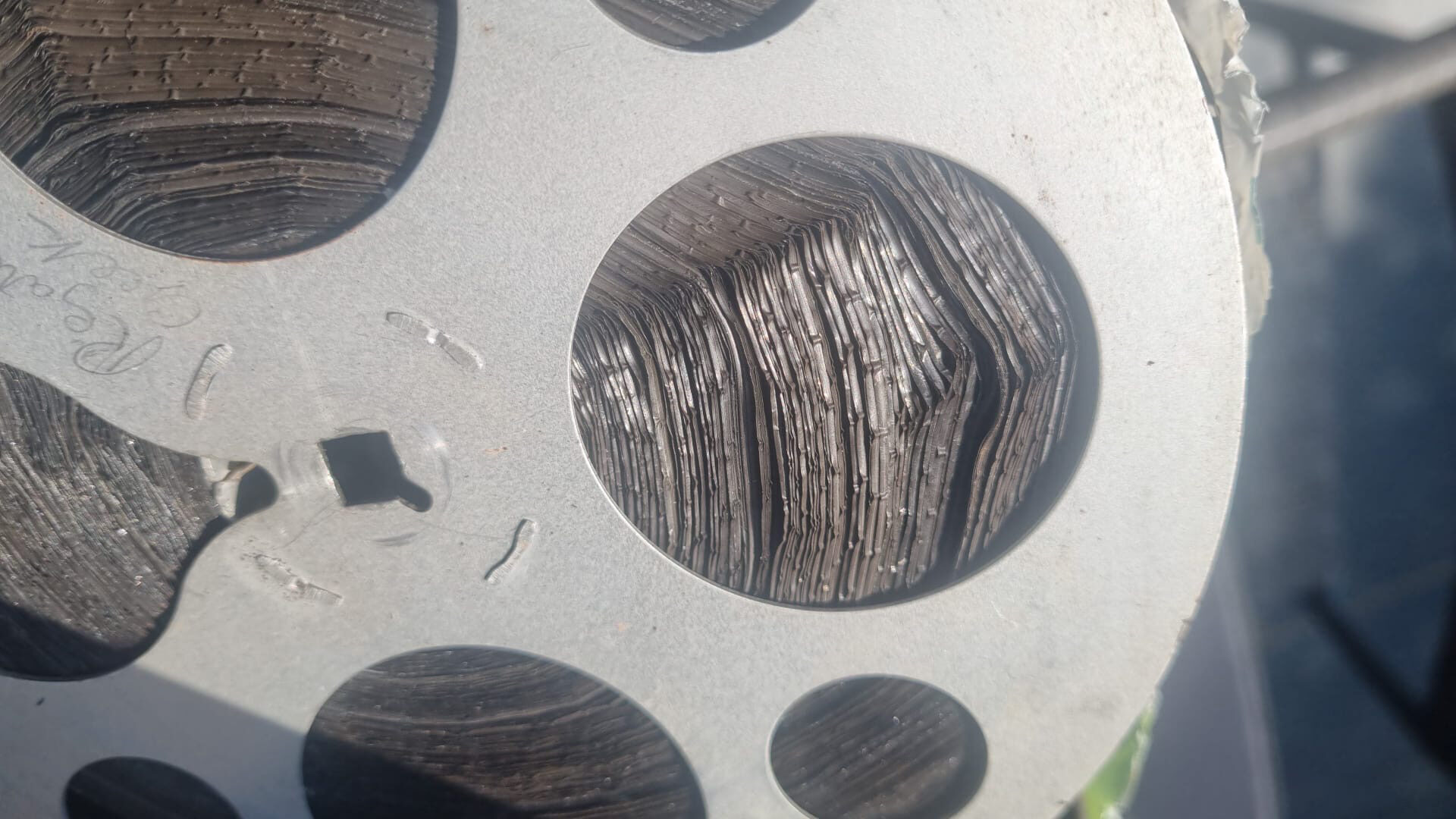
A brittle splice or damaged perforation can fail under mechanical tension.
For a broader explanation of looking after ageing reels, Supaphoto’s guide to protecting cine collections covers the preservation considerations that become increasingly important as analogue material ages.
Should You Project an Old Reel or Digitise It?
Projection remains a wonderful way to experience film, and institutions such as the BFI continue to screen 16mm prints. For fragile family material, however, projection and preservation are different objectives.
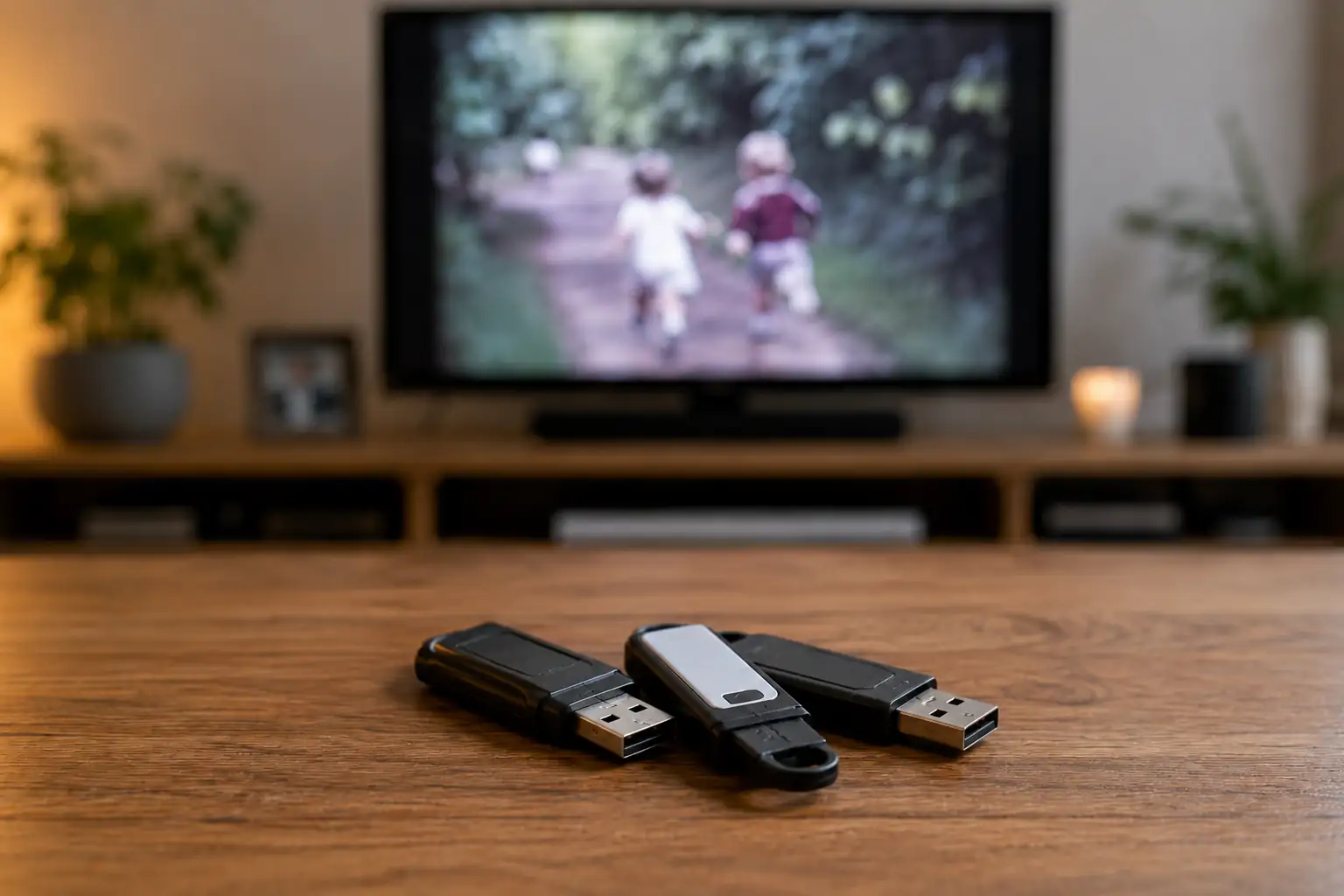
If a reel is unique, digitisation can create an accessible copy while allowing the original to be stored rather than repeatedly handled.
A professional assessment should consider:
- Film gauge – confirm that the reel really is 16mm.
- Physical condition – inspect perforations, splices, warping and contamination.
- Sound – determine whether a soundtrack is present and what type it is.
- Cleaning and preparation – prepare the film appropriately before scanning.
- Capture method – preferably scan the individual frames rather than simply filming a projected image.
- Digital output – choose files suitable for watching, sharing and future storage.
- Backup strategy – keep more than one copy and preferably more than one storage location.
Avoid throwing the original reel away after transfer. Digital files make access easier, but the physical film remains the source material.
Is 16mm Film Still Used Today?
Yes. 16mm is no longer required simply because cameras need to be portable, but filmmakers continue to choose it deliberately.
Its grain structure, highlight behaviour, colour response and physical production process give it an aesthetic that digital cameras can imitate but not literally reproduce.
The BFI continues both to preserve thousands of 16mm prints and to project the format. Contemporary productions also demonstrate that analogue filmmaking is not merely a historical curiosity.
That survival would probably have surprised filmmakers who once regarded the smaller gauge as “sub-standard”.
What looked like a compromise became a creative choice.
Frequently Asked Questions About 16mm Film
When was 16mm film invented?
Eastman Kodak introduced the format in 1923, together with the Cine-Kodak camera and Kodascope projector. It was designed to make motion-picture production and projection more practical outside professional 35mm cinema.
Was 16mm film made from nitrate?
No. The BFI states that the gauge has always been produced on safety bases such as acetate and polyester rather than nitrate film.
Does 16mm film have sound?
It can. Some material is silent, while suitable single-perforation prints can carry optical or magnetic soundtracks. An unidentified reel should therefore be inspected before transfer rather than assumed to be silent.
Is 16mm better quality than 8mm?
Generally, the larger image area gives 16mm greater potential image detail than 8mm formats, although the actual result depends heavily on the film stock, exposure, lens, processing, preservation and quality of the digital scan.
How can I tell whether an old reel is 16mm?
Film gauge is determined by the physical width and perforation arrangement rather than the reel diameter. Different gauges can also appear on similarly sized reels, so identification from the reel alone is unreliable.
Can old 16mm film still be digitised?
In many cases, yes. Age alone does not make a reel unusable. Its physical condition is more important. Fragile, shrunken or deteriorating material needs careful assessment before it is transported through scanning equipment.
A Century of Moving Images Worth Preserving
The real significance of 16mm film is not simply that Kodak made a strip of film narrower.
It made moving pictures more mobile.
Cameras travelled into homes, streets, classrooms, laboratories, workplaces and distant landscapes. Projectors took films beyond commercial cinemas. Television crews gained greater freedom on location. Documentary filmmakers could follow real events more naturally, while families created visual records that might otherwise never have existed.
Those private reels can now be historically valuable in ways their makers never anticipated. A few minutes of film may preserve relatives, buildings, fashions, vehicles, businesses or neighbourhoods that have since changed completely.
That makes an unlabelled reel more than obsolete technology. It may be the only surviving copy of a moment.
After more than a century, 16mm has achieved something unusual: it belongs simultaneously to the history of cinema, the history of television, the family album and modern 16mm filmmaking.
.