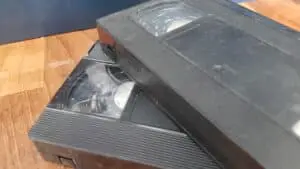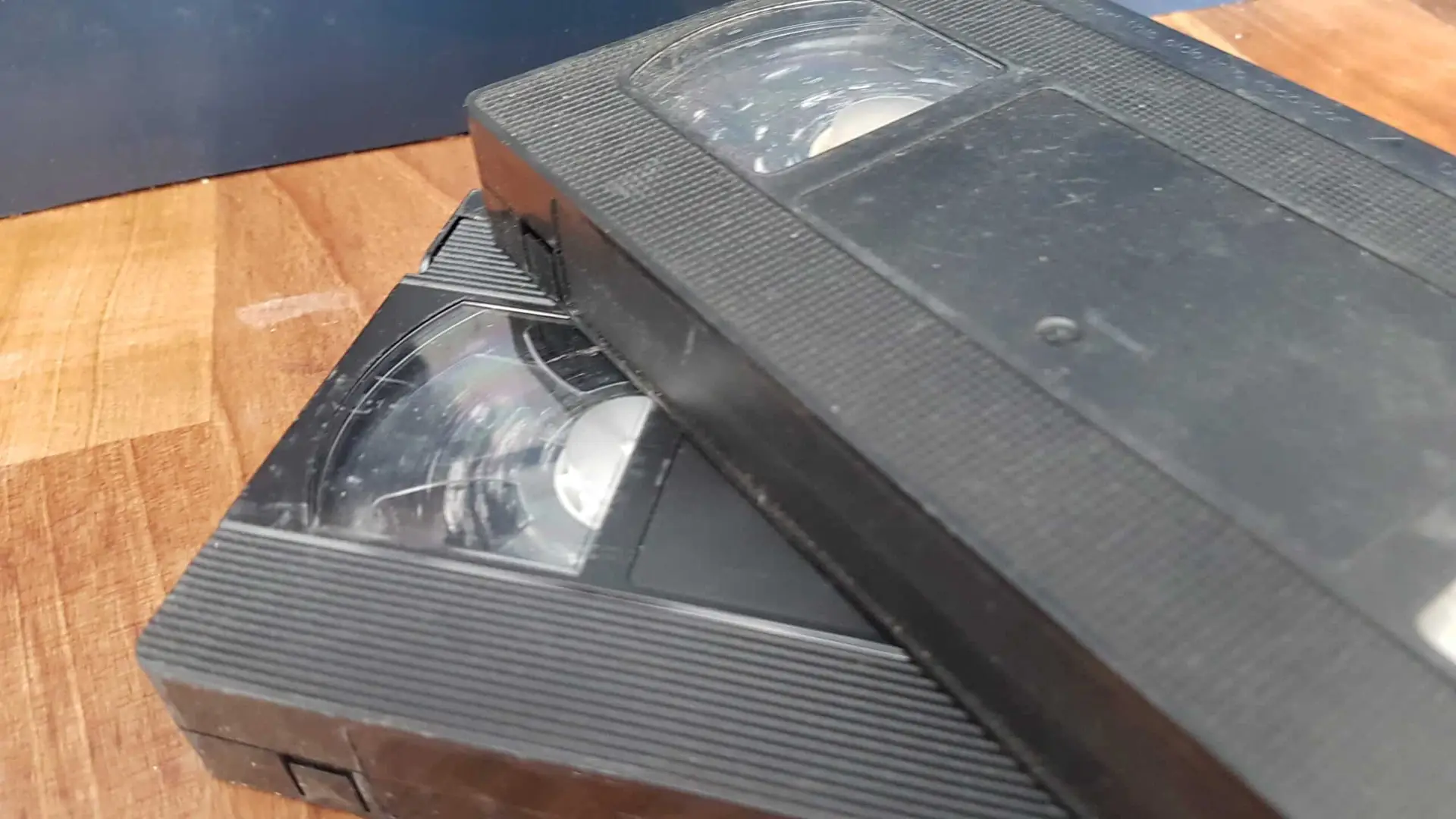

If you find mould on an old video tape, don’t play it. Isolate it from your other tapes, keep it somewhere dry and avoid opening or cleaning the cassette unless you have appropriate expertise and equipment. Mould can penetrate between layers of wound tape, contaminate a video recorder and potentially spread to other recordings. Canada
The safest immediate steps are:
- Don’t put the tape into a VCR or camcorder.
- Separate it from unaffected tapes.
- Avoid disturbing visible mould unnecessarily.
- Don’t spray the tape with household mould remover or cleaning products.
- Keep the affected cassette dry and protected.
- Have an important recording assessed and cleaned before attempting playback.
- Once safely cleaned, consider digitising it rather than repeatedly playing the original.
This is particularly important if the recording is unique. Your brief specifies mould cleaning as the relevant Supaphoto service for this article. Pasted markdown
How Can You Tell If a Video Tape Has Mould?
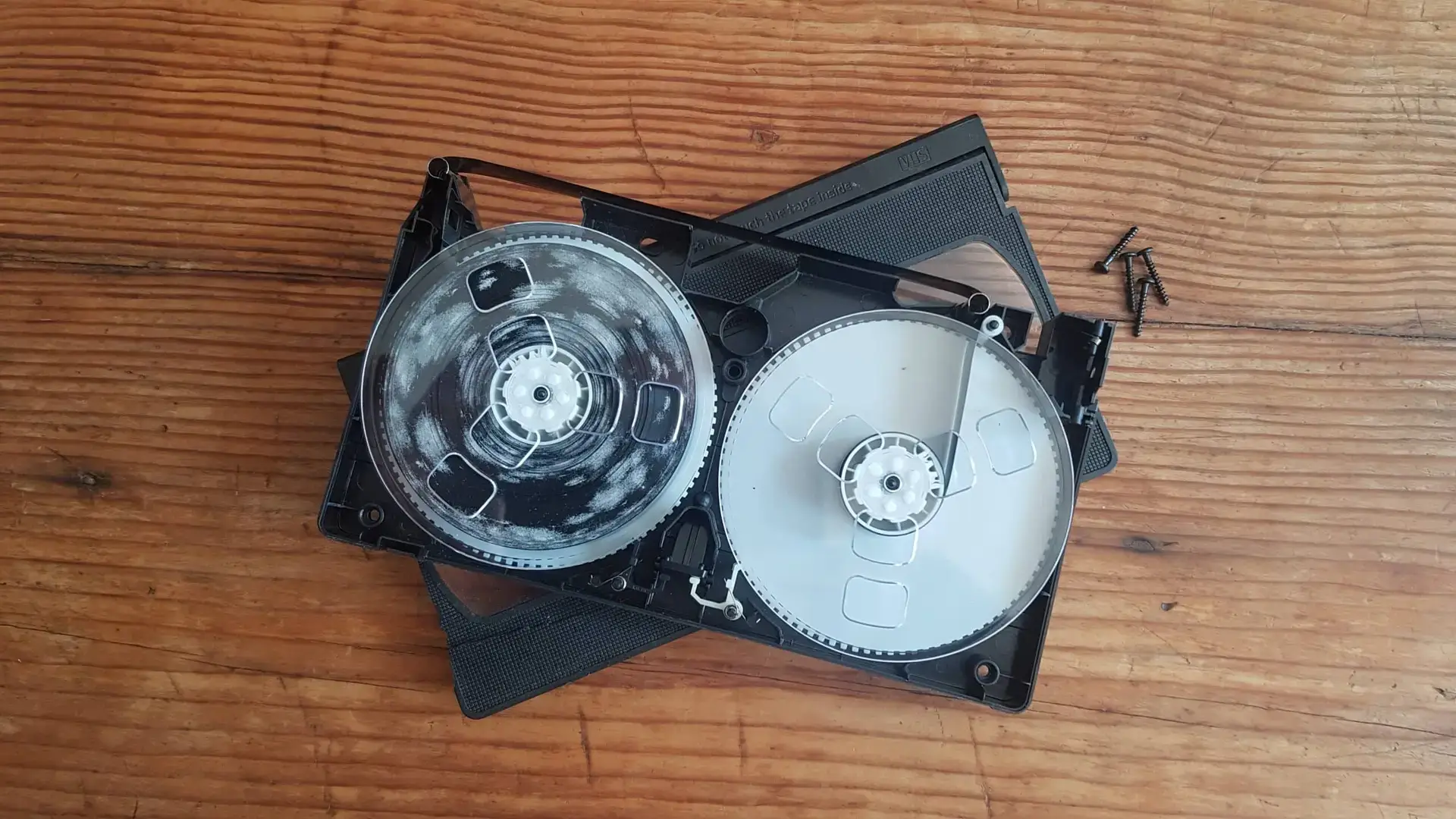
Mould on VHS and other magnetic tapes can appear as white, grey, black, brown or coloured fuzzy or thread-like deposits.
Look through the cassette’s clear window without opening the shell. Check the edges of the wound tape and the inside surfaces of the cassette.
Possible warning signs include:
- white or grey patches on the tape pack;
- fuzzy or thread-like growth;
- powdery deposits;
- dark spots;
- mould inside the cassette shell;
- a musty smell;
- staining or water marks on the cassette label;
- signs that the cassette has previously become wet.
The Canadian Conservation Institute (CCI) advises paying particular attention to the edges of the wound tape. It also notes that mould can vary in colour and that a musty smell may be noticeable when opening a storage container. Canada
Don’t automatically assume every white mark is mould. Dust, debris and deterioration of tape components can sometimes look suspicious. If you’re uncertain and the recording matters, assessment is safer than experimenting with it.
Why Does Mould Grow on VHS and Other Video Tapes?
Mould needs suitable environmental conditions to grow, and damp storage is one of the principal risks.
Old video collections are often discovered in precisely the places least suited to long-term magnetic-tape storage: garages, sheds, lofts, cupboards against damp walls and basements.
The CCI confirms that mould can develop on recording media when it has been wet or stored in damp conditions. With magnetic tape, the problem can be particularly difficult because mould can penetrate between the tightly wound layers. Canada
The Library of Congress recommends storing audiovisual material somewhere cool, relatively dry, clean and stable, and specifically advises avoiding attics, basements and other locations vulnerable to leaks and environmental extremes. The Library of Congress
If one cassette in a box is mouldy, therefore, inspect the others carefully. They have probably experienced similar storage conditions even if contamination isn’t immediately visible.
Should I Put a Mouldy VHS Tape in My VCR?
No. Don’t play a visibly mould-contaminated video tape in a VCR.
This is one of the most important precautions to take.
During normal VHS playback, the magnetic tape leaves its cassette and travels through the machine’s tape path and around the rotating video head drum.
If mould is present, playback can introduce contamination into the equipment.
The CCI explicitly advises that mould-contaminated tapes should never be played before remediation because they can contaminate playback equipment. Subsequent tapes placed into the same machine can then potentially be exposed unless the equipment is thoroughly cleaned. Canada
So don’t test a suspicious tape “just for a few seconds”.
If you’ve already played one, don’t immediately put an unaffected family recording into the same VCR. The machine itself may need inspection and cleaning.
Can Mould Spread From One Video Tape to Another?
Mould spores can contaminate surrounding materials, particularly when environmental conditions favour growth.
This is why affected tapes should be isolated from the rest of the collection.
CCI guidance recommends bagging and separating mould-contaminated tapes from unaffected material. Canada
If you’ve discovered one mouldy cassette in a box containing 30 family videos, don’t concentrate solely on the visibly affected one.
Inspect the whole collection.
Look at:
- cassette windows;
- tape-pack edges;
- cases;
- labels;
- cardboard boxes;
- shelving;
- the surrounding storage area.
Also address the underlying reason the mould appeared. Cleaning a cassette and returning it to the same damp cupboard simply recreates the conditions that caused the problem.
Can I Clean Mould From a Video Tape Myself?
For an important recording, professional cleaning is generally the safer option.
Cleaning magnetic tape isn’t equivalent to wiping mould from a plastic cassette case.
The recording is carried by magnetic material on a thin flexible tape. Mould may also be located deep within the wound tape pack rather than simply sitting on the visible outer edge.
The Library of Congress describes cleaning magnetic tape as a delicate undertaking that should be performed by preservation specialists. The Library of Congress
CCI guidance similarly warns that mould can penetrate between tape layers, requiring much more extensive cleaning than simply wiping or vacuuming the exposed surface. Canada
This distinction matters. Cleaning the outside of a cassette shell isn’t the same thing as safely cleaning the tape inside it.
If the recording is irreplaceable, don’t use it to practise a DIY technique.
Is Mould on Video Tape a Health Risk?
Potentially, yes.
Disturbing mould can release spores and contaminated dust into the air. Individual sensitivity varies, but preservation guidance treats mould remediation as something requiring appropriate precautions.
The CCI identifies mould-contaminated tapes as a potential health hazard and recommends expert remediation. Its guidance for handling mould includes suitable protective measures and controlled working environments where necessary. Canada
This is another reason not to open a visibly contaminated cassette at the kitchen table and start brushing it.
The risk isn’t only to the recording.
For a small amount of suspected contamination, minimise handling and isolate the cassette. For extensive contamination affecting a large collection, professional advice becomes more important.
Does Mould Mean the Recording Is Lost?
Not necessarily.
A mouldy cassette can look alarming, but visible contamination doesn’t automatically mean that the recorded pictures and sound have disappeared.
Whether a recording can be recovered depends on factors including:
- how extensive the contamination is;
- how deeply mould has penetrated the tape pack;
- whether the tape has become physically damaged;
- whether the magnetic coating remains stable;
- the condition of the cassette mechanism;
- the condition of the tape after cleaning;
- whether suitable playback equipment remains available.
The Library of Congress continues to research deterioration and remediation of magnetic media, including cleaning methods and physical problems such as sticky, shedding and squealing tapes. The Library of Congress
The key is to avoid making the condition worse.
A contaminated tape that might have been recoverable can become more difficult to transfer if it is repeatedly run through equipment while dirty or unstable.
Is Every Damaged-Looking Tape Suffering From Mould?
No.
Mould is only one of several problems that affect ageing magnetic video tape.
Old recordings can also suffer from:
- dirt and dust;
- damaged cassette shells;
- creased tape;
- broken tape;
- poor winding;
- deteriorating splices;
- binder degradation;
- shedding of magnetic material;
- playback tracking problems;
- contamination from previous storage.
For example, CCI documents magnetic material shedding from videotape as a deterioration problem associated with binder degradation. Playing a tape in this state can cause further material to flake away through friction. Canada
The Library of Congress also researches sticky-shed degradation, where deteriorated magnetic tape can leave deposits on playback equipment and interfere with the recorded signal. The Library of Congress
Correct diagnosis therefore matters. What looks like “dirt” may indicate a more serious physical problem.
Which Types of Video Tape Can Develop Mould?
The basic risk isn’t restricted to VHS.
Magnetic video formats stored in damp or unsuitable conditions can potentially become contaminated, including:
- VHS;
- VHS-C;
- S-VHS;
- Video8;
- Hi8;
- Digital8;
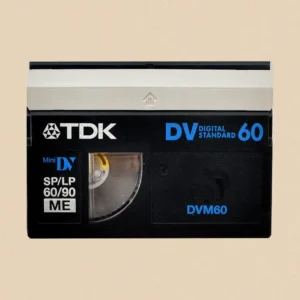
- MiniDV;
- Betamax;
- Betacam;
- U-matic and other magnetic tape formats.
Some cassette formats are harder to inspect visually than others because very little of the tape pack is visible.
If several different formats have been stored together in a damp environment, don’t assume the smaller cassettes are unaffected simply because you can’t immediately see contamination.
Their storage history is an important clue.
How Is Mould Professionally Removed From Video Tape?
The exact process depends on the format, contamination and physical condition of the recording.
Professional treatment normally begins with assessment and isolation, rather than immediate playback.
A specialist may need to deal with contamination on the cassette shell, tape pack and the tape itself. Because mould can penetrate between wound layers, effective remediation can require controlled cleaning of more than the exposed outer surface. Canada
The objective isn’t simply to make the cassette look clean.
It is to make the recording sufficiently safe and stable for controlled playback and transfer without unnecessarily damaging the magnetic surface or contaminating equipment.
Supaphoto provides specialist cleaning for contaminated and mould-affected magnetic tapes, which can be particularly appropriate when the recording is valuable or you don’t have suitable tape-handling equipment.
Once cleaned, the priority should normally be to capture the recording rather than subject the ageing original to unnecessary repeated playback.
Should a Mouldy Tape Be Digitised After Cleaning?
Yes, if the recording is important and can be safely recovered.
Cleaning addresses contamination. Digitisation addresses the longer-term problem that the recording still exists on ageing magnetic media requiring increasingly old playback equipment.
A sensible preservation workflow is:
- Assess the cassette.
- Deal with mould or other contamination.
- Inspect the tape’s physical condition.
- Prepare suitable playback equipment.
- Transfer the recording.
- Check the resulting digital file.
- Create backup copies.
- Retain the original tape under appropriate storage conditions.
Don’t discard the original immediately after transfer. A future transfer system or restoration technique may produce a better result.
Digitisation gives you a practical viewing copy while reducing the need to repeatedly handle and play the original.
How Should Old Video Tapes Be Stored to Prevent Mould?
For home collections, aim for a cool, dry, clean and stable environment.
The Library of Congress recommends roughly 35–40% relative humidity for home audiovisual collections and advises keeping recordings away from environmental extremes, direct light, radiators, vents and sources of strong magnetic fields. Cassettes should be stored upright on their long edge. The Library of Congress
Good practice includes:
- keeping tapes in clean protective cases;
- storing cassettes upright;
- avoiding garages, sheds and damp basements;
- avoiding hot lofts;
- keeping tapes away from external walls prone to condensation;
- checking storage areas for leaks;
- keeping the collection away from radiators;
- periodically inspecting valuable recordings.
If tapes have previously been stored somewhere damp, moving them to better conditions is worthwhile even when no mould is currently visible.
Common Mistakes to Avoid With Mouldy Video Tapes
When people discover an old family recording, the natural temptation is to see whether it still plays. With visible mould, that can be exactly the wrong first step.
Avoid:
- putting the tape straight into a VCR;
- repeatedly rewinding or fast-forwarding it;
- blowing mould from the cassette;
- aggressively brushing the tape;
- spraying household mould cleaner inside the cassette;
- using water or general-purpose cleaning fluid;
- dismantling a cassette without knowing how to reassemble it;
- testing subsequent clean tapes in a contaminated machine;
- returning treated tapes to damp storage;
- throwing away a tape simply because it looks mouldy.
Most importantly, don’t confuse cleaning the cassette shell with cleaning the magnetic tape itself.
The latter requires much greater care.
What Should You Do With a Valuable Mouldy Video Tape?
If the tape contains something replaceable, you can make a pragmatic decision about whether recovery is worthwhile. If it contains the only recording of a wedding, childhood, deceased relative or historically important event, take a more cautious approach.
Don’t play it. Isolate it. Keep it dry. Avoid unnecessary handling and have its condition assessed before transfer.
Mould doesn’t automatically mean the recording has been lost, but inappropriate playback or DIY treatment can create additional problems. Preservation organisations recommend specialist handling of contaminated magnetic media precisely because both the tape and playback equipment can be affected. Canada
Once a tape has been successfully cleaned and transferred, keep checked digital copies in more than one location and store the original properly. Ultimately, for irreplaceable or badly contaminated recordings, it makes sense to choose a professional company with years of experience dealing with these types of tapes, such as Supaphoto Ltd.