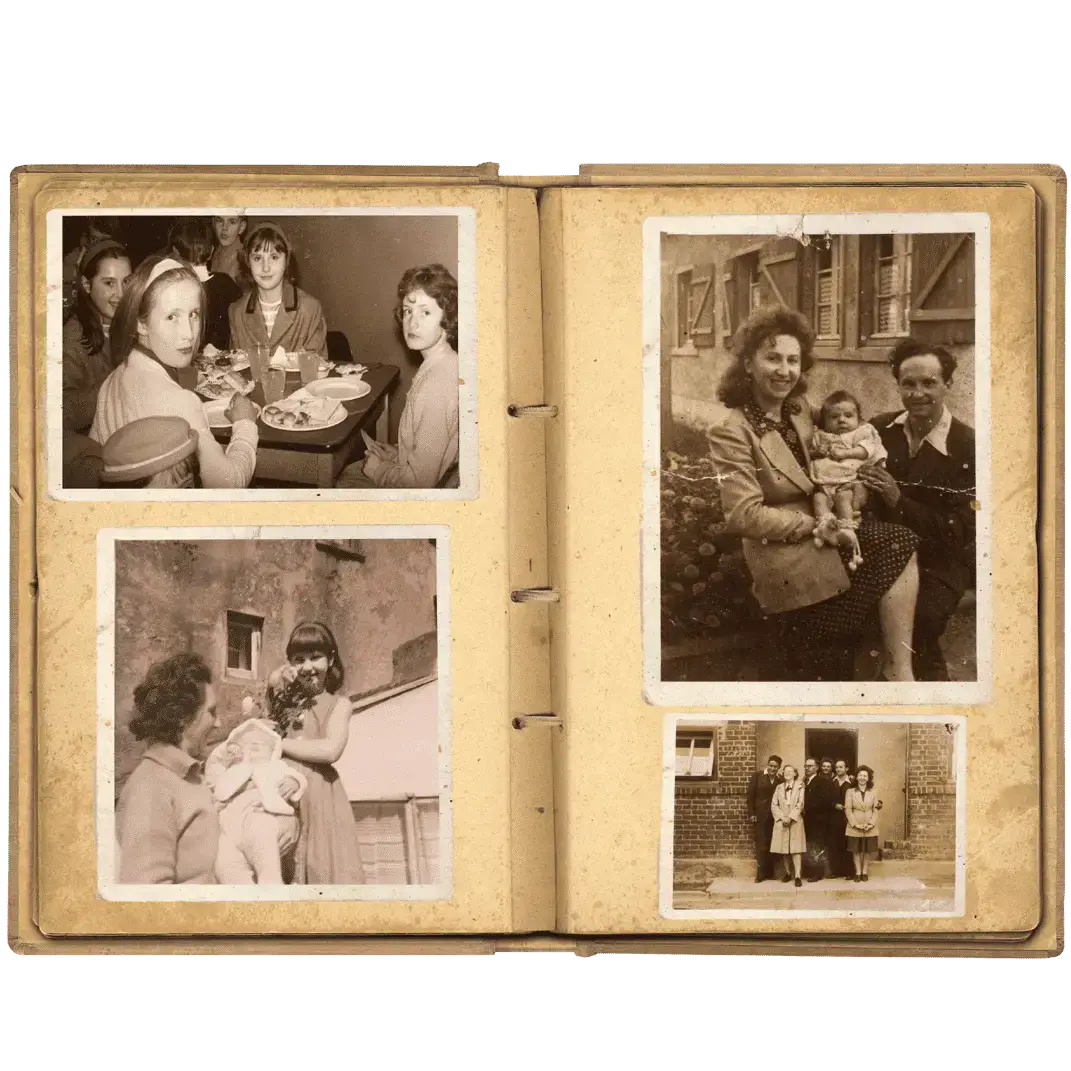

If old photos are stuck together or attached to glass, do not pull them apart by force. The photographic image layer can tear, lift or remain attached to the other surface. If the photographs are valuable or irreplaceable, the safest approach is to leave them undisturbed and seek advice from a photograph conservator or specialist.
Why do old photos stick together or to glass?
Photographs can become stuck when moisture, humidity, heat or prolonged contact causes the photographic image layer to adhere to another surface.
Many traditional photographic prints have an image layer containing gelatin. When this layer becomes damp, it can soften or swell. If the photograph is pressed against glass, another photograph, an album page or another surface at the same time, the layers can become adhered.
This can happen after:
- Water damage or flooding
- Storage in damp conditions
- High humidity
- Condensation inside a frame
- Long-term contact with glass
- Photographs being stored tightly together
- Poor-quality albums or storage materials
- Previous exposure to heat and moisture
The National Archives explains that damp conditions can cause photographs to stick to glass, while its guidance on stuck or fused materials warns against forcing items apart when they will not release with light pressure.
The problem is not always immediately obvious. A photograph may appear dry while still being vulnerable because the image layer has already bonded to the surface.
The most important rule
If a photograph does not separate easily, stop.
Trying to peel it away can remove part of the photographic image along with the glass, paper or neighbouring photograph.
The Library of Congress states that photographs stuck to glass or to each other can be difficult, and sometimes impossible, to detach without serious damage. It recommends consulting a photograph conservator where necessary.
What should you do if photographs are stuck together?
First, avoid trying to separate the photographs immediately.
If they are dry and simply resting together, carefully assess whether they are actually adhered. Do not slide fingernails, knives or other objects between the prints.
If there is resistance when you try to separate them, do not continue.
This is particularly important if the photographs are:
- Unique family photographs
- Very old
- Historically significant
- Already damaged
- Faded or brittle
- Valuable to your family
- Part of a collection that you want to preserve
The National Archives advises that coated papers and photographs can become stuck together and says they may be separated only when they release without resistance. If they do not release with light pressure, they should not be forced apart.
What not to use
Do not try to loosen stuck photographs with:
- Water
- Washing-up liquid
- Cleaning sprays
- Solvents
- Alcohol
- Oil
- Adhesive removers
- Hairdryers
- Irons
- Heat guns
- Knives or blades
- Credit cards or other rigid objects
A method that works for an ordinary household object can permanently damage a photographic emulsion.
The National Archives specifically warns that DIY cleaning of photographic materials can cause serious and irreversible damage.
What if a photo is stuck to glass?
A photograph stuck to glass is particularly difficult because the image surface may have bonded directly to the glazing.
This can occur when a framed photograph is exposed to moisture or high humidity. The Library of Congress notes that a photograph should ideally be separated from glazing with a window mat or spacers so that the image surface does not touch the glass.
If the photograph is already stuck to the glass, do not simply pull the photograph away from the frame.
You could remove the frame from around the photograph if doing so does not disturb the stuck area, but do not attempt to peel the photograph from the glass.
If the photograph is important, the safest course is to have it assessed by someone experienced in photographic conservation.
The National Park Service gives similar advice for valuable photographs stuck to frame glass: do not pull them apart and consult a professional conservator.
Why can removing a stuck photo cause damage?
The visible picture is not simply ink sitting on the surface of a sheet of paper.
Photographic prints are composite objects. They can contain a support layer, image-forming material and protective or binding layers. The National Archives describes photographic materials as composite objects consisting of a support layer coated with a light-sensitive emulsion.
When that image layer becomes attached to glass or another photograph, separation can cause:
- Loss of the image layer
- Scratches
- Tearing
- Cracking
- Creasing
- Surface abrasion
- Areas of missing image
- Permanent distortion
- Curling
- Pieces of one photograph remaining attached to another
The damage may happen in seconds, even when the photograph initially appears strong.
That is why resistance is a warning sign.
What if the photos became stuck after getting wet?
Wet photographs require a different approach from photographs that have simply been stored together for years.
Water can cause photographic materials to stick together as they dry. If the water was contaminated, such as after flooding or sewage damage, there are also health and safety considerations.
The National Park Service provides specific guidance for recovering wet photographs and recommends professional advice for valuable photographs stuck together or stuck to glass.
The National Archives similarly advises that photographs which have stuck or fused together should not be forced apart when there is resistance.
If the photographs are still wet, mould is developing or the collection has suffered significant water damage, avoid improvising a treatment based on advice intended for a different photographic process.
Different photographic materials can react differently to water.
If mould is present
Mould requires additional caution.
Do not brush or scrub mould from a valuable photograph, particularly indoors, as this can spread spores and potentially damage the photographic surface.
For a valuable or extensive collection affected by mould or water, specialist advice is appropriate.
Can you separate photographs that are stuck to an album?
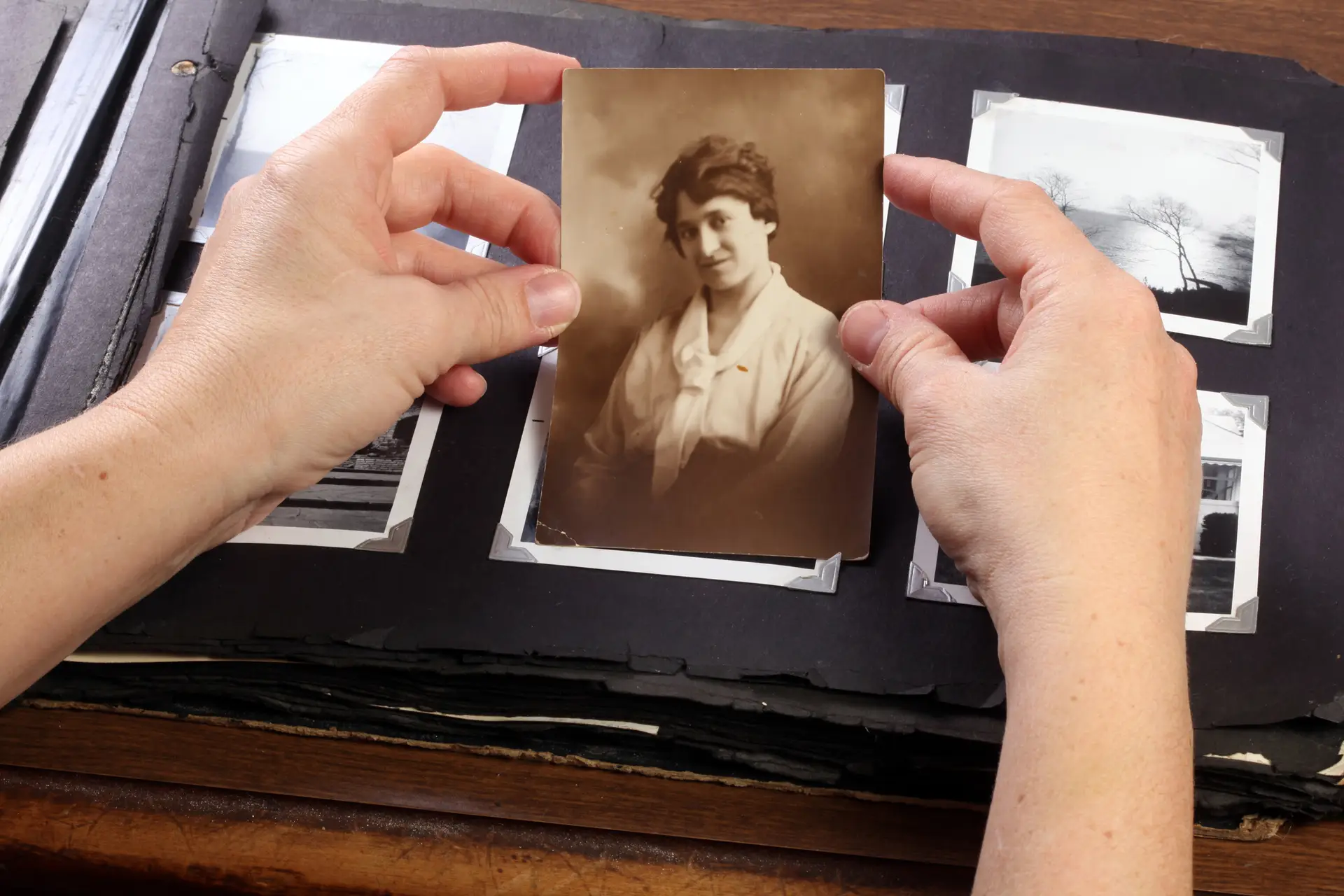
This depends on how the photograph is attached.
A photograph may be:
- Lightly attached to an album page
- Held with photo corners
- Attached with adhesive
- Completely bonded to the page
- Damaged when someone previously attempted removal
The Library of Congress gives specific guidance for photographs stuck to album pages. In some circumstances, cutting around the photograph and preserving the section of album page with it may be safer than trying to remove the print. If the photograph cannot be released without damage, it recommends consulting a photograph conservator.
This illustrates an important preservation principle:
The safest way to preserve a photograph is not always to remove it from whatever it is attached to.
Sometimes preserving the photograph together with its original backing or album page prevents additional damage.
Should you use heat to remove a photograph from glass?
No.
Applying heat may seem like a logical way to soften an adhesive, but photographic materials are not ordinary household paper products.
Heat can affect photographic layers and may worsen existing deterioration. It can also introduce additional distortion or damage.
Do not use a hairdryer, iron, heat gun or other heat source in an attempt to release a photograph from glass.
If a photograph is firmly bonded to glazing, professional assessment is much safer than experimenting with heat.
What if the photograph is valuable but already damaged?
This is when professional photographic conservation becomes particularly useful.
The Library of Congress recommends consulting a photograph conservator when an item is particularly valuable, has progressing damage, is handled frequently or presents a complicated preservation problem.
A conservator can assess the photograph and determine whether separation is possible, whether it should remain attached to the surface, and what treatment might be appropriate.
The aim is not necessarily to make the photograph look new.
For historic or particularly important photographs, preserving the surviving original material can be more important than achieving a visually perfect result.
Can a stuck photograph be restored digitally?
Sometimes.
If a photograph can be safely separated or otherwise imaged without causing additional damage, a high-quality digital copy can provide a valuable preservation and restoration opportunity.
Digital restoration can potentially address visible problems such as:
- Fading
- Colour shifts
- Scratches
- Marks
- Tears
- Missing areas
- Contrast problems
However, digitisation cannot magically recover photographic information that has been completely destroyed.
If part of the image remains attached to glass, for example, the missing information may not be recoverable simply through software.
The quality of the final restoration therefore depends heavily on the condition of the original and how much image information survives.
Why digitise stuck or fragile photographs?
Digitisation can reduce the need to handle an original repeatedly.
Once a suitable digital copy exists, family members can view and share the image without continually taking the physical photograph out of storage.
The Library of Congress recommends appropriate digitisation practices for photographic collections and also stresses the importance of maintaining suitable physical storage for the originals.
Digitisation should therefore be viewed as part of a wider preservation strategy rather than as a reason to throw the original away.
Keep the original whenever practical.
It remains the source material from which the digital version was created and may contain physical or contextual information that a digital copy cannot reproduce.
How should you store photographs after they have been separated?
Once photographs have been safely separated, storage conditions become an important part of old photo preservation.
The Library of Congress recommends a relatively cool, dry and stable environment for photographic materials and advises avoiding locations such as attics, basements, radiators and areas prone to environmental fluctuations.
Good storage practice includes:
- Keep photographs away from direct sunlight.
- Avoid damp or unusually humid areas.
- Avoid excessive heat.
- Handle photographs carefully.
- Do not use self-adhesive tape or glue.
- Avoid poor-quality plastic storage materials.
- Use suitable photographic storage materials.
- Keep photographs away from sources of condensation.
- Store particularly fragile items separately where appropriate.
The National Archives also warns that unsuitable storage materials, including PVC plastics and some adhesive albums, can contribute to deterioration.
What if photographs are already stuck together?
If the photographs are genuinely adhered rather than simply touching, the safest approach is usually to leave them together rather than risk tearing the image layer.
You can inspect the edges without forcing them apart, note how many photographs are involved and photograph the collection from the outside for your records.
If the photographs are important, seek specialist advice before attempting separation.
This is especially true when the photographs are:
- Family originals with no duplicate
- Historic prints
- Very old photographic processes
- Water damaged
- Mould affected
- Stuck to glass
- Stuck in an album
- Cracking, flaking or otherwise unstable
Who Can Help With Photographs That Are Stuck?
Supaphoto for example provide a photo restoration service covering older and damaged photographs, including work involving fading, colour correction, scratches and other forms of photographic damage. The service involves digitising photographs and restoring the resulting digital images rather than altering the original photograph itself.
rediscovering precious memories through photo restoration
When should you ask for professional help?
Professional assessment is particularly sensible if:
- The photograph is irreplaceable.
- It is stuck firmly to glass.
- Several photographs are bonded together.
- The image layer is flaking.
- The photograph has suffered water damage.
- Mould is present.
- The photograph is historically significant.
- You are unsure what photographic process you are dealing with.
- Previous attempts have already damaged the print.
A specialist can assess the risk before treatment rather than discovering the risk after the photograph has been damaged.
How can you prevent photographs sticking in the future?
Prevention is much easier than trying to repair a photograph after it has become bonded to another surface.
When framing an important photograph, make sure the image does not sit directly against the glazing. The Library of Congress recommends using a window mat or spacers to prevent contact between the photograph and glass.
For photographs in storage:
- Use suitable photographic storage materials.
- Keep photographs in a stable environment.
- Avoid damp areas.
- Keep them away from direct sunlight.
- Avoid adhesive albums and unsuitable tapes.
- Minimise unnecessary handling.
- Consider digitising particularly important photographs.
Regularly checking stored collections can also help you spot problems before photographs become severely damaged.
Preserving old photographs before the problem gets worse
Finding a collection of photographs stuck together can be worrying, but the worst thing you can do is rush into trying to separate them.
For old photo preservation, careful handling is often more important than immediate intervention. If photographs separate freely without resistance, they may be relatively straightforward to handle. If they are firmly bonded, stop and seek appropriate advice.
For irreplaceable family photographs, creating a digital copy can also provide an accessible version for family members while the original remains safely stored.
Supaphoto’s photo restoration service can be relevant when photographs need digital restoration for problems such as fading, scratches, colour changes or other visible damage. The condition of photographs stuck to glass or to each other should be considered before any attempt is made to separate them.
The key principle is simple: don’t sacrifice the original photograph in an attempt to save it. When separation could damage the image, preserving the photograph in its current state and obtaining specialist advice may be the safest option.
Frequently Asked Questions
How do I separate photos stuck together?
Do not force photographs apart. If they do not separate with very light pressure, leave them together and seek specialist advice, particularly if they are valuable or irreplaceable.
How do I remove a photo stuck to glass?
Do not pull or peel the photograph from the glass. Photographs can become seriously damaged during separation, so a firmly attached or valuable photograph should be assessed by a photograph conservator.
Can I use water to separate stuck photographs?
Do not assume that water is safe. Different photographic processes respond differently to moisture, and some can suffer serious damage. If the photographs are valuable, seek specialist advice before applying any liquid.
Why do photographs stick to glass?
Moisture and humidity can cause the photographic image layer to swell and become attached to glass. This is particularly associated with photographs that have been exposed to damp conditions while framed.
Can stuck photographs be restored?
Potentially, but the first priority is preventing further damage. Once a photograph can be safely imaged, digital restoration may improve visible damage, colour changes or other defects. The result depends on how much original image information remains.
Should I throw away photographs that are stuck together?
No. A photograph that appears badly damaged may still contain valuable information. If it is irreplaceable, avoid forcing it apart and seek appropriate preservation or conservation advice.
TL;DR
For old photo preservation, never force photographs apart when they are stuck together or attached to glass. Moisture and humidity can cause photographic layers to bond, and attempting to remove them can permanently destroy the image. Preserve the originals, improve their storage conditions and seek specialist advice where necessary.
How Long Do Audio Cassette Tapes Last? Signs Your Tapes Are Deteriorating
Audio cassette tapes can remain playable for decades, but there…

How Long Will a DVD Last For?
How long will a DVD last for? A DVD can…
VHS Video Tape Cleaner
VHS Video Tape Cleaner: How to Clean Old Tapes Safely…
Can I Watch Video Tapes Without a Video Machine Player?
Watch Video Tapes – You’ve just stumbled upon a dusty…