
Audio cassette tapes can remain playable for decades, but there is no reliable expiry date that applies to every tape. Their lifespan depends on the tape formulation, storage conditions, handling and playback history. Heat, humidity, contamination and physical damage can all contribute to deterioration, so valuable recordings are worth assessing before problems become difficult to recover.
How long do audio cassette tapes last?
There is no single number of years that tells you when an audio cassette will fail. Magnetic tape can age differently depending on its materials and the conditions it has experienced.
Preservation organisations caution that the usable life of magnetic tape is difficult to predict accurately. Even tapes of a similar age can be in very different condition because of differences in manufacture, storage and previous use.
That means age alone is not a good reason to assume a cassette is either safe or unsafe to play.
A better approach is to consider:
- How old the cassette is
- How it has been stored
- Whether it has been played frequently
- Whether it has been exposed to heat or damp
- Whether the cassette shell or tape is damaged
- Whether it shows signs of contamination
- Whether the recording has already developed playback problems
If a cassette contains an irreplaceable recording, it makes sense to consider preservation before you notice serious deterioration.
At a glance: signs of an ageing cassette
| Warning sign | What it may indicate |
|---|---|
| Muffled or distorted sound | Tape, cassette mechanism or playback problems |
| Squealing during playback | Possible tape deterioration or excessive friction |
| Sticking or residue | Possible deterioration of the tape or binder |
| Loose, creased or tangled tape | Physical damage |
| Mould or contamination | Unsuitable storage conditions |
| Reels refusing to turn | Mechanical or tape-related problems |
| A recording suddenly playing differently | A change that warrants further investigation |
Why do old audio cassette tapes deteriorate?
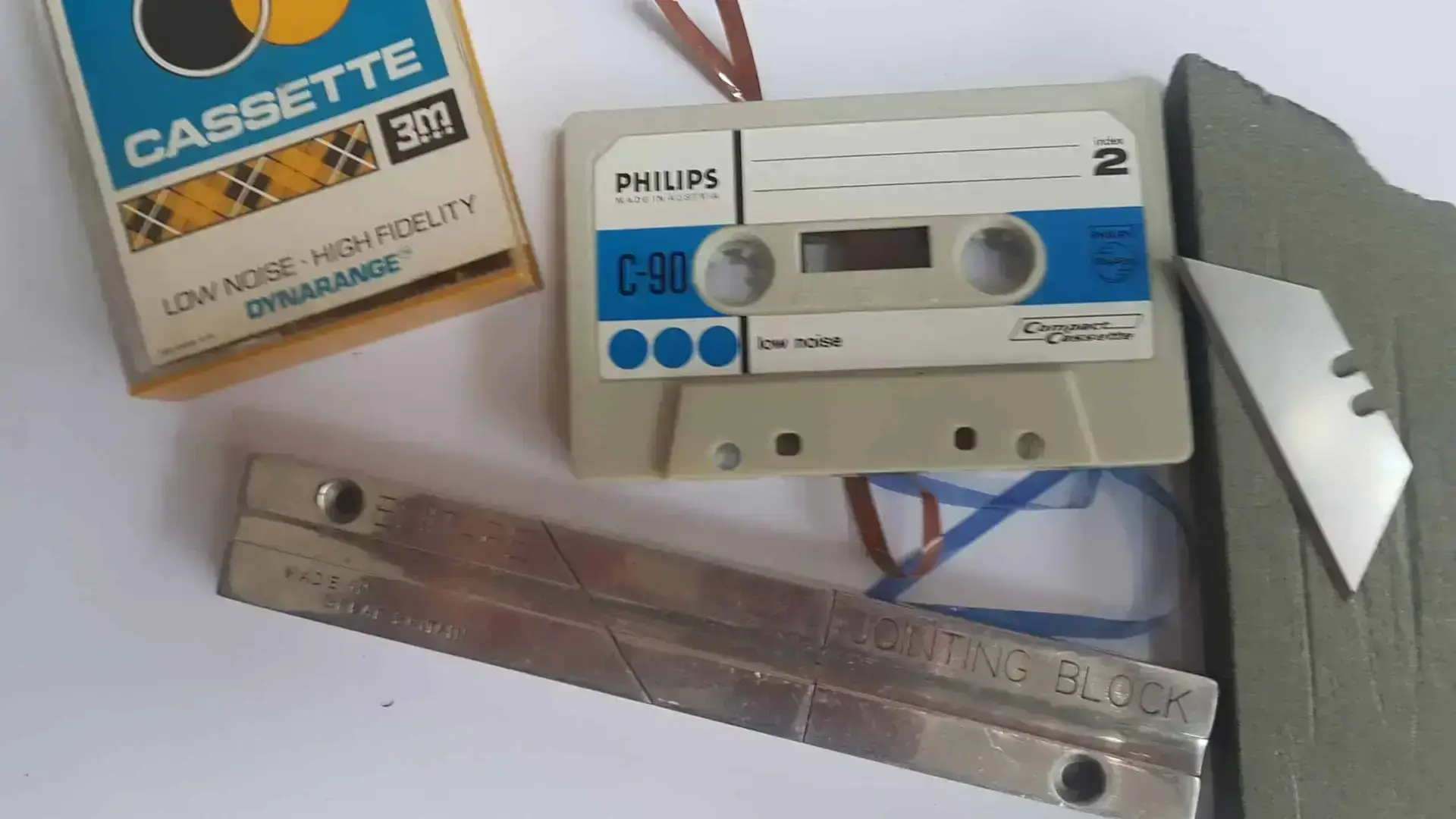
A compact cassette contains magnetic tape coated with a recording layer, together with the mechanical components that guide and move the tape through a cassette player.
The recorded information is held magnetically on the tape. Over time, both the tape and its mechanical surroundings can be affected by environmental conditions and physical use.
The Canadian Conservation Institute explains that magnetic tape deterioration can involve chemical changes in the binder that holds magnetic particles to the tape base, as well as physical damage and contamination. It also notes that cassette tapes and reel-to-reel tapes do not necessarily deteriorate in exactly the same way.
The main factors affecting old cassettes include:
Heat
Higher temperatures can accelerate chemical reactions within magnetic tape. Keeping cassettes away from radiators, boilers, direct sunlight and other heat sources can therefore help slow deterioration.
Humidity and damp
Moisture can contribute to chemical deterioration and create conditions in which mould can develop. Damp storage such as sheds, garages and some loft spaces can therefore be problematic for important recordings.
Temperature and humidity fluctuations
A consistently stable environment is preferable to somewhere that repeatedly becomes very hot, cold, damp or dry. Changes in environmental conditions can affect the physical behaviour of wound tape and increase the stresses placed on the material.
Repeated playback
Every playback involves physical movement of the tape through the cassette mechanism. For an irreplaceable recording, unnecessary repeated playback is therefore best avoided.
Dust and contamination
Dust and debris can interfere with tape movement and playback equipment. Mould can be particularly problematic because it may affect the tape layers and require specialist cleaning.
Strong magnetic fields
Magnetic tape should be kept away from strong magnetic sources. Preservation guidance specifically warns against storing magnetic tapes close to equipment such as loudspeakers, motors and transformers.
Six signs your audio cassette tapes may be deteriorating
Some problems are visible before playback. Others only become apparent when the cassette is played.
1. The recording sounds muffled or distorted
A recording that has noticeably changed may indicate a problem with the tape, although the cassette mechanism or playback equipment can also affect sound quality.
If one cassette suddenly sounds worse than it did previously, take note. If several cassettes played on the same machine all sound poor, the equipment itself should also be considered.
For an important recording, avoid repeatedly playing the cassette simply to investigate the problem.
2. The cassette squeals during playback
Squealing or unusual noises can be a warning sign, particularly if the cassette previously played normally.
Some forms of magnetic tape deterioration can cause increased friction or interaction between the tape and the playback path. The Canadian Conservation Institute identifies squealing as one possible sign of binder degradation in affected magnetic tapes.
If a valuable tape begins squealing, stop rather than repeatedly trying to get through the recording.
3. The tape sticks or leaves residue
Some magnetic tapes can suffer from binder deterioration, sometimes called sticky shed syndrome.
The binder is the material that holds magnetic particles to the tape base. When it deteriorates, the tape can become sticky and may shed material. This can interfere with playback and, in serious cases, cause further physical damage.
The condition is more commonly associated with certain reel-to-reel tapes than ordinary cassette tapes, so it should not automatically be assumed that every sticky cassette has sticky shed syndrome.
If you notice sticking or residue, do not force the tape through a cassette player.
4. The tape or cassette shell is physically damaged
Before playing an old cassette, look through the clear window and examine the shell.
Look for:
- Creased or folded tape
- Tape that has escaped from the cassette
- An uneven or loose tape wind
- Cracks in the cassette shell
- Broken or displaced components
- Dirt or debris
- Signs of mould or other contamination
A damaged cassette can cause problems during playback and may damage the tape or equipment.
5. The reels do not turn correctly
If the reels appear stiff, jammed or reluctant to move, do not force them.
A cassette contains several small mechanical components, and a problem with the housing does not necessarily mean that the recorded tape itself is beyond recovery. Attempting to force a jammed cassette can, however, turn a repairable problem into additional tape damage.
6. A previously playable cassette suddenly becomes difficult to play
This is one of the most useful warning signs.
If a cassette that once played normally now stops, squeals, sticks, distorts or behaves differently, the change itself matters.
For recordings that cannot be replaced, this is a good point to stop experimenting and consider professional assessment.
How should you store old audio cassette tapes?
Good storage will not make magnetic tape last indefinitely, but it can reduce some of the environmental stresses that contribute to deterioration.
For home collections, the Library of Congress recommends a cool, relatively dry, clean and stable environment and advises keeping magnetic tape away from strong magnetic fields. It also recommends storing cassettes upright.
For important cassettes:
- Keep them indoors in a stable environment.
- Store them vertically rather than in a loose pile.
- Keep them in suitable protective cases.
- Keep them away from radiators and direct sunlight.
- Avoid damp areas.
- Keep them away from strong magnetic sources.
- Protect them from dust and dirt.
- Avoid unnecessary playback.
- Do not leave them inside a cassette player when not in use.
The US National Archives gives similar guidance for audio magnetic tapes, including vertical storage in their boxes and separation from sources of electromagnetic fields.
You do not need to turn your home into an archive facility. For a personal collection, avoiding obvious environmental extremes and maintaining a reasonably stable indoor environment is a sensible starting point.
Should you play an old cassette to see if it still works?
Not always.
If the recording is simply an old commercial cassette that can easily be replaced, testing it may be relatively straightforward.
The situation is different when the tape contains the only recording of someone’s voice, a family interview, a childhood recording or another irreplaceable event.
Start with a visual inspection. If the cassette shows mould, serious contamination, damaged tape, a damaged shell or other obvious problems, avoid putting it straight into a player.
The Library of Congress advises that cleaning magnetic tape is a delicate procedure that should be undertaken by preservation specialists familiar with the format.
Can deteriorating audio cassette tapes be repaired?
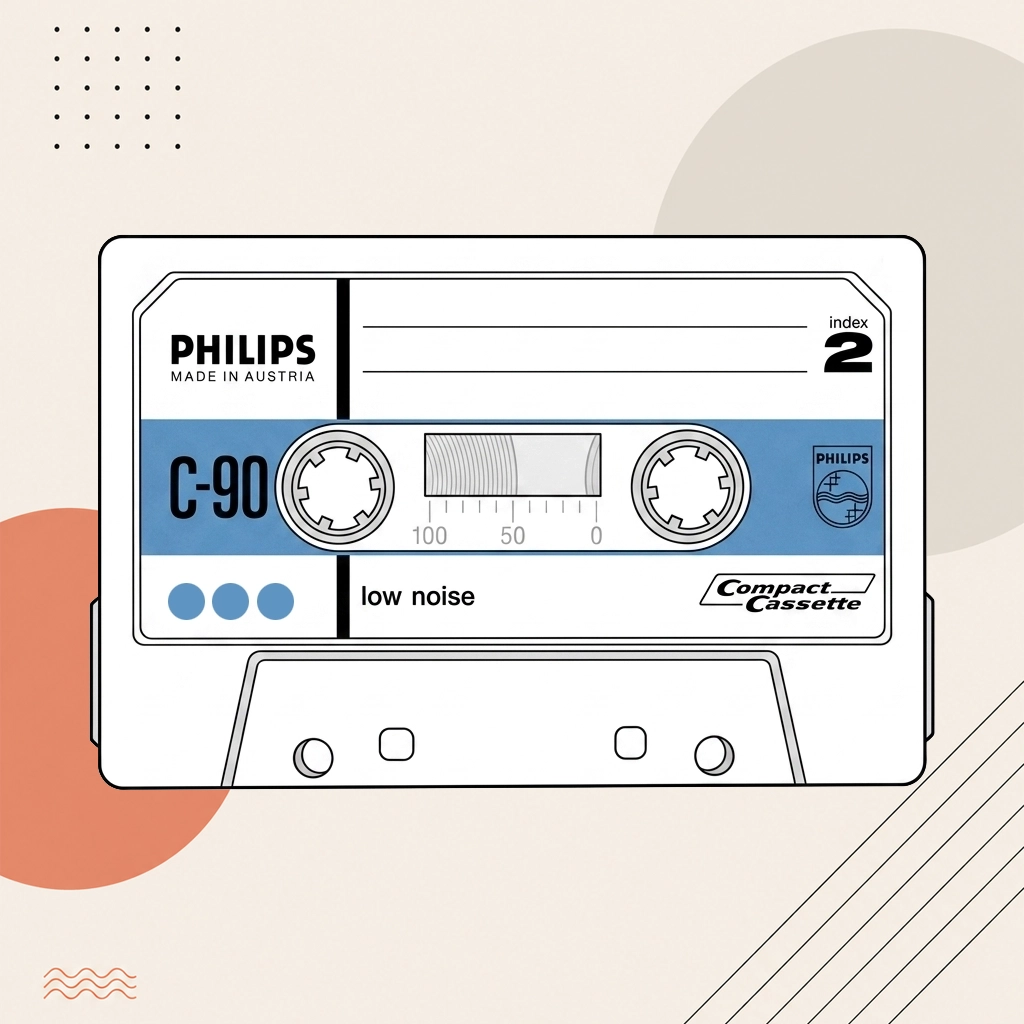
Sometimes, yes, but the appropriate treatment depends on the fault.
A damaged cassette may have a mechanical problem, physical tape damage, contamination or a problem that affects the tape’s ability to pass safely through the playback machine.
Some deteriorated magnetic tapes can receive specialist treatment that temporarily makes them playable so their contents can be transferred. This does not necessarily reverse the underlying chemical deterioration.
For that reason, avoid treating all tape problems in the same way.
Do not:
- Put an important cassette in a domestic oven.
- Apply household cleaning products to the tape.
- Pull stuck tape through the shell.
- Force jammed reels.
- Attempt repairs with ordinary adhesive tape.
- Repeatedly play a cassette that is already showing signs of failure.
If a cassette is damaged but contains important material, specialist assessment can establish what can safely be done.
When should you digitise old audio cassette tapes?
If a cassette contains a recording you cannot replace, there is a strong preservation argument for transferring it while it remains recoverable.
Digitisation has two important advantages.
First, it gives you an accessible copy that can be played without repeatedly handling the original cassette. Secondly, it reduces your dependence on ageing analogue playback equipment.
This equipment issue is becoming increasingly relevant. The Canadian Conservation Institute notes that preserving magnetic recordings involves not only the condition of the media but also the continued availability of equipment capable of reading it.
IASA likewise highlights the declining availability of working magnetic-tape replay equipment as an important preservation concern.
Digitisation does not mean that you should automatically throw away the original cassette. If it has personal, historical or family significance, retain it in suitable storage alongside your digital copies.
What should you do with a box of old cassettes?
You do not have to transfer everything at once.
A practical approach is to work through the collection in order of importance.
Start with the irreplaceable recordings
Prioritise:
- Family voices
- Interviews
- Personal messages
- Oral histories
- Recordings of family events
- Unique music performances
- Recordings with historical or sentimental value
Then assess their condition
Inspect the cassettes without immediately playing them. Separate anything that appears mouldy, damaged, contaminated or mechanically problematic.
Improve the storage conditions
Move cassettes away from damp, heat and large environmental fluctuations. Keep them protected in their cases and stored upright.
Create digital copies
For important recordings, consider transferring them before further deterioration makes playback more difficult.
Keep more than one digital copy
Digitisation is not the end of preservation. Important digital recordings should themselves be backed up and monitored rather than relying on a single copy stored on one computer or device.
How can we help with damaged audio cassettes?
If an old cassette is damaged, simply putting it into a player may not be the best first step. For example, we provides an audio cassette repair service for tapes that need attention before playback or digitisation. The service information explains that cassettes are inspected and that repair approaches depend on the condition of the recording.
This can be particularly relevant where a cassette is broken, twisted, torn, jammed or otherwise difficult to play. We also explains that repaired recordings can subsequently be considered for digital conversion where appropriate.
Preserving old audio cassette tapes
There is no dependable date when every cassette suddenly stops working. Some tapes remain playable for decades, while others deteriorate earlier because of their materials, storage history or physical condition.
The most useful warning signs are changes in playback, squealing, sticking, residue, physical damage, contamination and mechanical problems.
If a recording is irreplaceable, avoid unnecessary playback, store the cassette sensibly and consider digitising it while it can still be read safely. Keeping the original is also worthwhile where the cassette has personal or historical significance.
For cassettes that are damaged or showing signs of deterioration, professional assessment can help determine whether repair or specialist handling is appropriate. Supaphoto Ltd has experience working with older audio cassette recordings and provides repair and digitisation services where required.
Frequently Asked Questions
How long do audio cassette tapes last?
There is no fixed lifespan for every cassette. Some remain playable for decades, while others deteriorate sooner depending on their formulation, storage conditions, handling and playback history.
What are the first signs that a cassette tape is deteriorating?
Look for changes in sound, squealing, sticking, residue, damaged or loose tape, winding problems and contamination. A recording that suddenly plays differently from before is also worth investigating.
Can old cassette tapes still be played?
Many old cassettes can still play, but age alone does not tell you whether a particular tape is safe to use. Inspect important recordings first and avoid playback if you see serious damage or contamination.
Should I rewind old cassette tapes?
Do not automatically rewind an irreplaceable cassette simply because it has been stored for a long time. Preservation guidance stresses that handling and playback can put physical stress on magnetic tape, so the condition of the individual cassette matters.
Can a deteriorating cassette tape be saved?
Some damaged or deteriorated tapes can receive specialist treatment that makes playback possible for recovery. Results depend on the type and severity of the problem, and treatment does not necessarily reverse the underlying deterioration.
Is it better to keep the cassette after digitising it?
Yes, where the original has personal, historical or evidential value. Digitisation provides an accessible copy, but it does not necessarily replace the significance of the original physical recording.
TL;DR
Audio cassette tapes can last for decades, but there is no fixed lifespan. Store them in stable conditions, avoid unnecessary playback and consider digitising important recordings before deterioration makes them harder to recover.