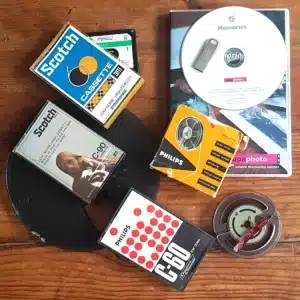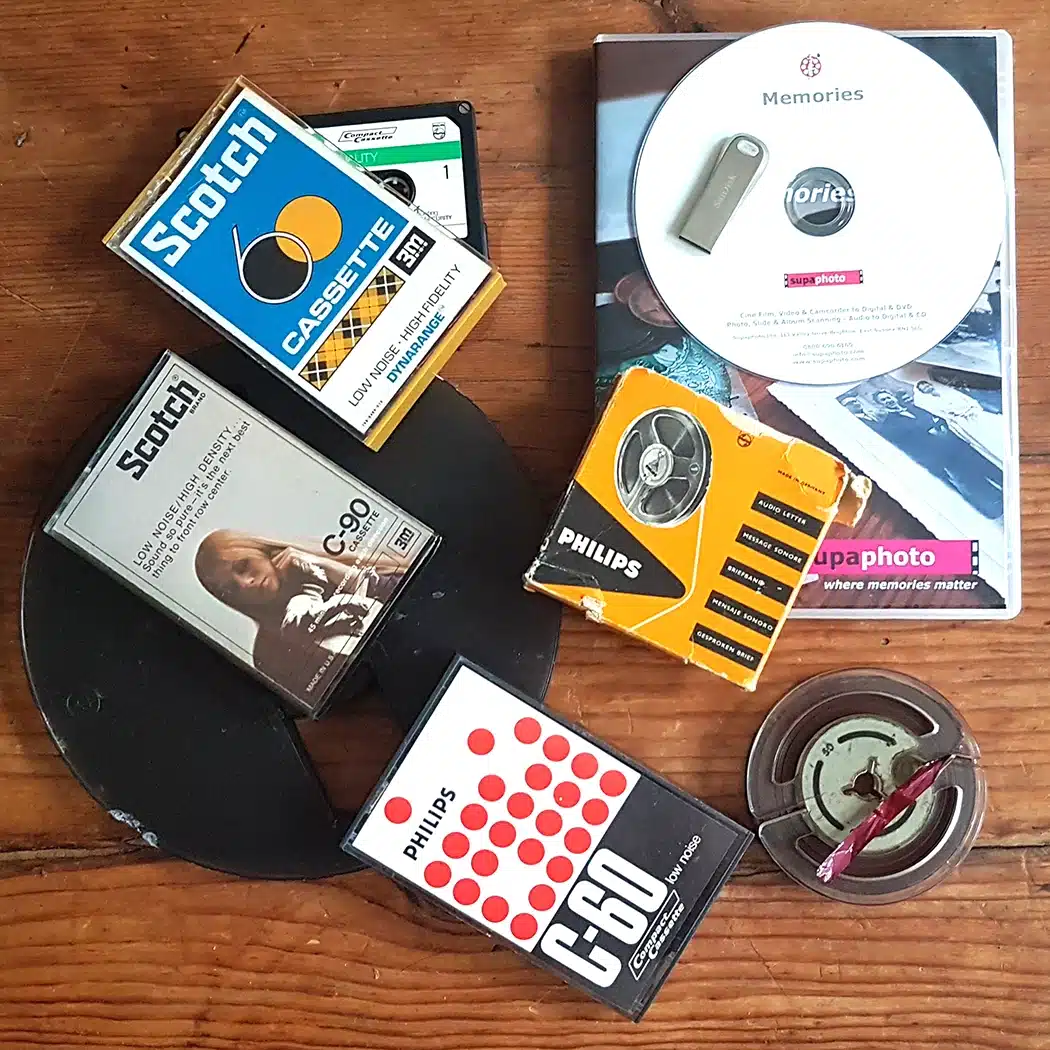

Cassette tapes do not have a fixed lifespan. How long they remain playable depends heavily on tape manufacture, storage conditions, handling and the condition of the cassette mechanism. Heat, moisture, dust and repeated playback can accelerate deterioration. If a cassette contains an irreplaceable recording, good storage helps, but digitising it is the safer long-term preservation strategy.
The most important things you can do are:
- Keep cassettes cool, dry and at a stable temperature.
- Store them upright in their protective cases.
- Avoid attics, garages, sheds and damp basements.
- Keep tapes away from strong magnetic fields.
- Avoid touching the exposed magnetic tape.
- Don’t repeatedly play a cassette that’s sticking, squealing or behaving unusually.
- Digitise important recordings while suitable playback equipment and the tape itself remain usable.
The Library of Congress recommends a cool, relatively dry and stable environment for home audiovisual collections, with magnetic cassettes stored on their long edge and protected from intense light, heat and strong magnetic fields. The Library of Congress
Do Cassette Tapes Have a 30-Year Lifespan?
You’ll sometimes see statements online claiming that cassette tapes last 10, 20, 30 or 50 years. Treat these numbers cautiously.
There isn’t a universal expiry date after which an audio cassette suddenly stops working. Two tapes manufactured in the same year can be in dramatically different condition decades later.
A cassette kept for years in a cool, dry cupboard may remain playable long after another tape of similar age has developed problems because it spent summers in a hot loft or winters in a damp garage.
Longevity depends on a combination of:
| Factor | Why it matters |
|---|---|
| Temperature | Excessive heat can accelerate physical and chemical deterioration |
| Humidity | High moisture levels encourage deterioration and potentially mould |
| Temperature fluctuations | A stable environment is preferable to repeated extremes |
| Tape formulation | Different manufacturers and formulations age differently |
| Cassette mechanism | Pads, rollers and other components can deteriorate |
| Handling | Poor handling can crease, stretch or contaminate tape |
| Playback equipment | A faulty deck can damage an otherwise playable cassette |
| Previous storage | Damage may already have occurred before you acquired the tape |
For that reason, the useful question isn’t really “How many years will my cassette last?” It is “Is the recording important enough that I shouldn’t risk leaving its survival to an ageing piece of magnetic tape?”
Why Do Cassette Tapes Deteriorate?
An audio cassette isn’t simply a strip of plastic containing sound.
The cassette contains magnetic tape made from several material layers. The recorded audio depends upon the magnetic information carried by that tape remaining physically intact and being reproduced correctly by a cassette deck.
Those materials can change with age and environmental exposure.
The Library of Congress notes that magnetic recordings can suffer physical deterioration including sticky, shedding and squealing tape. Research into magnetic-tape deterioration also shows that different products and formulations don’t necessarily age identically. The Library of Congress
The cassette shell introduces additional mechanical considerations. The tape has to move smoothly between the two hubs, across guides and past the playback head at the correct speed.
Consequently, a problem with an old cassette doesn’t necessarily mean the recorded magnetic information has disappeared. Sometimes the cassette’s physical condition or playback mechanism is preventing the recording from being reproduced correctly.
That’s one reason professional assessment can be worthwhile for particularly important tapes.
What’s the Best Temperature for Storing Cassette Tapes?
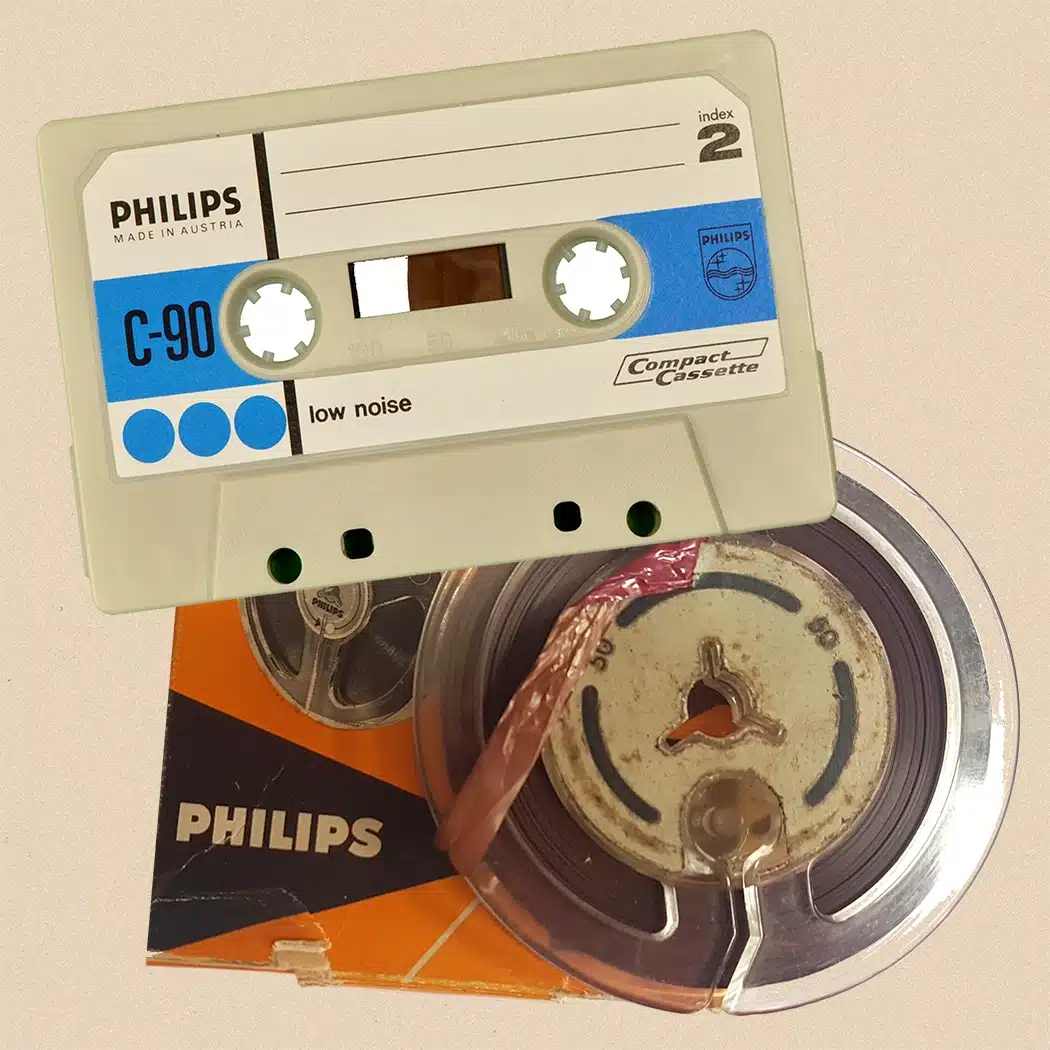
For a normal home collection, don’t become obsessed with recreating a museum vault.
Instead, aim for somewhere cool, dry, clean and stable.
The Library of Congress suggests room temperature or below and approximately 35–40% relative humidity as guidance for home audiovisual collections. It specifically recommends avoiding attics, basements and locations exposed to environmental extremes or leaks. The Library of Congress
A sensible domestic location might therefore be an internal cupboard in a normally heated part of the house.
Avoid storing valuable cassettes:
- beside radiators;
- above heating appliances;
- in direct sunlight;
- in an uninsulated loft;
- in a damp cellar;
- in a garage or shed;
- next to water pipes where a leak could cause damage.
Stability matters. A location that repeatedly changes from very hot to very cold or dry to damp is undesirable even if the average temperature appears reasonable.
Should Cassette Tapes Be Stored Upright or Flat?
Store audio cassettes upright on their long edge, preferably inside their individual cases.
This is also the storage orientation recommended by the Library of Congress for magnetic audio and video cassettes. The Library of Congress
The case provides useful protection against dust, dirt and accidental physical damage. It also keeps tapes organised so that you don’t have to handle them unnecessarily when searching for a particular recording.
Don’t pile valuable loose cassettes into a box where their shells, labels and exposed tape areas can become dirty or damaged.
If you’re organising a large family collection, this is also an excellent opportunity to label and catalogue it.
Record whatever you know:
- approximate recording date;
- people featured;
- occasion;
- location;
- cassette number;
- whether it has already been digitised.
That information can eventually become almost as valuable as the recording itself.
Are Attics and Garages Bad for Cassette Tapes?
Generally, yes.
The problem isn’t simply that an attic gets warm. An uninsulated attic can experience significant seasonal and daily temperature changes. Garages and sheds can also expose recordings to damp, cold, heat, dust and pests.
Basements or cellars introduce a different risk: moisture.
The Library of Congress’s preservation guidance specifically warns against attics and basements for audiovisual collections because of the potential for leaks and environmental extremes. The Library of Congress
If you’ve just discovered cassettes that have spent decades in an attic, however, don’t assume they’re ruined.
Move them to a more appropriate environment and examine their condition. If they contain important recordings, consider having them assessed rather than repeatedly testing them in an old cassette player.
A tape that has survived poor storage for decades deserves careful treatment now.
Can Magnets Erase Cassette Tapes?
Cassette tape stores sound magnetically, so strong magnetic fields should be avoided.
For normal household storage, there’s no need for panic about every electronic object in the room. The Library of Congress describes accidental demagnetisation as unlikely in most circumstances, but recommends keeping magnetic tape away from strong magnetic fields generated by equipment such as motors, transformers and loudspeakers. The Library of Congress
A sensible precaution is therefore to keep your collection away from obvious sources of strong magnetism rather than storing tapes directly alongside electrical equipment.
This also explains why deliberately using magnets near old tapes to “test” something is a particularly bad idea.
Once recorded information has genuinely been erased, storage improvements cannot bring it back.
Should You Rewind Cassette Tapes Before Storing Them?
This is one area where casual advice and professional preservation guidance don’t always match.
Many people instinctively rewind a cassette immediately after playing it. However, the Library of Congress’s current general audiovisual care guidance advises storing played tapes without rewinding them and rewinding immediately before playback. The Library of Congress
For an ordinary household collection, the larger preservation priorities remain environmental stability, clean storage, careful handling and avoiding unnecessary playback.
More importantly, don’t repeatedly fast-forward and rewind an old cassette simply because you’ve read that tapes should occasionally be “exercised”. Every journey through an ageing mechanism introduces another opportunity for damage.
If the recording matters, transferring it is a more useful preservation step than routinely exercising the original.
What Are the Warning Signs of a Deteriorating Cassette?
Pay attention to how an old tape behaves.
Warning signs can include:
- squealing during playback;
- tape moving inconsistently;
- the cassette stopping unexpectedly;
- visible creases or twists;
- tape spilling from the shell;
- unusual deposits;
- visible mould;
- repeated dropouts;
- significant changes in playback speed;
- sound becoming unstable;
- the deck struggling to turn the cassette.
Some audible problems may come from the recording or playback machine rather than deterioration of the tape itself. That makes diagnosis important.
If a treasured cassette suddenly starts behaving abnormally, stop playback rather than repeatedly trying it.
A damaged cassette can sometimes be repaired or transferred using alternative equipment. Continuing to force it through a malfunctioning machine may turn a manageable problem into permanent physical damage.
Can Mouldy Cassette Tapes Be Saved?
Mould requires particular caution.
Don’t put a visibly mouldy cassette straight into your normal cassette deck. Apart from potentially damaging the recording, contamination can be transferred to the machine and subsequently affect other media.
The Library of Congress has documented mould as a serious preservation concern for recorded media and emphasises controlled, dry storage as an important defence against deterioration. The Library of Congress
The right response depends on the extent of contamination and the importance of the recording.
For a unique family interview, historic recording or other irreplaceable material, professional assessment is preferable to experimenting with household cleaning products.
Avoid spraying liquids, solvents or general-purpose cleaners onto magnetic tape. Treatments suitable for one material may be damaging to another.
Does Playing a Cassette Wear It Out?
Playback involves physical contact and mechanical movement, so unnecessary repeated playback isn’t ideal for preservation.
The Library of Congress notes that recordings should ideally be played as little as practical when maximising their lifespan. This is one reason preservation institutions create digital copies: the original carrier no longer needs to be played every time someone wants to hear the recording. The Library of Congress
This principle works equally well for family collections.
If you have a cassette containing your grandparents speaking, a child’s first words, a wedding recording or an original musical performance, don’t make the cassette itself your everyday listening copy.
Digitise it once carefully, check the resulting files, create backups and listen to those instead.
The original cassette can then return to safe storage.
When Should You Digitise Old Cassette Tapes?
If the contents matter to you, sooner rather than waiting for obvious deterioration.
There are two ageing technologies involved: the cassette and the machine required to play it.
Even a perfectly preserved tape is of limited practical use if functioning, correctly maintained cassette decks become increasingly difficult to obtain.
Professional archives address this problem through preservation reformatting. The Library of Congress, for example, transfers historic recordings from original carriers to high-resolution digital audio files so that the recordings can be accessed without repeatedly playing the originals. The Library of Congress
The same principle can be applied on a smaller scale at home.
Supaphoto provides a professional service for transferring cassette recordings into modern digital files, particularly useful where recordings are unique, equipment is unavailable or tapes need careful handling. This is also the specific service relationship requested for this article. Pasted markdown
What Digital Format Should You Use?
For preservation, consider keeping a high-quality master rather than only a highly compressed listening copy.
A practical approach is to have:
- a high-quality master file, such as WAV, retained for preservation;
- a smaller MP3 or other convenient listening copy where required;
- more than one backup of the important files.
This separates preservation from convenience.
An MP3 is extremely useful for listening on everyday devices and sharing with relatives. A high-quality uncompressed master retains more of the captured audio information and provides a better starting point if restoration or conversion is needed later.
Digital files aren’t immortal either. Hard drives can fail, USB drives can be lost and file systems can become corrupted. The Library of Congress likewise identifies physical damage and technological obsolescence as risks to digital content left on external media. The Library of Congress
Digitisation therefore needs to be followed by sensible backup.
A Simple Cassette Storage Checklist
For a typical family collection, good preservation doesn’t need to be complicated.
Do:
- keep tapes in their cases;
- store them upright;
- choose a cool, dry cupboard;
- maintain reasonably stable conditions;
- keep them away from strong magnetic fields;
- handle the cassette by its shell;
- label unidentified recordings carefully;
- stop playback if a tape behaves abnormally;
- digitise valuable recordings;
- back up the resulting files.
Avoid:
- hot attics;
- damp garages and cellars;
- direct sunlight;
- radiators and heaters;
- touching exposed tape;
- unnecessary repeated playback;
- experimenting on mouldy or damaged originals;
- relying on one ageing cassette as the only surviving copy.
These basic precautions address many of the most avoidable threats to a home cassette collection.
How Long Will Your Cassette Tapes Actually Survive?
There is no responsible way to look at an old cassette and give it a precise expiry date.
Some decades-old tapes continue to play remarkably well. Others suffer physical or playback problems much sooner. Manufacture, environment, handling and the individual cassette’s history all influence the outcome.
That’s why good storage should be regarded as a way of slowing deterioration, not guaranteeing permanent survival. Magnetic tape is an ageing physical carrier, and preservation organisations routinely use reformatting alongside appropriate storage rather than relying indefinitely on the original medium. The Library of Congress
If your cassettes contain recordings you would genuinely regret losing, preserve the originals carefully but also create properly checked digital copies and backups. For large, fragile, unusual or particularly valuable collections, it ultimately makes sense to choose a professional company with years of experience handling such orders, such as Supaphoto Ltd.