
Yes. You do not necessarily need a Super 8 projector to watch old Super 8 film. The most practical modern option is to have the film transferred to a digital file, which can then be watched on a computer, television, tablet or phone. Specialist film-scanning equipment can capture the film directly, without projecting it onto a screen.
Can Super 8 film be watched without a projector?
If you have inherited a box of Super 8 reels but no longer have the projector that was used to show them, there are several ways to access the footage.
The important distinction is between projecting the original film and viewing a digital copy of the film.
A traditional Super 8 projector physically moves the film through a gate and shines light through each frame onto a screen. That is how many families originally watched home movies.
Today, however, a Super 8 reel can be digitised using dedicated film-scanning equipment. The resulting video file can then be played using modern devices without the original projector.
This can be particularly useful if the projector has been lost, is no longer working, or you simply do not want to rely on ageing projection equipment to view valuable family footage.
What are the alternatives to using a Super 8 projector?
There are three broad approaches:
| Option | What it involves | Suitable for |
|---|---|---|
| Use an existing Super 8 projector | The original film is projected onto a screen | People with compatible, working equipment |
| Find a suitable projector | A compatible projector is sourced or purchased | Occasional projection where the equipment is appropriate |
| Transfer the film to digital | The film is scanned and converted into a digital video | Easy viewing, sharing and preservation |
For an important family film, digitisation has an additional advantage: you can watch the digital copy without repeatedly running the original reel through a projector.
The Library of Congress advises keeping playback equipment clean and well maintained when film is projected and recommends using duplicate films for access where possible.
Can Super 8 film be scanned without projecting it?
Yes. Film scanning provides a different route to viewing the images.
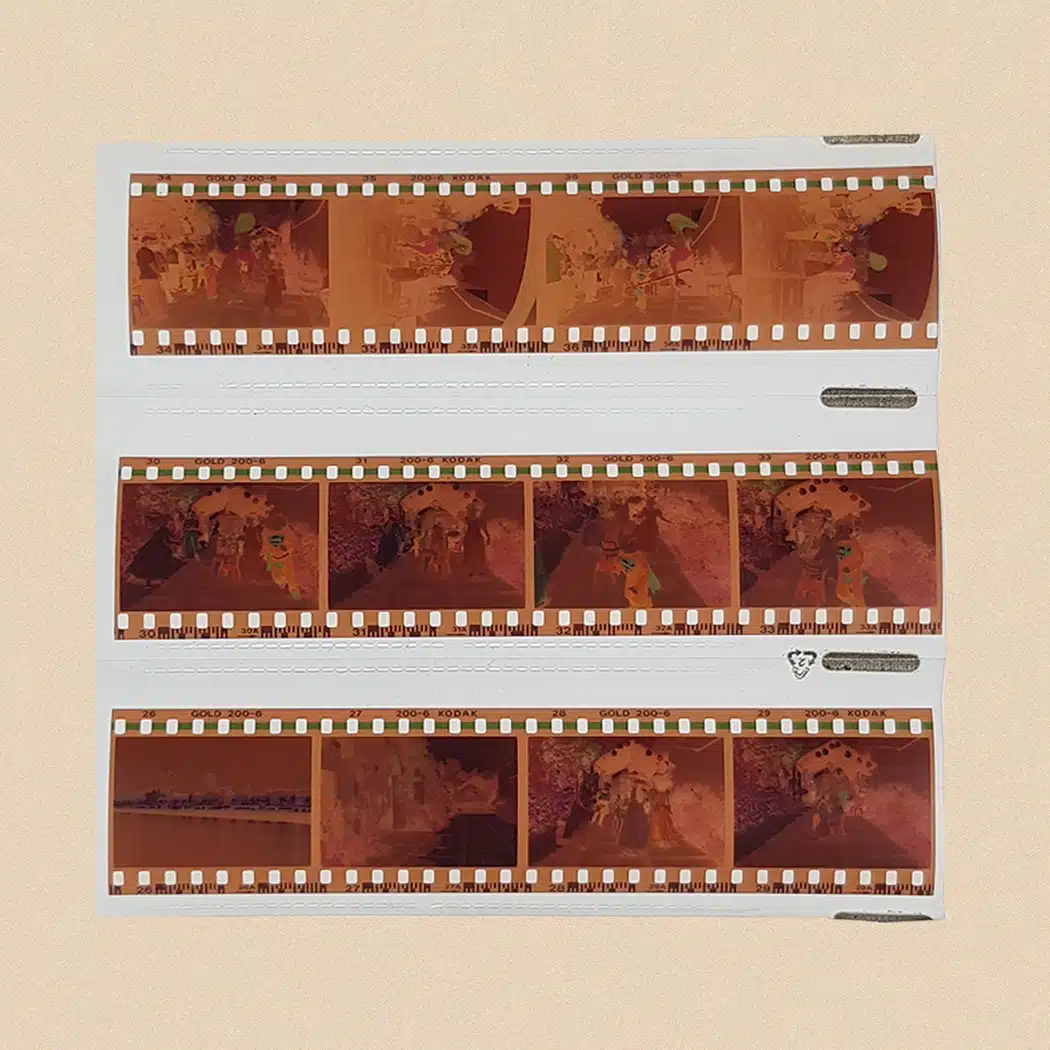
Instead of projecting the film onto a wall or screen and filming that projected image, dedicated scanning equipment captures the individual film frames directly. The resulting images are assembled into a moving-image file.
The BFI uses specialist film scanners for preservation work across film gauges including 8mm. Its 2026 description of its archive scanning equipment explains how modern scanners can create digital files from small-gauge film while using controlled transport mechanisms designed for delicate material.
This is why a projector is not essential if your objective is simply to see what is on an old Super 8 reel.
Why not just film the projected image?
It is possible to point a camera at a projected image, but this is not the same as properly scanning the original film.
A projected image has already passed through the projector’s optics and light source before being captured by the camera. The final result can therefore be affected by factors such as focus, alignment, flicker, exposure and the condition of the projection equipment.
Direct film scanning takes a different approach by capturing the information from the film itself.
For valuable family footage, the condition of the original film and the method used to capture it can therefore matter considerably.
What if you don’t know whether the reel is Super 8?
Before arranging playback or transfer, it is worth identifying what you actually have.
Super 8 is a small-gauge motion-picture film format, but it is not the only type of 8mm film you may encounter in an older collection. Standard 8 and Super 8 are different formats and require appropriate equipment.
Look at:
- The reel and any original box or packaging
- Labels written by the person who filmed the material
- Film gauge markings
- Any information about the camera originally used
- The approximate date the film was recorded
- Whether the collection contains other reels from the same camera
Do not assume that two reels that look similar can automatically be played on the same equipment.
If you are uncertain, it is safer to establish the format before trying to run the film through an unknown projector.
Do you need to buy a Super 8 projector?
Not necessarily.
Buying an old projector can seem like the obvious solution, particularly if you remember watching Super 8 films at home. However, finding a suitable machine is only part of the problem.
You also need to consider:
- Whether the projector is actually compatible with the film
- Whether it is in suitable working condition
- Whether the film itself is suitable for projection
- Whether the projector has been properly maintained
- Whether the film has damaged joins or other physical problems
- Whether repeated projection is appropriate for an important original
Older equipment can also require maintenance, and simply finding a projector that powers on does not establish that it is safe to use with valuable film.
If the reel contains irreplaceable family memories, getting the film assessed before attempting playback can be a sensible option.
What if the Super 8 film has not been watched for decades?
Avoid assuming that an old reel is automatically ready to project.
Film can deteriorate through age and unfavourable storage conditions. Physical problems may include damage to the edges, weakened joins, dirt, scratches or other deterioration.
Storage conditions also matter. The National Film and Sound Archive of Australia advises keeping film away from high humidity and water hazards because moisture can accelerate deterioration and contribute to mould growth.
The Library of Congress similarly recommends cool, stable and relatively dry storage for motion-picture film and advises keeping it away from environmental extremes such as attics and basements.
If a reel looks damaged, brittle, contaminated or otherwise unusual, avoid forcing it through a projector simply to find out what is recorded on it.
Can you watch Super 8 film on a TV?
Yes, but the television does not normally play the original Super 8 film directly.
The film needs to be converted into a digital video first. Once that has been done, the resulting file can be viewed using an appropriate modern device.
For example, a digital copy can potentially be:
- Watched on a computer or laptop
- Played through a compatible television
- Stored on USB
- Saved to a computer
- Shared with family members
- Backed up for future access
The exact playback method depends on the digital format supplied and the devices available in your home.
Supaphoto’s Super 8 transfer service provides digital versions of converted film, with options including digital downloads and USB.
Is transferring Super 8 film better than using a projector?
The two approaches serve different purposes.
A projector allows you to experience the original film as projected film. For some people, that is an important part of the character of watching cine film.
Digital transfer, on the other hand, makes the footage considerably easier to access with modern equipment. It also means you do not have to rely on an ageing projector every time you want to watch the recording.
Digitisation does not mean the original reel should be discarded. The physical film remains the source material and may have historical or sentimental value.
The BFI describes digitisation as an important part of making historic film collections accessible while continuing to care for the original physical material.
What should you do before sending old Super 8 film for transfer?
A little information can make the process easier.
Check the reels
Keep reels together where possible and make a note of any labels, dates or descriptions.
Don’t attempt risky cleaning
Avoid household cleaning products or improvised methods. Film surfaces and emulsions can be damaged by inappropriate handling.
Don’t force damaged film through a projector
If the film appears damaged or the reel has problems, stop rather than repeatedly attempting playback.
Keep the original film
Even after digitisation, retain the original reels in suitable storage. A digital copy provides convenient access, but it does not replace the physical original.
The Library of Congress recommends appropriate storage and careful handling of motion-picture film as part of long-term preservation.
How We Can Help You View Old Super 8 Film Without a Projector
If you have Super 8 reels but no suitable projector, we can transfer Super 8 film to digital, allowing you to view the footage using modern devices rather than relying on the original projection equipment.
For example, Supaphoto inspects and digitises Super 8 reels and provides digital output options for viewing and sharing. The company also states that original reels are returned after the conversion.
This approach can be particularly useful if you have inherited several reels and do not know whether the original projector still exists or is suitable for use.
For more information about the process and available output options, see Supaphoto’s Super 8 film transfer service.
How we can help you view old Super 8 film without a projector
If you have Super 8 reels but no suitable projector, we can transfer Super 8 film to digital, allowing you to view the footage using modern devices rather than relying on the original projection equipment.
For example Supaphoto inspects and digitises Super 8 reels and provides digital output options for viewing and sharing. The company also states that original reels are returned after the conversion.
This approach can be particularly useful if you have inherited several reels and do not know whether the original projector still exists or is suitable for use.
For more information about the process and available output options, see Supaphoto’s Super 8 film transfer service.
What affects the quality of a Super 8 digital transfer?
There is no single result that can be guaranteed for every reel.
The final digital footage can be affected by the condition and quality of the original film. Factors may include:
- How the film was originally exposed
- Age and storage history
- Scratches or dirt
- Damaged sections
- Film joins
- Colour deterioration
- The quality of the original recording
- The scanning and transfer process
A transfer can make old footage considerably easier to watch, but it cannot recreate information that was never captured or that has been irretrievably lost from the original.
This is one reason why professional assessment can be useful when a reel is particularly old, fragile or important.
Should you keep your Super 8 projector?
If you already own a working, compatible projector and enjoy watching the original film in that way, there is no reason to assume that digitisation has to replace it.
Instead, the two can serve different purposes.
The projector can provide access to the original physical medium, while a digital transfer gives you a convenient viewing copy that can be shared and backed up.
For valuable footage, having a digital copy can also reduce the need to repeatedly access the original reel.
What if the projector no longer works?
Don’t automatically assume that the film itself is unusable.
If the Super 8 reel is in reasonable condition, the absence of a working projector is not necessarily a barrier to viewing the footage. Film transfer and scanning provide another way to access the images.
If the film itself is damaged, however, the situation is different. The Library of Congress advises against attempting to play damaged film because doing so can cause further damage to both the media and playback equipment.
Frequently Asked Questions
Can I watch Super 8 film without owning a projector?
Yes. Super 8 film can be transferred to a digital video file using suitable film-scanning equipment. You can then watch the digital version on compatible modern devices.
Can I put Super 8 film into a normal 8mm projector?
Not automatically. Super 8 and Standard 8 are different film formats, so the projector needs to be appropriate for the particular film.
Can I transfer Super 8 film myself?
There are consumer film-scanning products available, but the practical suitability depends on the equipment, the film and its physical condition. Valuable or fragile originals may be better assessed before attempting a home transfer.
Does digitising Super 8 film destroy the original?
No. A properly performed transfer creates a digital copy of the footage. The original Super 8 reel can still be retained as part of the physical family archive.
Can old Super 8 film still be transferred if it has deteriorated?
It may be possible, depending on the nature and extent of the deterioration. Damaged or fragile film should be assessed before playback or scanning rather than repeatedly tested in a projector.
TL;DR
You can watch Super 8 film without a projector by having the original reels professionally scanned and converted into digital video. This provides a convenient way to watch and share old footage while retaining the original film for preservation.
Reviewed by: [Name / professional title to be confirmed]