
Microfilm and microfiche both store greatly reduced images of documents on photographic film, but their physical formats are different. Microfilm normally stores images sequentially on a roll, while microfiche stores multiple images in a grid on a flat sheet. Both belong to the broader family of archival formats known as microforms. National Archives
| Feature | Microfilm | Microfiche |
|---|---|---|
| Physical format | Roll of film | Flat sheet of film |
| Image arrangement | Sequential | Grid of images |
| Typical use | Newspapers, registers, long document sequences | Reports, records and grouped documents |
| Navigation | Wind through reel | Move across rows and columns |
| Storage | Reels in boxes or cartridges | Sleeves in drawers or boxes |
| Digitisation | Reel scanning | Sheet-by-sheet scanning |
| Main advantage | Efficient for long sequences | Individual sheets are easy to organise |
What Is Microfilm?
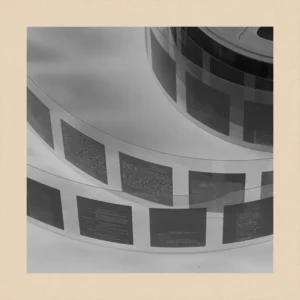
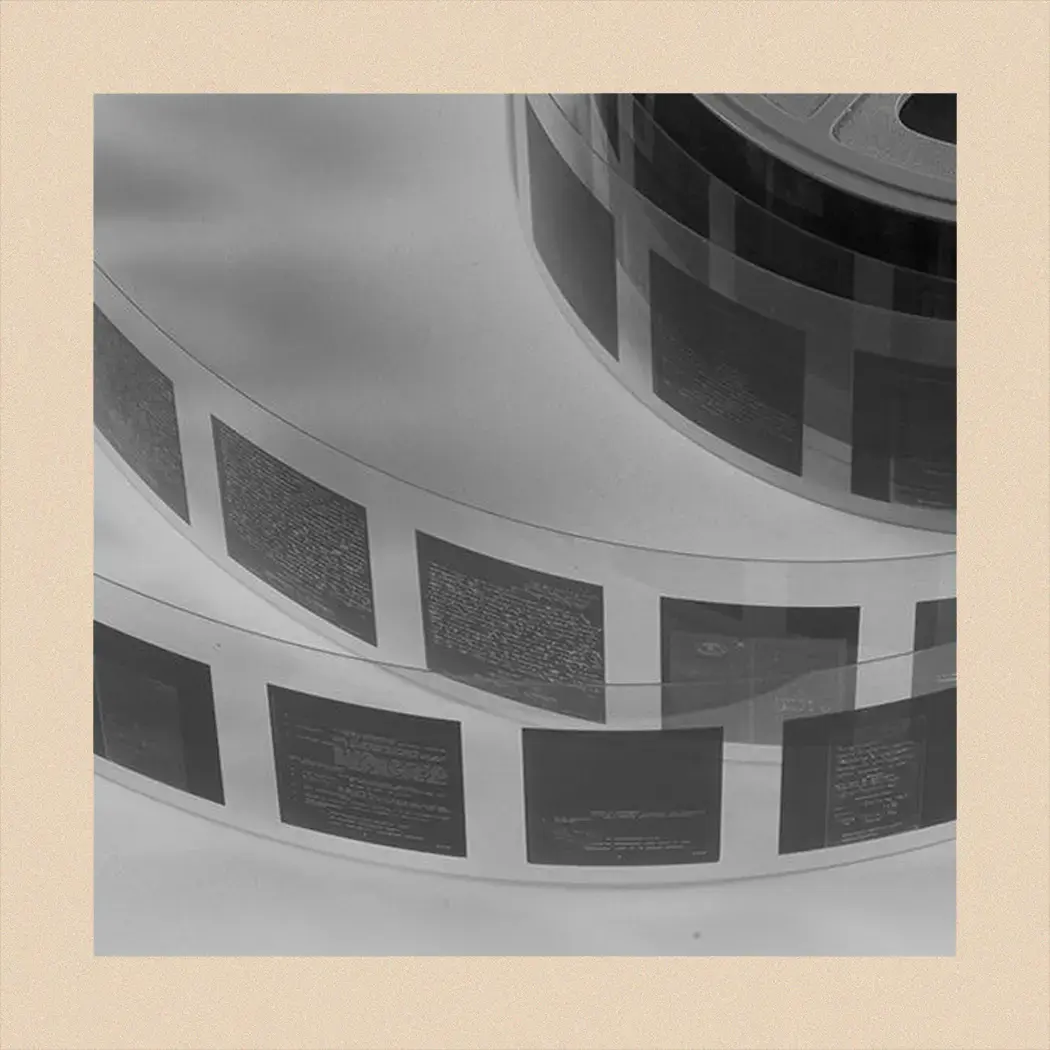
Microfilm is a roll of photographic film containing miniaturised images of documents in sequence. The US National Archives defines it as fine-grain, high-resolution film in roll form containing reduced images arranged sequentially. National Archives
A single reel can therefore contain a substantial sequence of material. Depending on the collection, that might include:
- newspapers;
- registers;
- archival records;
- correspondence;
- legal records;
- historical documents;
- journals;
- genealogical records.
Rather than storing shelves of original paper, documents could be photographed at a greatly reduced scale and the resulting images stored on film.
To read traditional microfilm, the reel is mounted on a reader. The film is advanced until the required frame appears and is then enlarged optically on a screen.
The technology may seem old-fashioned today, but microfilm remains an important archival medium. The US National Archives notes that properly created and stored preservation microfilm is stable, supported by standards and readable using relatively simple optical technology. National Archives
What Is Microfiche?
Microfiche uses the same basic concept—photographically reducing documents—but puts the images onto a flat transparent sheet rather than a continuous roll.
The US National Archives defines microfiche as a flat, transparent sheet containing miniaturised images arranged in a grid. National Archives
Think of it as a page containing many tiny pages.
Each frame represents a photograph of an original document. A microfiche reader magnifies the selected frame so that the information becomes readable.
Microfiche became particularly useful for material that could be organised into individual sets or records. Unlike a reel, the operator doesn’t need to wind through a long sequence of film to reach the required section.
The trade-off is capacity and organisation. Large collections can contain thousands of fiche sheets, so indexing and labelling become extremely important.
Is Microfiche a Type of Microfilm?
The terminology can be confusing.
Microfilm and microfiche are both microforms, but technically they describe different physical formats.
“Microfilm” is often used conversationally as a general description for miniature photographic document records. In archival terminology, however, it normally refers specifically to the roll format.
Microfiche refers to the sheet format.
The distinction matters when you’re cataloguing, storing or digitising a collection because each requires different handling and scanning equipment.
If you’ve inherited an archive described simply as “microfilm”, examine the material itself before assuming everything is on reels. Archives can contain reels, fiche and other micrographic formats together. The National Archives’ collections, for example, include microfilm reels, microfiche and other types of micrographic records. National Archives
What Sizes Does Microfilm Come In?
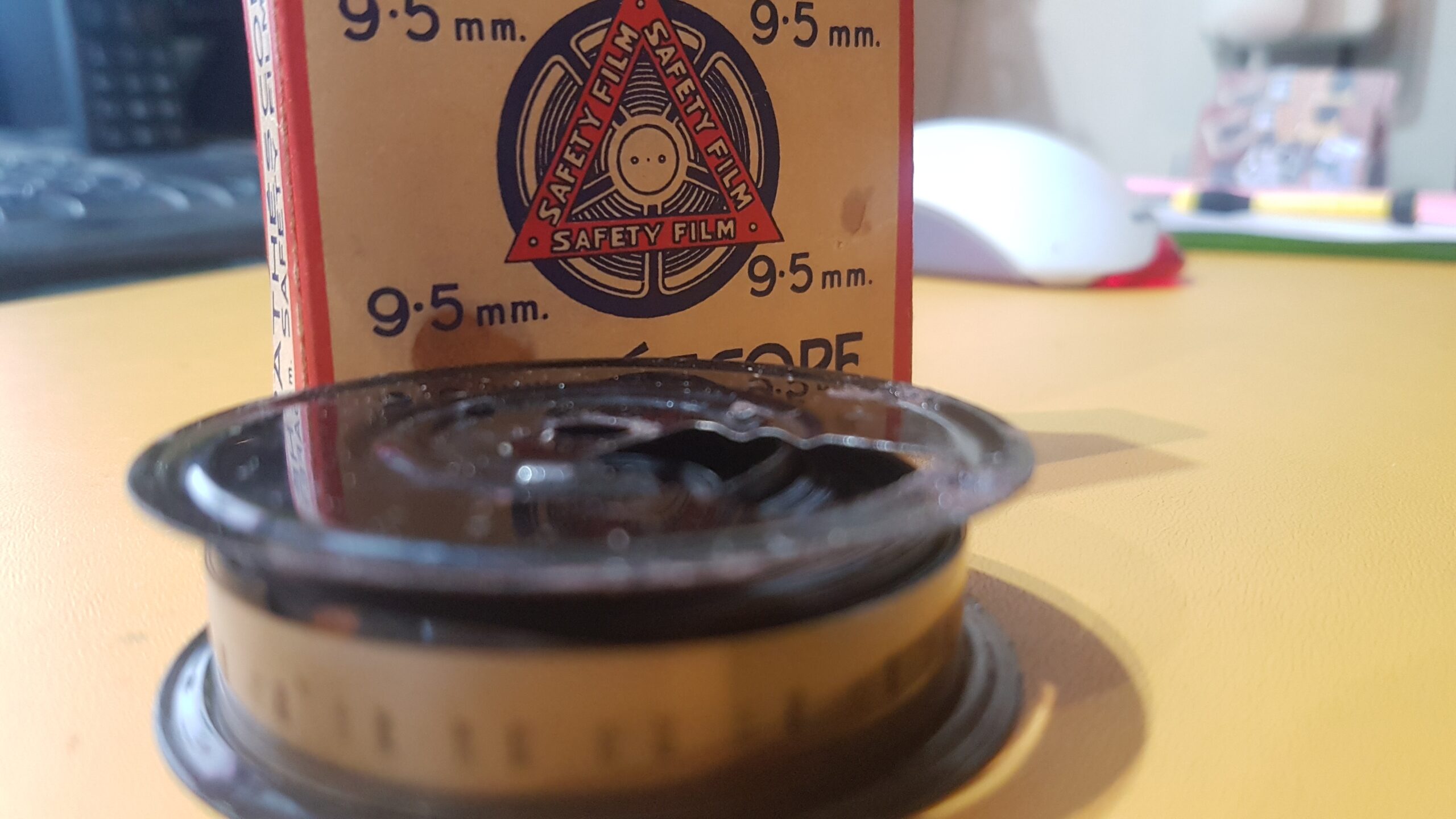
Two of the most familiar roll-film widths are 16mm and 35mm.
The format used depends partly on the original material and the way the archive was created. Smaller documents have commonly been reproduced on 16mm film, while larger originals such as newspapers have often been associated with 35mm microfilm.
However, don’t assume that every reel in an archive conforms neatly to one standard.
Collections accumulated over many decades can contain different film stocks, generations, reels, cartridges and reduction ratios.
The National Archives specifically recommends choosing appropriately sized storage enclosures for 16mm and 35mm microfilm. National Archives
When preparing a collection for scanning, identifying these physical characteristics beforehand can make the project considerably easier.
Why Were Documents Put Onto Microfilm and Microfiche?
The attraction was straightforward: large volumes of paper information could be stored in a much smaller physical space.
But reducing storage wasn’t the only benefit.
Microfilming also allowed organisations to create copies of heavily used or vulnerable documents so researchers didn’t have to continually handle the originals.
The US National Archives has microfilmed millions of pages of permanently valuable records and describes microfilm as a reliable, standardised long-term image-storage medium. National Archives
Historically, microforms became common in organisations managing large document collections, including:
- libraries;
- archives;
- universities;
- government departments;
- local authorities;
- businesses;
- research organisations;
- newspaper collections.
They were particularly valuable before digital storage and high-volume document scanning became commonplace.
Is Microfilm Still Used?
Yes, although its role has changed considerably.
Many organisations now prefer digital files for day-to-day access because digital documents can be distributed quickly and, where suitable processing and metadata exist, searched electronically.
Microfilm nevertheless remains part of major archival collections.
The National Archives describes properly produced microfilm as a proven format and notes that it continues to preserve existing microfilm holdings even though its own reformatting work now uses digital technology. National Archives
The important distinction is therefore between preservation and access.
A physical microfilm collection may remain an important archival asset while a digitised copy becomes the version researchers and staff use every day.
That combination can reduce unnecessary handling of the original film.
Which Lasts Longer: Microfilm or Microfiche?
The answer depends less on whether the material is a reel or a sheet and more on the film base, photographic process, manufacture and storage conditions.
Microforms have been produced using different materials over the years.
The National Archives identifies polyester and cellulose acetate among common microfilm supports. Acetate film can suffer chemical deterioration commonly known as vinegar syndrome, while polyester is dimensionally more stable. National Archives
For preservation-standard microfilm made and stored correctly, archival longevity can be very substantial. NARA notes that properly created and stored microfilm can have a life expectancy measured in hundreds of years. National Archives
That doesn’t mean every reel or fiche sheet sitting in an office cupboard will survive for centuries.
Its actual condition matters more than a theoretical lifespan.
How Can You Tell If Old Microfilm Is Deteriorating?
Inspect older collections before attempting large-scale viewing or scanning.
Potential warning signs include:
- brittle film;
- broken sections;
- distortion;
- curling;
- scratches;
- surface contamination;
- damaged reels;
- rusting metal components;
- unusual spots or blemishes;
- a vinegar-like smell from deteriorating acetate film.
The National Archives recommends inspecting microfilm and microfiche for degradation including vinegar syndrome, distortion and redox blemishes. It also advises prioritising deteriorated material for reformatting or appropriate preservation measures. National Archives
Don’t attempt improvised repairs with ordinary adhesive tape.
For damaged microfilm, NARA specifically recommends consulting a preservation specialist about appropriate splicing materials and states that ordinary Scotch tape should not be used to repair broken film. National Archives
How Should Microfilm and Microfiche Be Stored?
Although they’re related media, their physical differences mean they should be stored differently.
Storing Microfilm Reels
Roll microfilm should normally remain wound and protected in an appropriate enclosure.
The National Archives recommends suitable low-lignin paper boxes or chemically inert plastic enclosures, subject to appropriate environmental conditions. It also warns against winding microfilm too tightly because this can damage the emulsion. National Archives
Reels should be checked for physical damage, and deteriorating metal reels may need replacing with appropriate archival alternatives.
Storing Microfiche
Individual fiche sheets should be protected against scratching and abrasion.
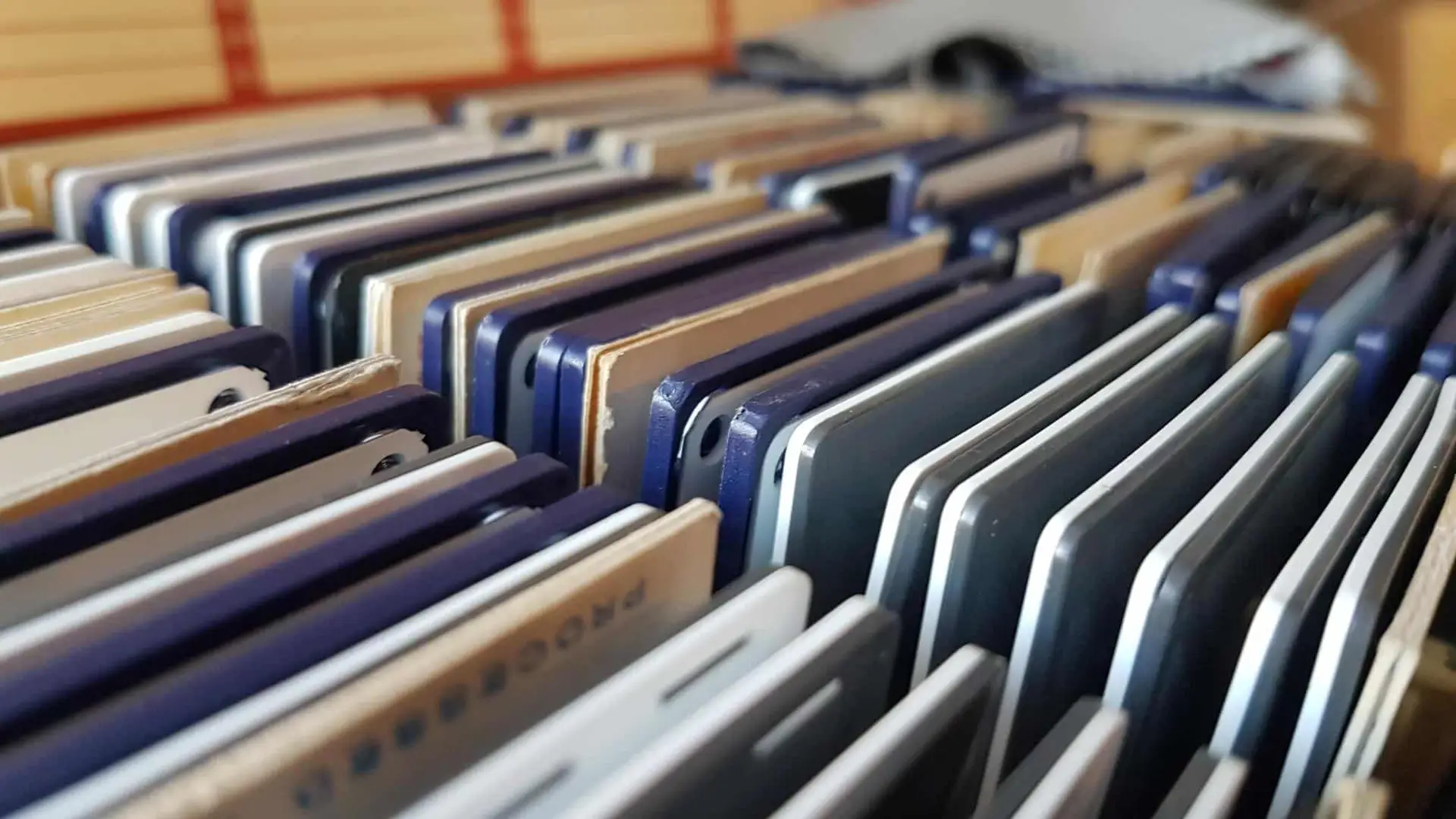
The National Archives recommends storing each sheet separately in a suitable sleeve or envelope and keeping sleeved fiche vertically without packing it so tightly that retrieval becomes difficult. National Archives
The Library of Congress likewise maintains preservation specifications specifically for paper enclosures intended for microfiche. Research Guides
Good organisation is also essential. A physically well-preserved fiche collection becomes much less useful if its indexing system is lost.
Why Digitise Microfilm or Microfiche?
Digitisation changes how people can access the information.
With traditional microfilm, someone usually has to visit the collection, load a reel onto compatible equipment, locate the relevant frame and read it through magnification.
Digital conversion can make that material accessible on modern computer systems.
Potential benefits include:
- faster retrieval;
- easier distribution;
- reduced handling of originals;
- simpler backup;
- remote access;
- integration with digital archives;
- image enhancement where appropriate;
- potential OCR processing;
- indexing and metadata;
- easier research across large collections.
The National Archives notes that digitisation can improve access to deteriorating microfilm while reducing the need to access the original. National Archives
Digitisation shouldn’t automatically mean disposing of the microfilm, however. A properly preserved original can remain an important archival source.
Can Microfilm Be Made Searchable?
Potentially, yes—but scanning and text recognition are separate stages.
Scanning creates a digital image of each microfilm frame. Optical Character Recognition (OCR) can then analyse suitable images and attempt to turn printed characters into machine-readable text.
The results depend heavily on the source.
Clear, consistently printed documents may produce useful OCR. Results can be less reliable with:
- faded originals;
- unusual typefaces;
- handwritten records;
- skewed pages;
- damaged film;
- poor original photography;
- low contrast;
- newspapers with complex layouts.
For important archives, OCR shouldn’t necessarily replace the page image. Keeping the scan means researchers can refer back to the visual source when the recognised text is inaccurate.
Indexing can be equally valuable. Even without perfect full-text OCR, metadata such as dates, document types, reel numbers and record references can dramatically improve navigation.
Is Microfilm Scanning Different From Ordinary Document Scanning?
Yes.
A conventional office scanner is designed for paper. Microfilm contains miniaturised photographic images that need to be enlarged during digital capture.
The scanner therefore needs appropriate optics, illumination, film transport and image-capture capabilities.
Different equipment may be required for:
- 16mm roll film;
- 35mm roll film;
- microfiche;
- cartridges;
- jackets;
- unusual microforms.
Condition also affects the process.
Scratched, curled, brittle or poorly exposed film may require additional attention, and large archive projects often need decisions about indexing, file naming, OCR, image orientation and output structure before scanning begins.
Supaphoto’s brief specifically identifies its specialist microfilm and microfiche digitisation service as the relevant service for collections requiring conversion to modern digital files. Pasted markdown
Which Is Easier to Digitise: Microfilm or Microfiche?
Neither format is automatically “better”; they simply create different workflows.
Roll microfilm has the advantage of a continuous sequence. Suitable equipment can transport the film through a scanning system frame by frame.
Microfiche requires the scanner to locate multiple images arranged across each sheet. The fiche itself may be straightforward to handle, but large collections can require substantial indexing and organisation.
The bigger questions are often:
- How many images are there?
- What condition is the film in?
- Is it 16mm, 35mm or fiche?
- Are the images positive or negative?
- How consistent is the exposure?
- Is OCR required?
- Does each file need individual naming?
- Is there an existing index?
- What digital file formats are required?
Answering these questions before starting can prevent a technically successful scanning project from producing a badly organised digital archive.
Should You Keep Microfilm After Digitisation?
In many cases, yes.
Digitisation provides convenient access, but digital preservation has its own requirements. Files need appropriate storage, backups, integrity checking and management as technology changes.
Microfilm, by contrast, can be read optically with relatively simple equipment. This technological simplicity is one reason archival organisations have valued it as a preservation medium. NARA notes that microfilm doesn’t require software decoding in the way digital files do. National Archives
The strongest preservation strategy may therefore be to retain suitable original microforms while also creating managed digital copies for access.
For a business disposing of records under a formal retention policy, legal and regulatory requirements may affect the decision, so digitisation alone shouldn’t be treated as automatic permission to destroy originals.
Microfilm or Microfiche: Which One Do You Have?
The quickest identification test is physical:
A reel containing a continuous strip of miniaturised document images is microfilm. A flat transparent sheet containing rows and columns of miniature images is microfiche.
From there, look more closely at the film width, condition, labelling, indexing and storage system.
For a small collection, identifying and scanning individual items may be relatively straightforward. Large institutional archives need more planning because preserving the relationship between images and their catalogue information is just as important as producing clear scans.
Ultimately, the objective isn’t simply to turn old film into image files. It is to preserve the information in an accessible, organised and dependable form. For valuable, fragile or extensive collections, it therefore makes sense to choose a professional company with years of experience dealing with archival digitisation projects, such as Supaphoto Ltd.