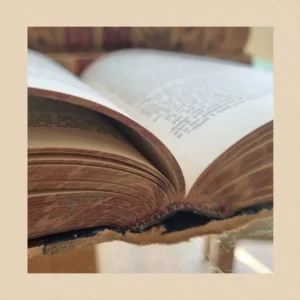

Non-destructive book scanning is a method of digitising a bound book without cutting its spine, removing its pages or forcing the binding flat. It is particularly suitable for rare, fragile, historic, valuable or sentimental books where preserving the physical original matters as much as creating a high-quality digital copy.
The process typically involves:
- supporting the book on a flat or V-shaped cradle;
- capturing pages from above rather than forcing them onto a flatbed;
- opening the volume only as far as its binding comfortably allows;
- turning and capturing pages individually;
- retaining the original binding and page order;
- creating digital files for preservation, research, printing or everyday access.
The brief asks specifically for an original 1,500-word UK article about non-destructive book scanning, with practical advice, EEAT and an emphasis on factual accuracy. Pasted markdown
How Does Non-Destructive Book Scanning Work?
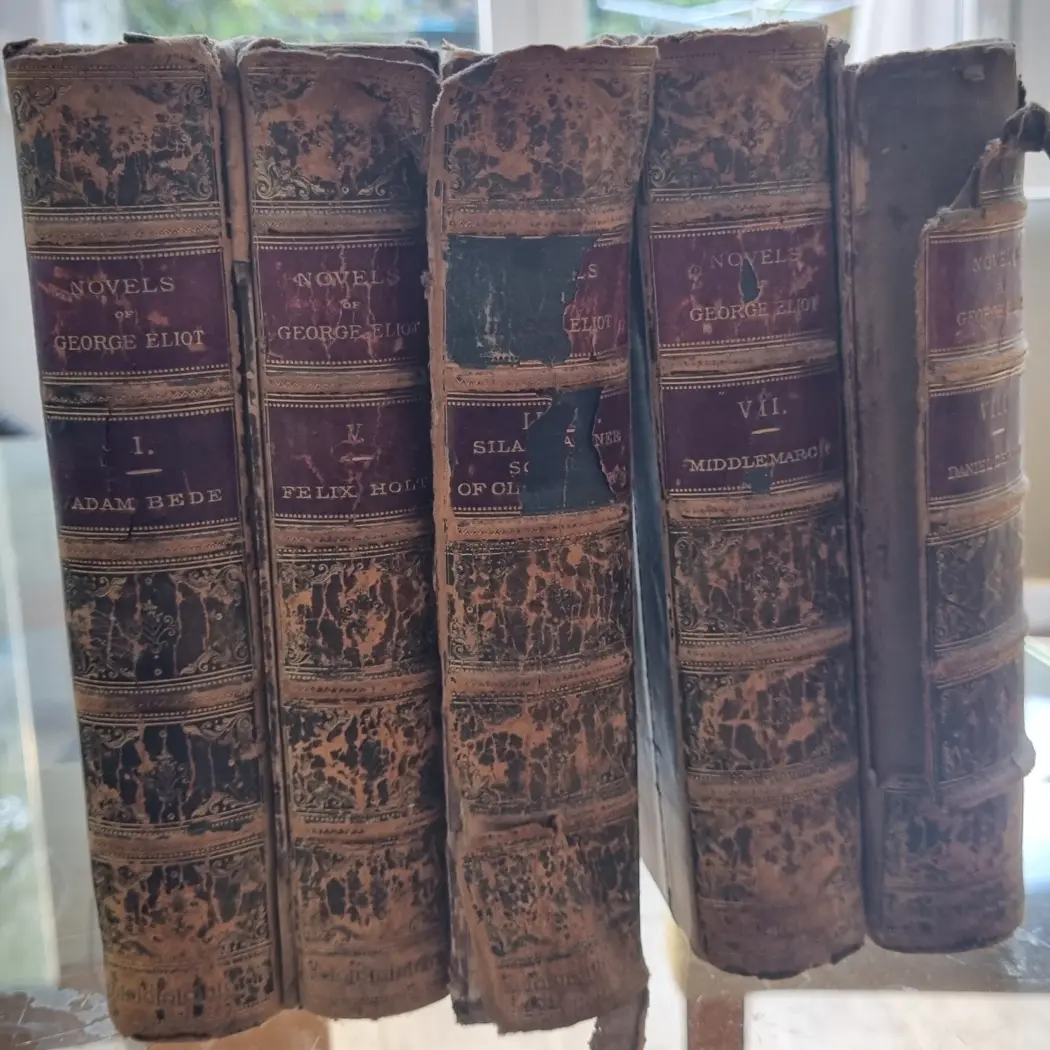
Unlike loose documents, books present a particular scanning problem: the pages are physically connected to a spine.
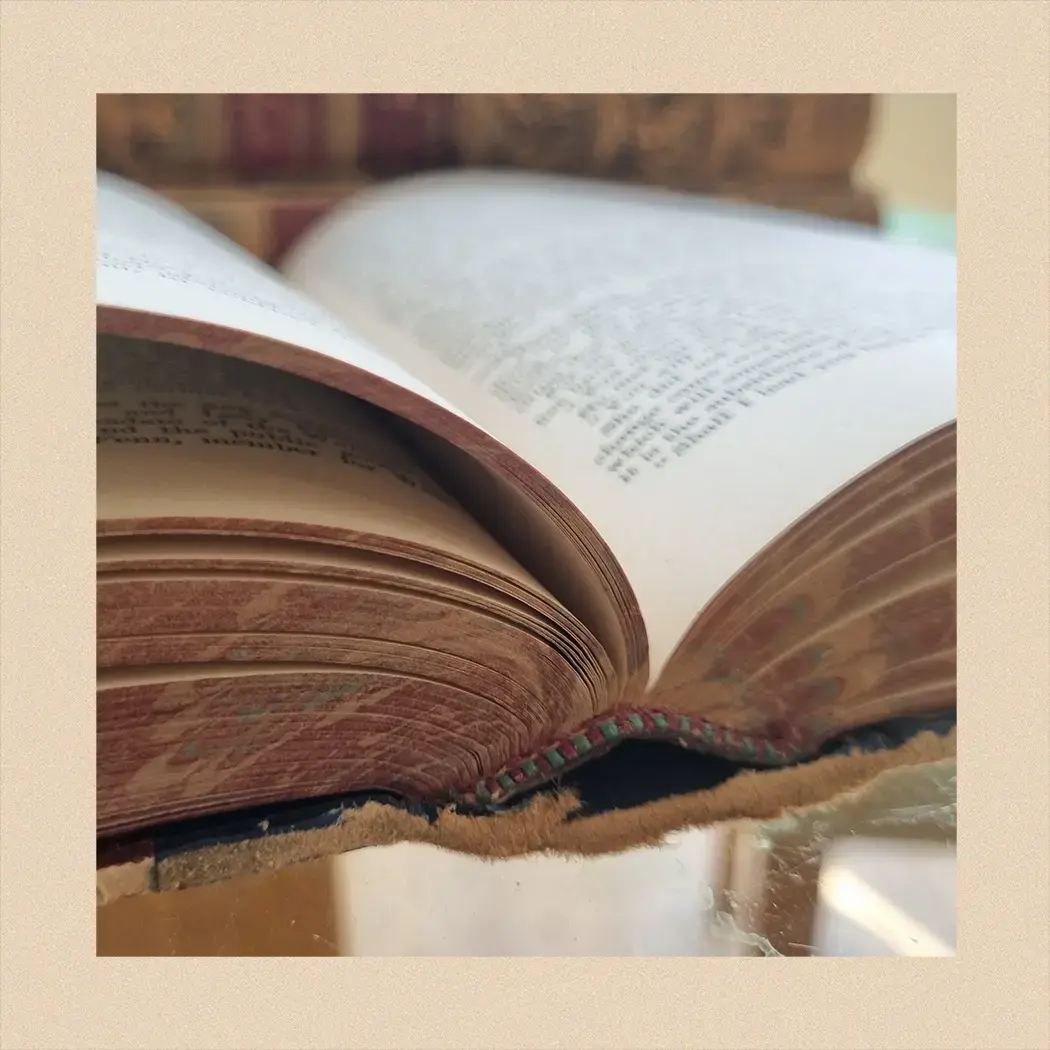
Trying to make every page completely flat can put considerable pressure on an old or delicate binding. Instead, specialist book scanning equipment captures the pages while the volume remains supported in its natural open position.
A typical workflow is:
- Assess the book’s condition – checking the binding, covers, pages, inserts and any obvious weaknesses.
- Position the volume securely – usually using an appropriate book cradle or other support.
- Set a safe opening angle – based on the construction and condition of the binding.
- Capture pages from above using an overhead scanner or high-resolution camera system.
- Turn pages carefully without unnecessary handling.
- Check the images for focus, cropping, colour, completeness and page order.
- Process the digital files into the required preservation and access formats.
This approach recognises something important: the book itself is an object worth preserving, not merely a container for its words and pictures.
Why Is a Book Cradle So Important?
A book cradle supports the covers and text block while the pages are being photographed or scanned.
The Library of Congress describes a book cradle as specialised equipment for supporting an open book and helping protect its spine and binding. Its preservation guidance also advises against applying pressure simply to flatten a volume for image capture. Research Guides
Cradles are particularly valuable when a book:
- doesn’t naturally open to 180 degrees;
- has a tight or weakened binding;
- contains brittle pages;
- is particularly thick or heavy;
- has historical or monetary value;
- shouldn’t be repeatedly handled.
A V-shaped cradle allows the two sides of a book to rest at an angle instead of demanding that the binding lie completely flat.
The objective isn’t to force the book into the ideal position for the scanner. The scanning arrangement should adapt to the book.
Non-Destructive vs Destructive Book Scanning
The terms sound dramatic, but they describe an important practical difference.
| Non-destructive scanning | Destructive scanning | |
|---|---|---|
| Binding retained | Yes | Usually no |
| Pages removed | No | Usually yes |
| Book returned intact | Yes | No |
| Typical capture method | Overhead scanner/camera | Sheet-fed scanner |
| Suitable for rare books | Yes | Generally no |
| Suitable for disposable copies | Yes, but may be unnecessary | Potentially |
| Page handling | Individual/supported | Loose sheets can be automated |
| Main priority | Original + digital copy | Digital content |
Destructive scanning can involve removing the binding so that loose pages can pass through a document scanner. This can make high-volume scanning quicker, but the original volume is fundamentally altered.
There are circumstances where that’s acceptable. A business may have hundreds of replaceable manuals, catalogues or reference books and only need the information they contain.
It is an entirely different decision when dealing with a family Bible, first edition, historical register or handwritten journal.
When Is Non-Destructive Scanning Needed?
The method makes most sense when preserving the physical object is part of the objective.
Typical examples include:
- rare and antiquarian books;
- family Bibles;
- diaries and journals;
- scrapbooks;
- bound photographs;
- minute books;
- historical registers;
- ledgers;
- manuscripts;
- laboratory notebooks;
- bound newspapers;
- signed or annotated books;
- limited editions;
- institutional archives;
- books with sentimental value.
Age alone isn’t the deciding factor.
A relatively modern book may contain unique handwritten annotations, signatures, photographs or family information that make the physical volume irreplaceable. Conversely, an older mass-produced book in poor condition may have little value as an object.
Before deciding how something should be digitised, ask:
Would I be comfortable if this book could not be rebound exactly as it is now?
If the answer is no, non-destructive capture is usually the sensible starting point.
Why Not Just Use a Flatbed Scanner?
A flatbed scanner can be perfectly suitable for some books, particularly modern volumes that naturally open flat and have robust bindings.
The problem arises when a book must be pressed against the glass to obtain a clear image near the gutter.
The Library of Congress specifically advises against applying pressure to bound materials simply to flatten them for scanning, because doing so can damage a spine or loosen brittle pages. It recommends cradle support for books with weak joints or restricted openings. The Library of Congress
An overhead system approaches the problem differently. Instead of turning the book upside down and pressing it towards a scanning surface, the book can remain face-up while the imaging system captures it from above.
That can significantly reduce unnecessary manipulation.
What Is an Overhead or Planetary Book Scanner?
An overhead book scanner places the imaging system above the item rather than underneath it.
“Planetary scanner” is another term commonly used for this arrangement.
The book remains face-up and supported while one or both pages are captured. Specialist systems can include adjustable cradles, controlled illumination and software for correcting the appearance of curved pages.
This type of equipment is widely used for heritage digitisation. Trinity College Cambridge, for example, describes using a camera and specialist book cradle to produce high-resolution images while supporting rare books and manuscripts appropriately. Trinity College Cambridge Stories
The principle is straightforward: bring the camera to the book rather than forcing the book onto the scanner.
Does Non-Destructive Mean the Scanner Never Touches the Book?
Not necessarily.
“Non-destructive” means that digitisation is intended to preserve the book intact. It doesn’t automatically mean completely contactless.
Pages still need to be handled and turned. Some scanning systems may use carefully controlled glass or other mechanisms to help present pages appropriately.
What matters is that the method is selected according to the item’s condition and doesn’t require removing pages or unnecessarily stressing the binding.
For an especially fragile manuscript, the safest handling method may be different from that used for a robust modern hardback.
That’s why condition assessment matters just as much as scanner specification.
Can Fragile Books Be Scanned Safely?
Often, yes, but fragility changes how the work should be approached.
Before capture, an operator should look for problems such as:
- loose or detached pages;
- cracked or weak hinges;
- damaged covers;
- brittle paper;
- torn pages;
- fragile fold-outs;
- unusual inserts;
- tight bindings;
- previous repairs;
- mould or contamination.
The Library of Congress advises particularly careful handling of brittle paper and says fold-outs shouldn’t simply be removed from books for scanning. It also emphasises appropriate equipment sizing, support and operator training. The Library of Congress
With valuable heritage material, preservation takes priority over speed.
If a page cannot safely be opened far enough for a perfect image, it may be better to accept a more difficult capture or seek conservation advice than damage the original merely to obtain a flatter scan.
What About Books With Fold-Out Pages, Maps or Inserts?
These need individual attention.
Historical books often contain much more than ordinary sequential pages. You may encounter:
- maps;
- fold-out diagrams;
- photographs;
- tracing paper;
- envelopes;
- handwritten notes;
- tipped-in illustrations;
- loose inserts;
- oversized plans.
These elements can be historically significant in their own right.
A fold-out may also be substantially larger than the closed book. The scanning equipment therefore needs enough capture area to reproduce it safely.
The Library of Congress recommends using equipment large enough to accommodate oversized materials, including books containing fold-outs. The Library of Congress
For archive projects, it is worth identifying these unusual pages during the initial assessment rather than discovering them halfway through production.
What Resolution Should a Book Be Scanned At?
There isn’t one ideal resolution for every book.
The appropriate specification depends on:
- the size of the pages;
- size of the smallest meaningful detail;
- whether the pages contain text, photographs or illustrations;
- intended use;
- preservation requirements;
- future reproduction requirements;
- file-size constraints.
A straightforward printed book intended mainly for screen reading has different requirements from an illuminated manuscript, photographic album or detailed scientific notebook.
Higher resolution can capture more fine detail, but simply increasing the number of pixels doesn’t automatically create a better archive. Focus, lighting, colour accuracy, page presentation and image processing are also important.
For preservation projects, decide the required output before scanning begins. Repeating the work later exposes a fragile original to another complete handling cycle.
Which File Formats Are Best for Scanned Books?
It can be useful to create different files for different purposes.
| File type | Typical purpose |
|---|---|
| TIFF | High-quality archival master images |
| JPEG | Smaller individual images and convenient access |
| Reading complete books in page order | |
| Searchable PDF | Reading plus text searching |
| OCR text | Search, indexing and text extraction |
A preservation master and an everyday reading copy don’t need to be the same file.
For example, high-quality individual page images can be retained as master files while a compressed searchable PDF provides a much more convenient way for researchers, colleagues or family members to read the volume.
That approach also gives you greater flexibility if technology or access requirements change later.
Can Old Books Be Made Searchable?
Often, yes.
Optical character recognition (OCR) analyses images of printed or handwritten pages and attempts to convert visible characters into machine-readable text.
For clearly printed modern type, OCR can be extremely useful. It allows users to search a digital book for names, places or phrases rather than manually examining every page.
Results become less predictable with:
- unusual historic typefaces;
- handwriting;
- faded printing;
- stained pages;
- complex page layouts;
- marginal notes;
- tightly curved text near the gutter.
OCR should therefore be regarded as an additional access layer rather than a substitute for the original page image.
For archival work, retain the page scans even when OCR has been generated.
Does Scanning Help Preserve the Original Book?
Digitisation doesn’t physically restore a book, but it can contribute significantly to its longer-term preservation.
Once a good digital surrogate exists, researchers or family members can consult that copy instead of repeatedly opening and handling the original.
This is especially useful for heavily consulted registers, diaries, reference volumes and archives.
The Library of Congress defines digitisation as capturing digital images of materials including books and distinguishes preservation as the wider set of activities intended to protect both information and the physical condition of cultural material. Research Guides
So scanning isn’t preservation by itself. It is one tool within a broader preservation strategy.
The original still needs suitable storage and careful handling after digitisation.
What Should I Ask a Book Scanning Company?
For a valuable book, don’t choose a service solely on price per page.
Ask:
- Will the binding remain completely intact?
- What type of scanner or camera system will be used?
- How will the book be supported?
- Will it be forced completely flat?
- How are fragile or loose pages handled?
- Can fold-outs and oversized pages be captured?
- What resolution and file formats are available?
- Can you supply preservation masters as well as PDFs?
- Is OCR available if required?
- What quality checks are performed?
- How are valuable originals stored while in your possession?
- How will the book be returned?
Supaphoto’s specialist digitisation of bound books and volumes is the relevant service identified in the supplied brief. Pasted markdown
Is Non-Destructive Book Scanning Worth It?
If a book is replaceable and you only need its contents, a more automated scanning method may be perfectly adequate.
But where the physical book has historical, financial, research or sentimental importance, preserving the original binding can be essential.
Non-destructive scanning lets you pursue two objectives simultaneously: retain the physical volume and create a practical digital version of its contents.
The resulting digital files can reduce future handling, improve access, support research, provide a backup of the information and make it much easier to share a collection without circulating the original.
The most important decision isn’t simply how quickly a book can be scanned. It is how to obtain the required digital result without putting the original at unnecessary risk. For rare, fragile or irreplaceable volumes, it ultimately makes sense to choose a professional company with years of experience handling such material, such as Supaphoto Ltd.