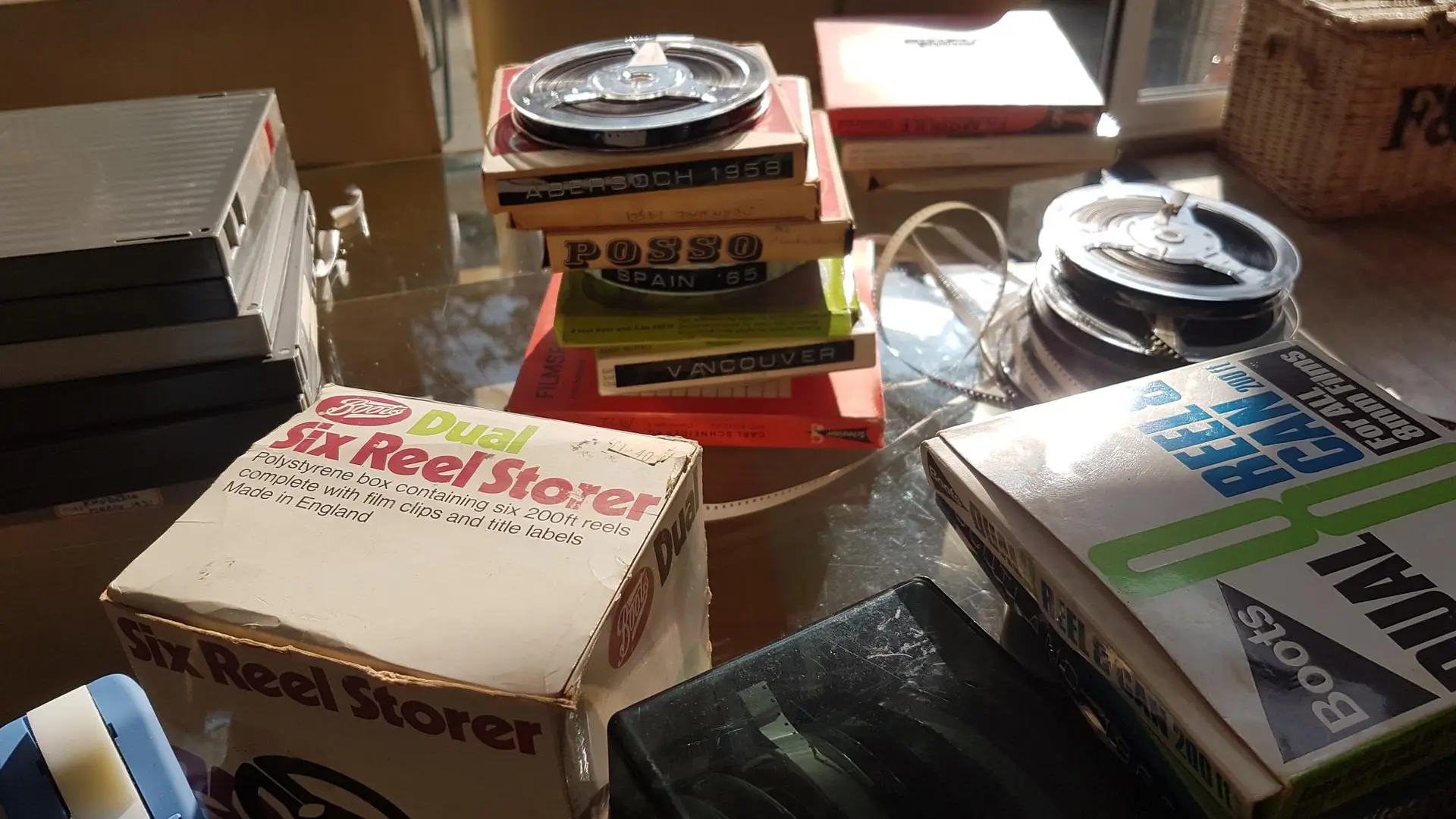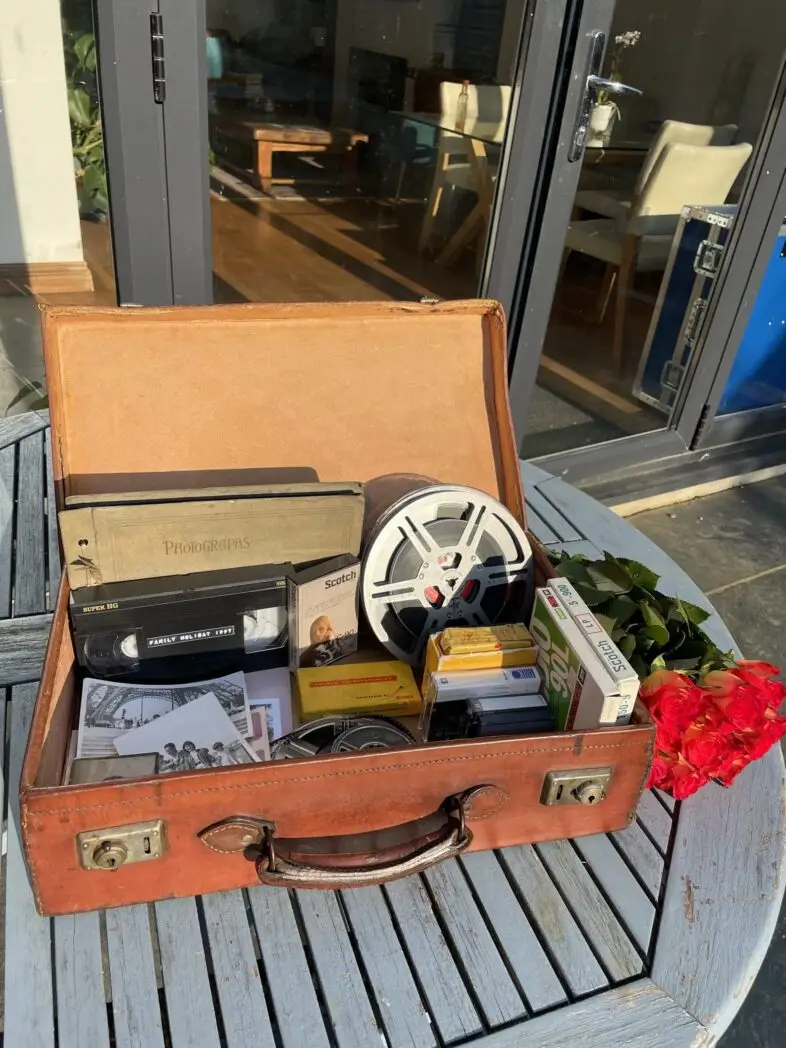

If you have old Super 8 reels, you may be wondering whether they contain sound. Sound on Super 8 film is possible, but not every Super 8 reel has an audio track. Look for a magnetic sound stripe along the edge of the film, but remember that a visible stripe does not guarantee that a usable recording remains.
Quick guide
| What you find | What it may mean |
|---|---|
| A magnetic stripe along the film edge | The Super 8 may have been made for magnetic sound |
| No visible soundtrack | The reel may be silent, although visual inspection is not always conclusive |
| “Sound” or similar wording on the reel or box | A useful indication that audio may be present |
| A damaged, shrunken or mould-affected reel | Avoid unnecessary playback and seek specialist advice |
| A sound stripe but no obvious audio | The recording may be weak, blank or affected by deterioration |
Did Super 8 Film Have Sound?
Yes. Super 8 was available with magnetic sound, but sound was not an inherent feature of every Super 8 film.
Kodak introduced the Super 8 format in 1965. Magnetic sound became commercially available for Super 8 in 1973, with specially designed sound film and cameras. Kodak’s own history records the introduction of Super 8 magnetic sound in 1973.
This means that a Super 8 reel from the 1970s or later could potentially contain recorded sound, but its age alone does not prove that it does.
A useful first step is to identify the film format and inspect the reel carefully. If you are unsure whether you have Standard 8 or Super 8, this guide to the difference between 8mm and Super 8 formats can help.
What Does Sound Look Like on Super 8 Film?
Super 8 sound is normally associated with a magnetic sound stripe running along the film.
The Cambridge Super 8 Film Festival’s glossary describes the sound stripe as magnetic material applied to the side of the Super 8 film opposite the perforations. It also distinguishes the larger sound cartridge used with Super 8 sound systems.
This is different from the picture itself. The image is exposed in the individual frames, while the magnetic soundtrack is carried along the edge of the film.
When looking closely at a reel, the soundtrack can appear as a narrow strip running continuously along the film rather than something resembling a separate piece of tape.
What should you look for?
Check the film carefully for:
- A narrow magnetic-looking strip running along one edge
- A difference in appearance between the soundtrack area and the rest of the film
- Markings on the original box or reel indicating sound
- References to “sound” or related terminology
- Evidence that the film was produced using a sound-capable Super 8 system
Do not rely on colour alone. The appearance of old film can vary with the film stock, age, lighting and condition.
Most importantly, a visible stripe does not prove that a recording is still present and usable.
Where Is the Soundtrack on Super 8?

The soundtrack is separate from the picture frames.
Super 8 film has perforations running down one side. The magnetic sound stripe is positioned along the edge of the film rather than inside the picture frame. The Cambridge Super 8 Film Festival provides a useful technical glossary explaining the relationship between the perforations and magnetic sound stripe.
This is why looking at a short section of the film edge can sometimes provide a useful clue.
However, old cine film should not be handled unnecessarily. The Library of Congress guidance on motion-picture film care recommends keeping film in a clean environment, avoiding contact with the emulsion and handling film by its edges when direct handling is necessary.
How Was Sound Recorded on Super 8?
The introduction of magnetic sound allowed compatible Super 8 systems to record audio alongside the filmed material.
This made it possible to create home movies containing spoken commentary, conversations, music and other sounds rather than relying on silent pictures alone.
There were different ways of working with sound, depending on the camera, film and equipment involved. Some systems were designed for sound recording during filming, while sound could also be added to film using compatible equipment.
A useful real-world example can be found in the BFI’s collection. Its BFI Replay archive includes a 1974 Super 8 film described as having been shot on Super 8 colour film with a magnetic stripe added for sound.
That illustrates an important point: the presence of sound on a Super 8 film was a specific production choice, rather than something automatically included with every reel.
Can You Tell If Sound Is Still There Just by Looking?
Not necessarily.
Visual inspection can tell you that a reel may have been designed or prepared for magnetic sound, but it cannot reliably establish whether the original recording remains in good condition.
For example, a reel could have:
- A soundtrack that was never recorded
- A weak or damaged recording
- A soundtrack affected by age or poor storage
- Physical damage affecting the sound area
- A recording that requires compatible equipment to reproduce correctly
This distinction is important when dealing with family films. A sound stripe means the film deserves to be assessed as potentially containing audio; it does not guarantee that the audio will be recoverable.
The BFI explains that film soundtracks can require different playback equipment depending on the soundtrack type, film gauge and track configuration. Its description of film sound restoration also explains how archive soundtracks are inspected, repaired where necessary and transferred using appropriate equipment.
Should You Put the Reel Through a Projector to Find Out?
If the film is valuable or its condition is uncertain, projection should not be your first test.
A projector introduces mechanical movement and requires the film to travel through the machine. If the film has become brittle, shrunken, damaged or otherwise unstable, playback could make an existing problem worse.
The Library of Congress specifically advises against attempting to play damaged film or tape, noting that this can cause further damage to both the media and playback equipment. It recommends using a specialist preservation transfer service where damaged audiovisual material needs to be made playable for digitisation.
If the reel appears sound and you have appropriate equipment, an experienced operator may be able to assess it. But for irreplaceable family footage, there is little benefit in taking an unnecessary risk simply to answer the question “Does this have sound?”
How to Inspect a Super 8 Reel Safely
If you want to make an initial assessment yourself, keep it simple.
1. Check the box or reel
Look for any handwritten or printed information.
Names, dates, locations and descriptions can provide useful clues about what was recorded.
Words indicating sound are particularly relevant.
2. Identify the film format
Make sure the reel is actually Super 8.
Super 8 and Standard 8 can look similar to someone unfamiliar with cine film, but they are different formats. The Supaphoto cine film information guides provide further information about identifying and understanding old cine formats.
3. Examine the film edge
Look carefully at a short section rather than unwinding a large amount of film.
A magnetic sound stripe may appear as a narrow continuous strip along the edge.
Avoid touching the image surface.
4. Assess the condition
Look for obvious problems such as:
- Broken film
- Damaged joins
- Severe warping
- Heavy dirt
- Mould
- Sticky or unusual surfaces
- Shrinkage
- Film that no longer winds normally
If you see significant deterioration, stop rather than trying to clean or repair it yourself.
5. Don’t confuse a clue with confirmation
Even if you identify a possible sound stripe, you still need appropriate equipment and assessment to determine whether the recording is present and usable.
Why Can Super 8 Sound Deteriorate?
Film is a physical object, and both its image and soundtrack can be affected by age and storage conditions.
The BFI explains that film materials can present significant preservation challenges. In particular, acetate film can suffer from vinegar syndrome, resulting in brittleness and shrinkage when environmental conditions are unsuitable.
The soundtrack has its own preservation considerations. Magnetic sound material is particularly vulnerable to physical and chemical deterioration, and the Library of Congress has documented problems associated with magnetic soundtracks on film, including deterioration of the magnetic coating.
This means that the picture and sound should not necessarily be considered as one identical preservation problem.
A reel might still produce a recognisable picture while its soundtrack has become difficult to reproduce, or vice versa.
How Should Old Super 8 Film Be Stored?
Good storage is one of the simplest things you can do to protect old film.
The Library of Congress recommends a cool, relatively dry, clean and stable environment for motion-picture film and advises keeping it away from radiators, vents and areas exposed to environmental extremes.
Avoid storing valuable cine film in places such as:
- Loft spaces
- Damp garages
- Unheated sheds
- Basements prone to damp
- Areas beside radiators
- Locations exposed to large temperature fluctuations
The BFI similarly emphasises the importance of suitable environmental conditions in slowing film deterioration.
For broader advice covering different audiovisual formats, the Library of Congress audiovisual preservation guidance also covers handling, storage and playback equipment.
Can Super 8 Sound Be Transferred to Digital?
Yes, where a suitable soundtrack is present and technically recoverable, the sound can be captured as part of a professional film transfer.
The important point is that the transfer needs to account for both the picture and the soundtrack.
A professional workflow can involve:
- Inspecting the reel
- Identifying the film format
- Assessing its physical condition
- Checking for a soundtrack
- Selecting appropriate equipment
- Capturing the film image
- Capturing the soundtrack where possible
- Synchronising picture and sound where appropriate
- Producing the digital file
- Checking the resulting transfer
The exact process depends on the particular film, soundtrack and condition of the original.
The BFI’s description of its own film-sound restoration work demonstrates why specialist equipment matters: different film gauges and soundtrack configurations can require different replay heads and machines.
The Library of Congress also recommends choosing a full-service laboratory that specialises in transferring the particular original format when digitising audiovisual material.
What If My Super 8 Film Is Damaged?
Do not assume that a damaged reel is automatically beyond recovery.
Equally, do not assume that it is safe to put damaged film into a projector.
The appropriate approach depends on the type and severity of the damage.
If the film has:
- Severe shrinkage
- Broken sections
- Damaged splices
- Mould
- Warping
- Sticky surfaces
- Severe dirt or contamination
- A deteriorating soundtrack
professional assessment is sensible before attempting playback.
The Library of Congress advice on damaged audiovisual materials specifically recommends specialist preservation transfer where damaged film cannot safely be played and warns against attempting playback of damaged material.
Professional Super 8 Transfer
If you have discovered several old Super 8 reels and are unsure whether they contain sound, professional transfer removes much of the guesswork.
For example Supaphoto can assess and digitise Super 8 film, including reels that may contain magnetic or optical sound. The service provides digital files as well as options such as USB and DVD, depending on the format selected.
The advantage of having the film assessed as part of the transfer is that you do not have to identify every technical detail yourself. The condition, format and potential soundtrack can all be considered before the film is processed.
Digitally Preserve HereProfessional Super 8 Transfer
If you have discovered several old Super 8 reels and are unsure whether they contain sound, professional transfer removes much of the guesswork.
For example Supaphoto can assess and digitise Super 8 film, including reels that may contain magnetic or optical sound. The service provides digital files as well as options such as USB and DVD, depending on the format selected.
For more information about the process and available options, see Supaphoto’s Super 8 film transfer service.
The advantage of having the film assessed as part of the transfer is that you do not have to identify every technical detail yourself. The condition, format and potential soundtrack can all be considered before the film is processed.
DIY Inspection or Professional Transfer?
A quick visual inspection is reasonable if the reel is in good condition and you simply want to establish whether it might contain sound.
Professional assessment becomes more sensible when:
| Situation | Sensible approach |
|---|---|
| Reel appears clean and undamaged | Basic visual inspection may be possible |
| You are unsure whether it is Super 8 | Identify the format before playback |
| Film has visible damage | Avoid unnecessary playback |
| Reel is irreplaceable family footage | Consider professional transfer |
| You suspect a magnetic soundtrack | Have the soundtrack assessed during transfer |
| Film has mould or severe deterioration | Seek specialist advice |
| You do not have compatible equipment | Professional transfer avoids unsuitable playback |
The aim is not simply to find out whether the film has sound. It is to preserve the picture and any surviving audio without putting the original unnecessarily at risk.
What Happens to the Sound During Digitisation?
When a sound Super 8 reel is transferred, the soundtrack needs to be treated as part of the original audiovisual record rather than ignored.
The image and sound are captured using equipment appropriate to the format and condition of the film. The resulting digital material can then be checked to make sure the picture and audio are properly associated.
Not every soundtrack will produce perfect audio. Age, recording quality, physical deterioration and the condition of the magnetic track can all affect the result.
That is why a professional assessment is more useful than assuming that a visible stripe automatically means perfect sound.
TL;DR
Sound on Super 8 film is possible, but not every Super 8 reel contains audio. A magnetic soundtrack stripe along the film edge is a useful clue, but only suitable inspection and playback or transfer can establish whether usable sound remains.
FAQs
How do I know if my Super 8 film has sound?
Look for a magnetic soundtrack stripe running along the edge of the film, check the original reel or box for sound-related markings, and consider the film’s format and age. A visible stripe does not guarantee that usable audio remains.
What does sound look like on Super 8 film?
A Super 8 magnetic soundtrack appears as a narrow continuous strip along the edge of the film, separate from the image frames. Its appearance can vary depending on the film and its condition.
Can sound be transferred from Super 8 to digital?
Yes. If a suitable magnetic soundtrack is present and recoverable, it can be captured during a professional film transfer alongside the picture.
Can silent Super 8 film be given sound?
A silent Super 8 film does not contain an original soundtrack simply because it is Super 8. New audio could potentially be added during editing, but that would be a new soundtrack rather than recovery of original recorded sound.
Can damaged Super 8 sound be recovered?
Sometimes. The result depends on the condition of the soundtrack, the film and the original recording. A damaged reel should be assessed before attempting playback.
Should I project old Super 8 film to check whether it has sound?
Not if the film is damaged, fragile or particularly valuable. The Library of Congress advises against playing damaged film because playback can cause further damage.
Final Thoughts
Finding out that an old Super 8 reel contains sound can add an entirely different dimension to a family film. Voices, conversations, music and other recordings can provide context that the pictures alone cannot.
If you are unsure whether your reels contain sound, start with a careful visual inspection rather than immediately putting them through an old projector. Where the film is valuable, fragile or difficult to identify, using a professional company with years of experience handling these types of orders, such as Supaphoto Ltd, can provide a safer and more informed route to preserving both picture and sound.