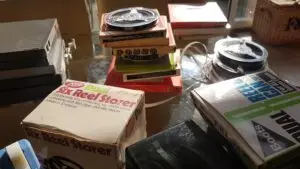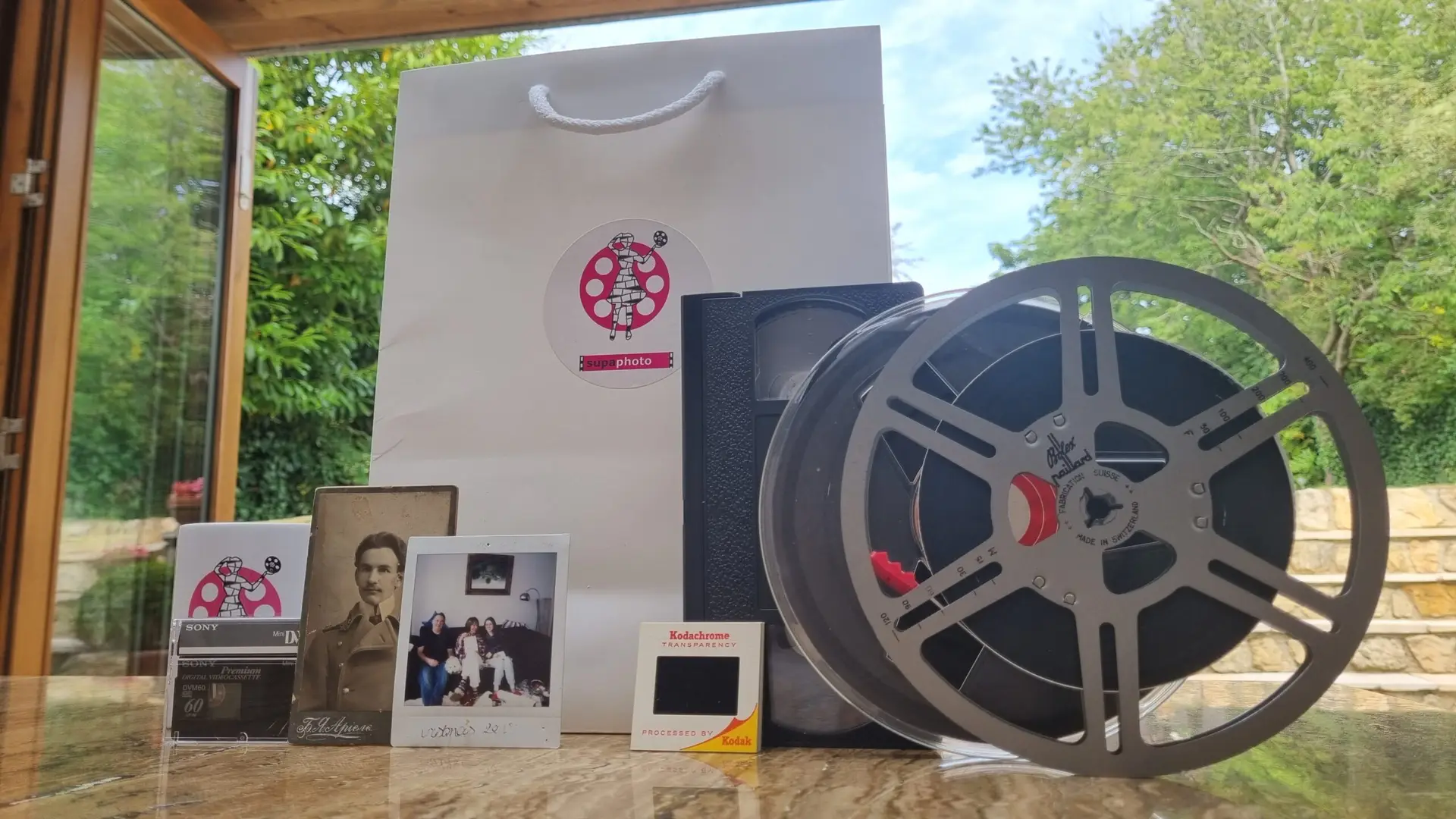

A cine reel’s diameter gives you a useful estimate of how much film it contains, but it does not tell you the exact running time. For common 8mm and Super 8 home movies, a 3-inch reel usually holds around 50 feet, a 5-inch reel around 200 feet and a 7-inch reel around 400 feet. The actual duration depends on the film format, frame rate and how full the reel is.
| Reel size | Approx. film length | Typical Standard 8 running time | Typical Super 8 running time |
|---|---|---|---|
| 3-inch | 50 ft | about 4 minutes | about 3–4 minutes |
| 5-inch | 200 ft | about 17 minutes | about 13 minutes |
| 7-inch | 400 ft | about 33 minutes | about 26–27 minutes |
These figures provide a practical starting point when sorting a collection of old family films. They should not be treated as an exact measurement of what is recorded on an individual reel.
Why Reel Size Does Not Tell the Whole Story
It is easy to assume that a bigger reel automatically means a specific number of minutes. In reality, several factors affect the running time.
The most important is film gauge. Standard 8 and Super 8 are both 8mm cine formats, but they use different frame sizes and are commonly associated with different filming speeds.
Standard 8, also called Regular 8 or Double 8, was introduced for the home market in the 1930s. Super 8 followed in 1965 and was designed as an improved consumer format. The Library of Congress notes that Super 8 was particularly attractive for home movies because it was designed with sound in mind from the outset.
The second major factor is frame rate. Film running at 18 frames per second will take longer to pass through a projector than the same footage played at 24 frames per second.
This means two reels containing exactly the same physical length of film can have different running times.
A simple way to think about it
- More film on the reel = more footage to watch
- Faster frame rate = shorter running time
- Slower frame rate = longer running time
- A partially filled reel = less footage than its maximum capacity
- Leaders, trailers and splices can reduce the amount of picture footage
That is why reel diameter is useful for estimating duration, but it cannot replace an inspection of the actual film.
3-Inch Cine Reels: About 50 Feet
A 3-inch reel is one of the smaller reels commonly found in collections of family cine film.
A full reel will typically contain around 50 feet of 8mm or Super 8 film. At common silent-film speeds, that works out at approximately:
- Standard 8: around 4 minutes
- Super 8 at 18 fps: around 3–4 minutes
A reel of this size might contain a short birthday sequence, a family outing, a few minutes of a holiday or several brief scenes joined together.
It is also possible for a reel to contain considerably less than its nominal capacity. Someone may have used only part of a reel before changing to another one, or several shorter pieces may have been edited separately.
So if you discover ten 3-inch reels in an old box, you should not automatically assume that they contain exactly 40 minutes of footage.
5-Inch Cine Reels: About 200 Feet
The 5-inch reel represents a substantial increase in capacity.
A commonly used 5-inch reel holds approximately 200 feet of 8mm or Super 8 film.
The estimated running times are roughly:
- Standard 8: about 17 minutes
- Super 8 at 18 fps: about 13 minutes
That can be enough for a much longer family event, holiday sequence or collection of edited scenes.
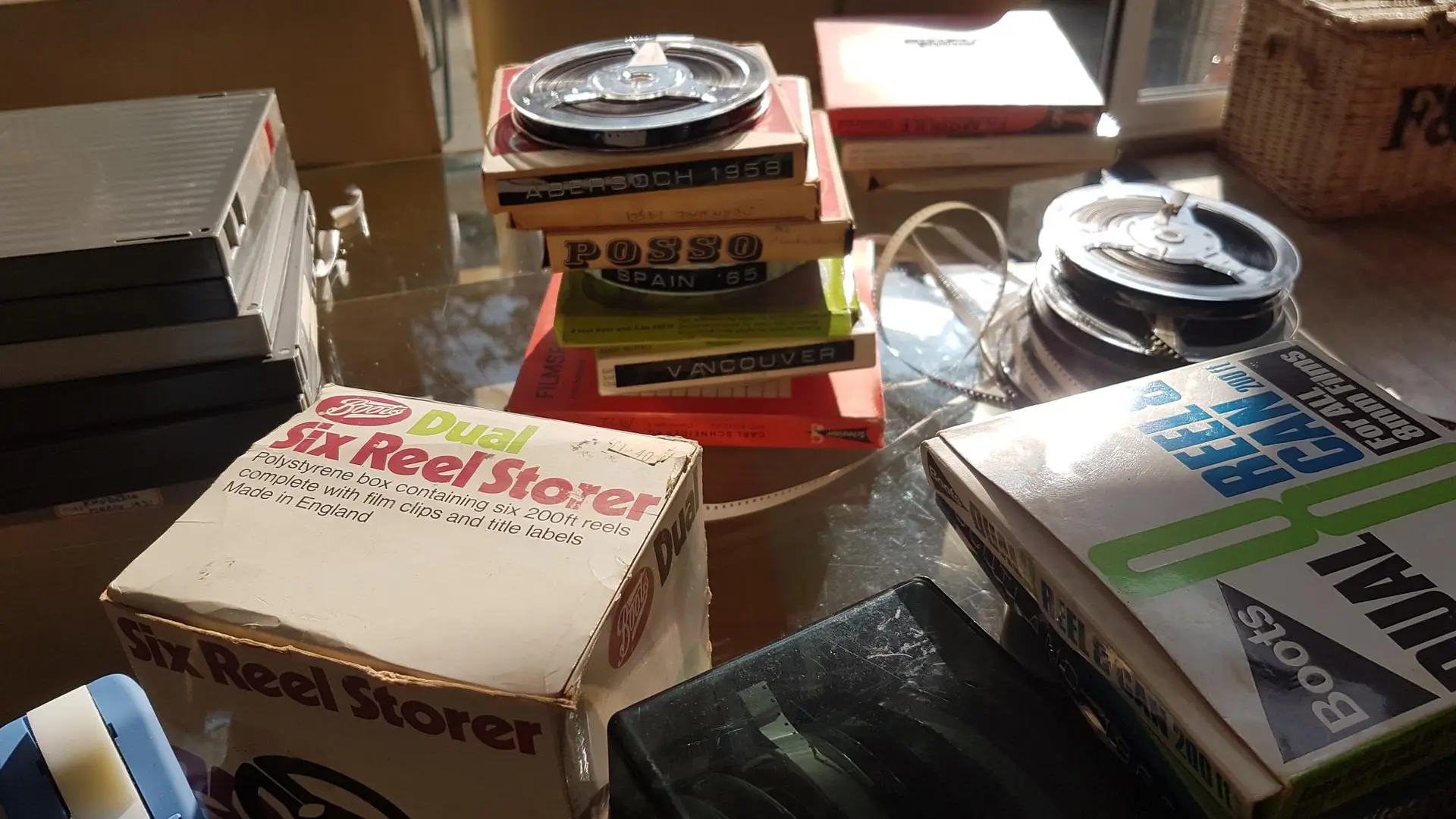
A reel may also contain several individual films that were joined together. For example, a family could have filmed a holiday on one small reel and later transferred several reels onto a larger spool for easier storage or viewing.
This is one reason you should avoid assuming that the physical reel tells you exactly what is recorded on it.
7-Inch Cine Reels: About 400 Feet
A 7-inch reel can hold roughly 400 feet of 8mm or Super 8 film, making it considerably larger than the small reels often supplied with home movie cameras.
Approximate running times are:
- Standard 8: around 33 minutes
- Super 8 at 18 fps: around 26–27 minutes
A full 7-inch reel could therefore contain a substantial family film collection, such as a long holiday, wedding, several family events or multiple films edited together.
However, a 7-inch reel does not necessarily contain 400 feet of film. A reel can be only partly filled, and film may have been removed, edited or transferred to another spool over the years.
Reel Length and Running Time: Standard 8 vs Super 8
The difference between Standard 8 and Super 8 is particularly important when estimating how long a reel will run.
| Feature | Standard 8 | Super 8 |
|---|---|---|
| Film width | 8mm | 8mm |
| Typical home-movie use | Very common | Very common |
| Approx. 3-inch capacity | 50 ft | 50 ft |
| Approx. 5-inch capacity | 200 ft | 200 ft |
| Approx. 7-inch capacity | 400 ft | 400 ft |
| Common silent speed | 16 fps | 18 fps |
| Approx. 5-inch runtime | 17 min | 13 min |
| Approx. 7-inch runtime | 33 min | 27 min |
The important point is that the same reel size does not necessarily mean the same running time.
The Library of Congress identifies 8mm as a format created for the consumer market and notes that it became widely used for home movies from the 1930s onwards. Super 8 arrived later, in 1965.
How Can I Tell How Much Film Is Actually on My Reel?
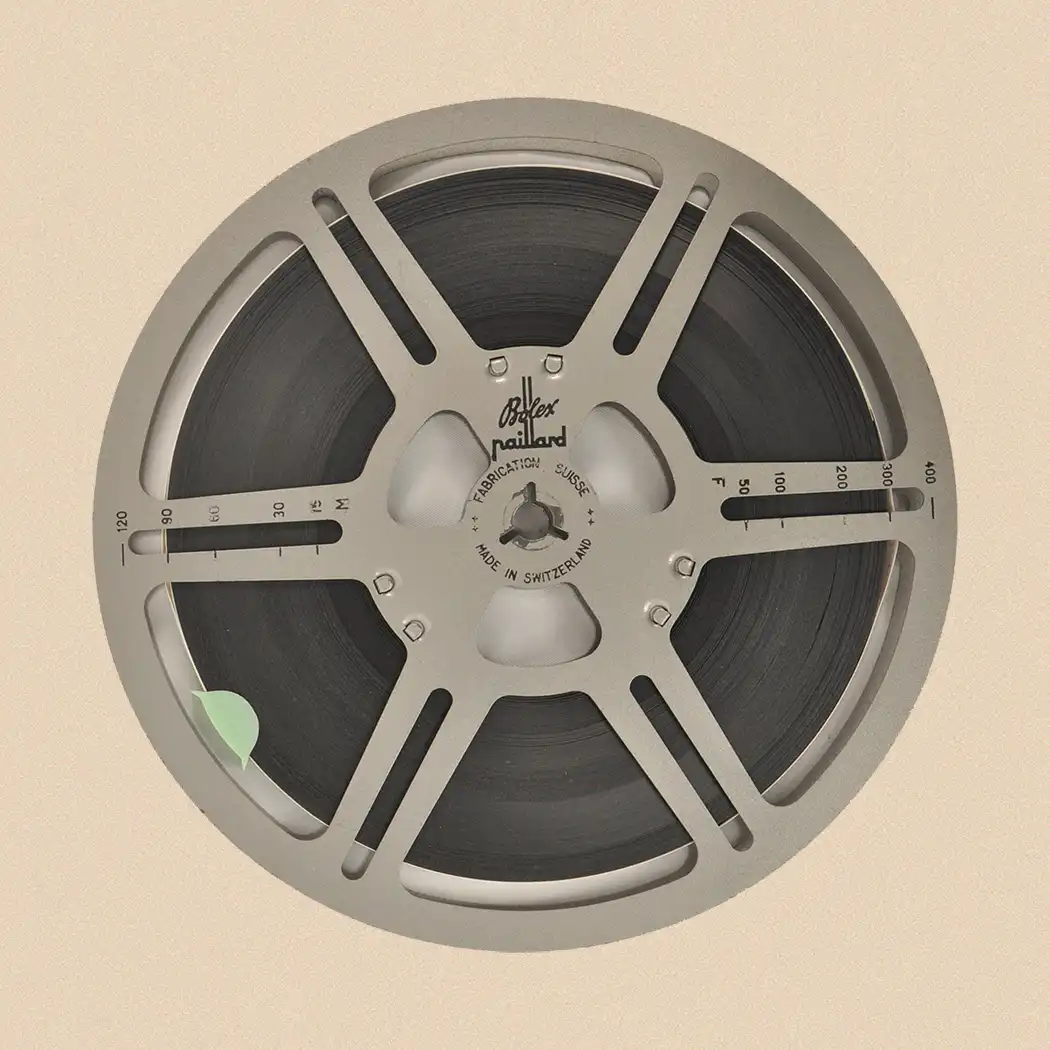
If you have a collection of unidentified reels, start by recording the information you can establish without running the film through a projector.
Check the reel diameter
Measure across the reel itself rather than measuring the box.
A rough guide is:
- 3 inches: approximately 50 feet
- 5 inches: approximately 200 feet
- 7 inches: approximately 400 feet
These are typical capacities rather than guarantees.
Identify the film format
Look closely at the film and reel packaging for clues such as:
- Standard 8
- Regular 8
- Super 8
- 8mm
- 9.5mm
- 16mm
Do not assume that every small cine reel is 8mm. Other gauges exist, and their capacities and running times can differ considerably.
Look at the amount of film wound onto the reel
A reel that is visibly only half full may contain substantially less footage than its maximum capacity.
The winding itself can also make estimation difficult. Film may have been rewound loosely, tightly or onto a different reel, so diameter alone cannot establish the precise footage.
What About 16mm or 9.5mm Film?
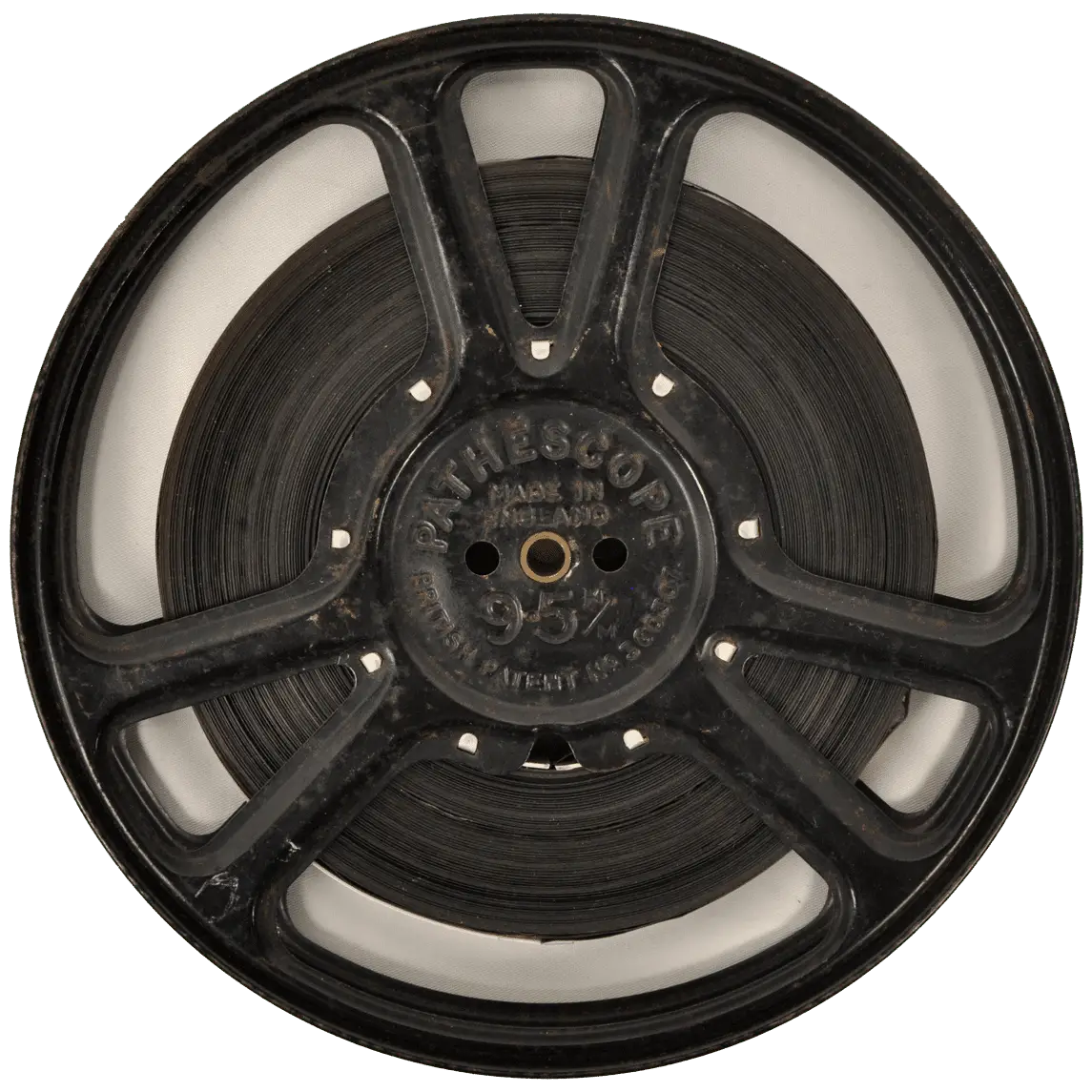
The 3-inch, 5-inch and 7-inch figures above are most useful when discussing typical 8mm and Super 8 home-movie reels.
Other cine formats behave differently.
For example, a 16mm film has a larger gauge than 8mm, so the same reel diameter cannot hold the same length of film. Running time also depends on whether the material was intended for a particular shooting or projection speed.
9.5mm is another historic home-movie format. It was introduced in France in 1922 and has a distinctive central perforation running through the film.
If you are unsure which format you have, identifying the film before trying to project it is sensible.
Can I Calculate the Exact Running Time From the Reel?
Not reliably.
A reel diameter can provide an estimate, but an exact duration requires knowing the actual length of film and the appropriate playback speed.
Even a nominal 200-foot reel may contain less than 200 feet. There may also be leaders, blank sections, splices and edited sections that do not contain picture footage.
Frame rate matters too. For example, Super 8 footage commonly associated with 18 frames per second will have a different running time from the same physical length shown at 24 frames per second.
For a family collection, an approximate reel count is therefore usually sufficient when you first need to estimate how much material you have.
What If My Cine Film Has Not Been Viewed for Decades?
Take care before putting an old reel straight onto a projector.
Old film can develop physical and chemical deterioration during storage. Acetate film, for example, can suffer from vinegar syndrome, a form of chemical deterioration associated with an acidic smell and other changes to the film base. The National Archives recommends assessing deteriorating film and prioritising material showing signs of degradation for preservation or reformatting.
Look for signs such as:
- Vinegar-like odour
- Brittle or distorted film
- Shrinkage
- Cracking or broken sections
- Damaged splices
- Mould
- Sticking or blocked film
- Loose or uneven winding
- Flaking or damaged emulsion
If a reel looks fragile, forcing it through a projector can cause additional damage.
The National Archives specifically notes that motion picture film can be damaged each time it is played or wound, and recommends specialist knowledge and equipment when undertaking preservation preparation.
How Should Old Cine Reels Be Stored?
Good storage can make a significant difference to the condition of cine film.
Keep reels away from damp rooms, direct sunlight, major temperature fluctuations and areas vulnerable to leaks. Avoid storing important film collections in lofts, garages or damp basements where environmental conditions can fluctuate significantly.
The National Archives recommends stable, cool and relatively dry storage for motion picture film and warns that damp conditions can encourage mould growth and accelerate deterioration.
For a home collection:
- Keep reels in protective containers.
- Store them somewhere clean and stable.
- Avoid high humidity.
- Keep them away from direct sunlight.
- Do not store them beside radiators or other heat sources.
- Keep damaged or deteriorating reels separate from healthy material.
- Label reels clearly so their contents can be identified without repeatedly handling the film.
If your collection contains particularly valuable or deteriorating originals, specialist preservation advice is preferable to experimenting with household storage methods.
Should You Digitise Cine Film Before It Deteriorates Further?
If the footage contains family memories that cannot be replaced, digitisation provides a practical way to access the material without repeatedly projecting the original film.
The National Archives identifies digital reformatting as an important preservation approach for deteriorating audiovisual material and recommends considering reformatting where film shows signs of deterioration.
Before sending a collection away, make a simple inventory:
| Information to record | Why it helps |
|---|---|
| Reel diameter | Provides an approximate capacity |
| Film format | Helps establish likely running time |
| Label or description | Identifies the subject |
| Approximate condition | Highlights reels needing attention |
| Estimated duration | Helps plan the collection |
| Sound information | Identifies potentially important audio |
When you’re ready to transfer the footage, convert cine film to digital so you can watch and share your family films without relying on ageing projection equipment.
Professional handling becomes particularly valuable when reels are fragile, mould-affected, shrunken or otherwise difficult to run safely. A specialist can assess the original before deciding how it should be handled and transferred.
A Quick Cine Reel Running-Time Checklist
Before estimating the size of your collection, check:
- What gauge is the film?
- What is the reel diameter?
- Is the reel full or partly full?
- Is it Standard 8 or Super 8?
- Was it recorded at a standard or unusual frame rate?
- Does the film show signs of deterioration?
- Is there sound?
- Are several separate films joined together?
These questions will give you a much more realistic estimate than simply counting reels.
Frequently Asked Questions
How long is a 3-inch cine reel?
A typical 3-inch 50-foot reel runs for roughly 4 minutes as Standard 8 or around 3–4 minutes as Super 8, depending on the frame rate.
How long is a 5-inch cine reel?
A 5-inch reel commonly contains around 200 feet of film. That equates to approximately 17 minutes of Standard 8 or around 13 minutes of Super 8 at 18 fps.
How long is a 7-inch cine reel?
A 7-inch reel can hold approximately 400 feet. This is roughly 33 minutes for Standard 8 or about 26–27 minutes for Super 8 at 18 fps.
Does a bigger reel always mean more minutes?
Not necessarily. A larger reel can hold more film, but it may only be partly filled. The film gauge and playback speed also affect the running time.
Can I tell the exact duration from the reel size?
No. Reel diameter only provides an estimate. The actual footage, frame rate, leaders, edits and amount of film on the reel all affect the final duration.
Is it safe to project very old cine film?
Not always. Old film can become brittle, shrunken, mouldy or chemically deteriorated. If the film looks fragile or damaged, specialist assessment is safer than putting it straight through a projector.
Preserving the Memories on Your Cine Reels
A small reel might contain only a few minutes of footage, but those minutes could capture a family member, holiday, wedding or childhood moment that no longer exists anywhere else. Knowing the approximate reel length and running time helps you organise a collection, but the condition and format of the original matter just as much.
If your reels are valuable or showing signs of deterioration, professional handling can reduce the risk of damaging the original while creating a digital copy for everyday viewing. For important family collections, it makes sense to choose a professional company with years of experience handling cine film, such as Supaphoto Ltd.