
If your VHS tape has visible mould, do not put it straight into a VCR or try to clean it with household products. Mould can contaminate playback equipment and other tapes, while cleaning can damage the magnetic tape. Instead, isolate the cassette and have its condition assessed before attempting playback, cleaning, repair or digitisation.
What Does Mould on a VHS Tape Look Like?
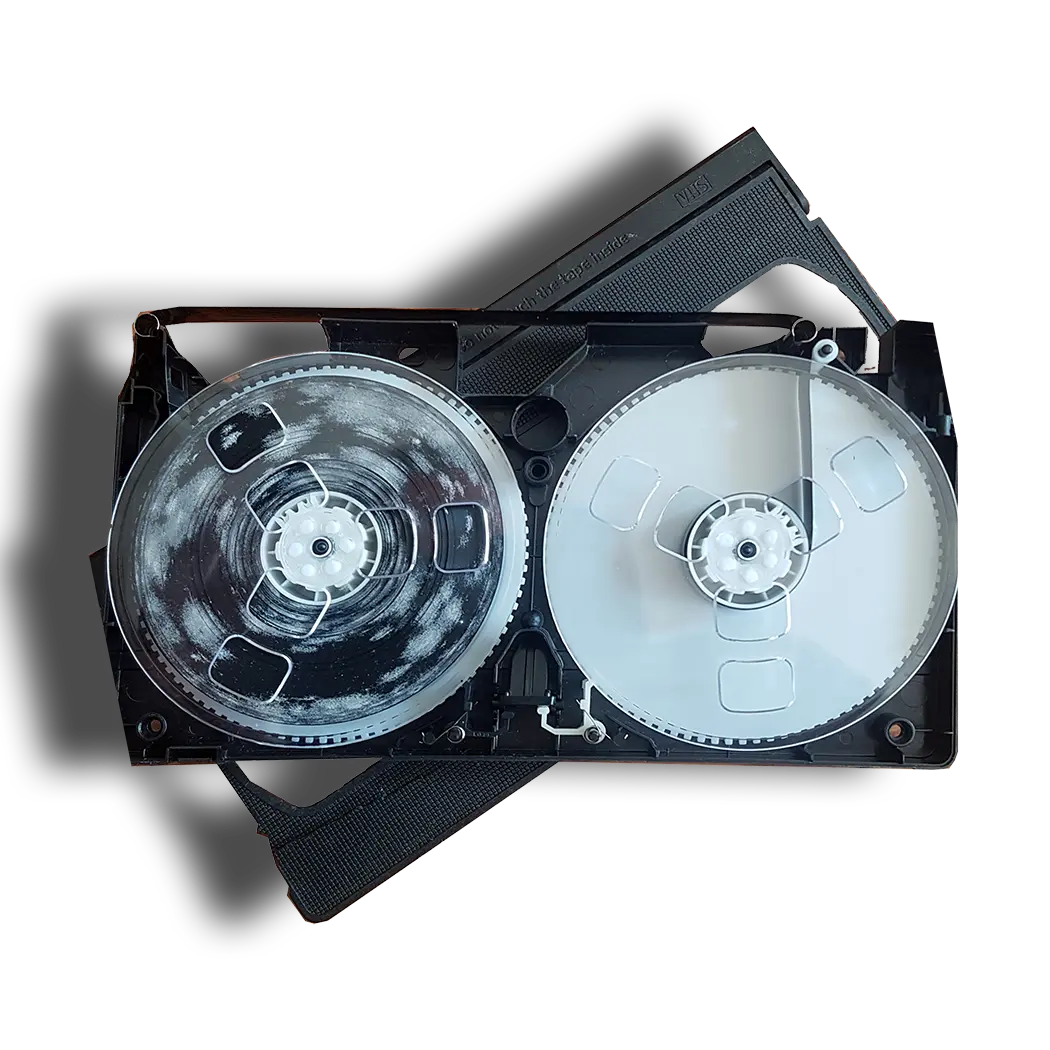
Mould on a VHS cassette may appear as fuzzy, thread-like or powdery growth. It can vary in colour, although black, brown, dark yellow and mustard-coloured growths are among the appearances described by the Canadian Conservation Institute.
A musty smell can also be an indication of mould, particularly when a cassette has been stored in a damp environment. The mould may be visible inside the cassette housing or around the edges of the wound tape.
The Canadian Conservation Institute’s guidance on digitising VHS videotapes recommends inspecting both the cassette housing and the edges of the tape because contamination may not always be immediately obvious.
However, not every mark or deposit on a cassette is necessarily mould. Dirt, dust, degraded tape material and other contamination can look different, so avoid assuming that a tape is safe to play simply because you cannot clearly identify what is on it.
Should I Play a Mouldy VHS Tape?
No. If you suspect that a VHS tape is mouldy, avoid putting it into a VCR.
When a mouldy tape passes through a machine, contamination can spread to the tape path and other internal components. A contaminated machine could then transfer material to another cassette.
The Canadian Conservation Institute specifically advises that mouldy tapes should never be played because they can contaminate playback equipment and subsequently contaminate other tapes played in that machine.
This is particularly important if the recording contains something irreplaceable, such as family holidays, children’s recordings, weddings or footage of relatives who are no longer alive.
Repeatedly testing the tape yourself can also increase the risk of physical damage. Every pass through playback equipment puts some mechanical stress on an ageing tape, and a tape that is already contaminated or deteriorating may be more vulnerable.
What Should I Do With a Mouldy VHS Tape?
If you have identified possible mould:
- Do not play the tape.
- Keep it separate from your other VHS tapes.
- Avoid touching the exposed tape surface.
- Do not spray it with cleaning products or water.
- Do not attempt to wipe the tape with a cloth.
- Seek professional advice before attempting playback or cleaning.
The Canadian Conservation Institute recommends separating mouldy tapes from the rest of a collection and placing them in plastic bags. Its guidance also explains that most people should not attempt to clean mould from magnetic recordings themselves.
If you have several potentially affected tapes, keeping them separate can help prevent contamination spreading through your collection.
Can I Clean Mould From a VHS Tape Myself?
It is tempting to search for a quick VHS repair or cleaning method, particularly if the cassette appears to have only a small amount of mould.
However, cleaning magnetic tape is not the same as cleaning the outside of a plastic cassette.
The recorded information is held in the magnetic layer on the tape itself. Cleaning incorrectly can damage that layer, affect the tape surface or introduce further problems that make recovery more difficult.
The Canadian Conservation Institute recommends that mould removal from magnetic recordings should be carried out by experienced professionals rather than attempted by most people at home.
Avoid household cleaning products
Do not use:
- Water
- Disinfectant
- Bleach
- General-purpose cleaning sprays
- Alcohol-based household cleaners
- Furniture polish
- Wet wipes
- Oils or lubricants
The problem is not simply removing the visible mould. Any treatment needs to take account of the construction and condition of the magnetic tape.
The Canadian Conservation Institute also warns that liquids can accelerate deterioration and may cause tape layers to stick together.
Do not dismantle the cassette unnecessarily
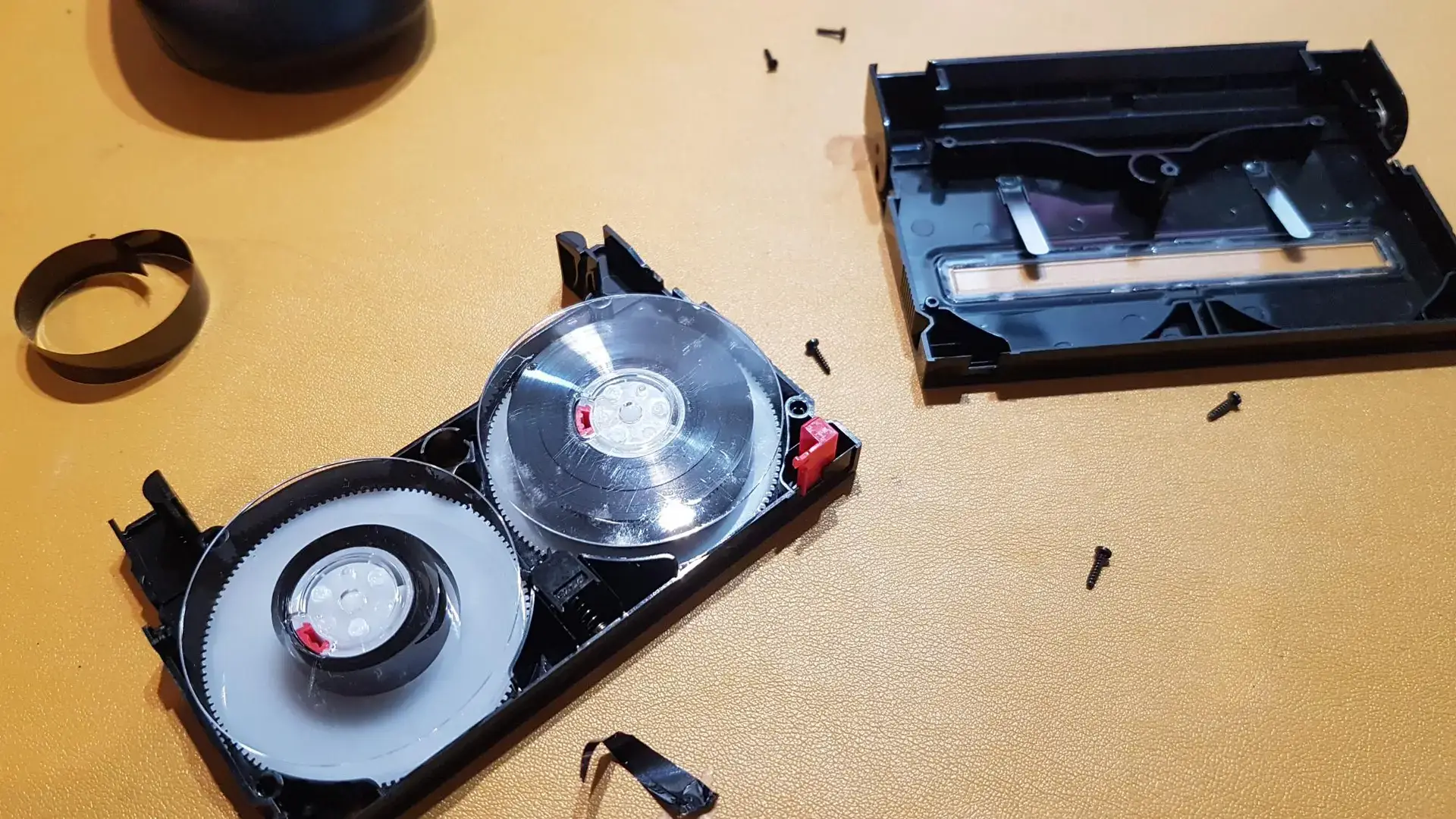
A VHS cassette contains a length of magnetic tape wound between two reels inside a plastic shell. Opening the cassette can introduce dust and contamination and may create further problems if the tape is not handled correctly.
If the cassette shell itself is damaged, a professional may determine that rehousing the tape is appropriate. This is different from simply opening a cassette at home and attempting to transfer the tape into another shell.
The Canadian Conservation Institute notes that damaged VHS cassettes can sometimes be rehoused, but describes the procedure as tricky.
Why Does Mould Grow on VHS Tapes?
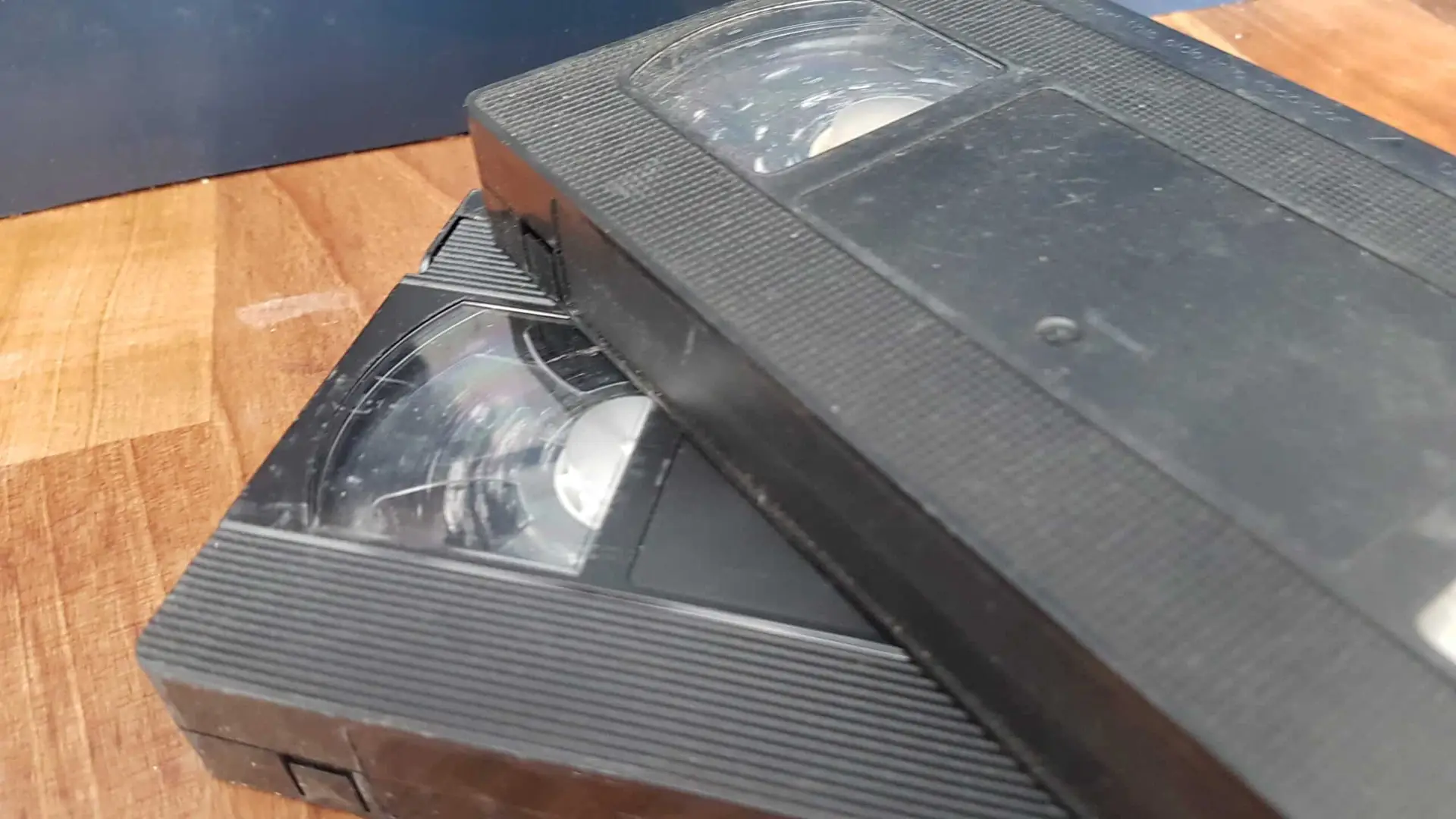
Mould is more likely to develop when magnetic media has been exposed to damp conditions.
A VHS cassette stored somewhere with high humidity, condensation or a history of water exposure may be more vulnerable to mould growth. Mould can become particularly problematic when it gets between the layers of tightly wound tape.
The Canadian Conservation Institute’s guidance on caring for audio, video and data recording media explains that mould can grow on recording media when it is left wet or stored in damp conditions. It also notes that mould can infiltrate between the wound layers of magnetic tape, potentially making cleaning much more extensive.
This is one reason why garages, lofts, sheds and other areas with changing temperature and humidity can be unsuitable places to store valuable VHS recordings.
Is a Mouldy VHS Tape Beyond Repair?
Not necessarily.
The presence of mould does not automatically mean that the recording has been lost. However, the condition of the cassette and tape needs to be assessed before anyone can determine whether it can be cleaned, repaired, played and digitised.
There is an important difference between repairing the cassette, cleaning contamination, recovering the recording and digitising the video.
VHS repair
A cassette may have a damaged shell, broken components or another mechanical problem that prevents normal playback.
In some circumstances, the tape may be rehoused or repaired before an attempt is made to recover the recording.
VHS cleaning
Cleaning involves dealing with contamination such as mould, dirt or other debris before the tape is introduced to playback equipment.
This needs to be approached carefully because the cleaning process itself can potentially damage an already fragile tape.
VHS recovery
Recovery is concerned with getting the recorded information from a tape that may have physical or chemical problems.
A tape might require specialist handling before it can safely be played.
VHS digitisation
Digitisation transfers the recorded video into a digital file so that it can be watched without relying on the original VHS cassette and ageing playback equipment.
These processes can overlap, but they are not the same thing.
The BFI’s experience with videotape preservation illustrates why this work can require specialist knowledge and equipment. Its discussion of videotape preservation describes problems including mould, fungi, moisture and mechanical damage, as well as the specialist work sometimes needed to clean and repair affected tapes.
What Happens When a Mouldy VHS Tape Is Professionally Assessed?
A professional assessment should establish what condition the cassette and tape are in before playback is attempted.
Depending on the condition, this may involve checking:
- The cassette shell
- The exposed tape
- The edges of the tape pack
- Signs of mould or other contamination
- Evidence of water or damp exposure
- Damage to the tape itself
- Whether the cassette mechanism operates correctly
- Whether the tape can potentially be cleaned or repaired safely
The aim is to avoid treating every problematic VHS cassette in exactly the same way.
A tape with surface contamination may require a different approach from one that has suffered mechanical damage or deterioration of the magnetic layer.
The BFI describes how different videotapes can present their own physical challenges and explains that specialised processes may be needed to recover recordings from tapes affected by mould, moisture and mechanical damage.
Should I Get a Mouldy VHS Tape Digitised?
If the recording is important to you, digitisation is worth considering once the tape has been assessed and any necessary cleaning or repair has been carried out.
VHS tapes have a finite lifespan, while the equipment required to play them is becoming increasingly difficult to maintain. The Canadian Conservation Institute explains that VHS preservation faces both tape degradation and the declining availability of playback technology and repair expertise.
Digitising an important recording creates a way to access the content without depending on the original VHS cassette every time you want to watch it.
However, digitisation does not repair the original tape. If the physical cassette has historical, sentimental or archival value, it should normally be retained after transfer.
We Can Clean and Transfer Mouldy VHS Tapes
If you have a mouldy VHS cassette that contains important family footage, our mould cleaning and VHS/camcorder tape service can assess the tape before playback and determine what approach may be appropriate.
The service is designed for tapes affected by mould and other problems that may prevent straightforward playback. Assessment and inspection are important because the condition of each tape can vary.
Rather than assuming that a mouldy cassette can simply be put into a VCR, the safer approach is to establish its condition first and determine whether cleaning, repair, recovery and digitisation are appropriate.
If the recording contains irreplaceable family memories, avoiding unnecessary playback attempts can help reduce the risk of causing further damage.
We Can Clean and Transfer Mouldy VHS Tapes
If you have a mouldy VHS cassette that contains important family footage, we provide a mould cleaning and VHS/camcorder tape service can assess the tape before playback and determine what approach may be appropriate.
The service is designed for tapes affected by mould and other problems that may prevent straightforward playback. Assessment and inspection are important because the condition of each tape can vary.
Rather than assuming that a mouldy cassette can simply be put into a VCR, the safer approach is to establish its condition first and determine whether cleaning, repair, recovery and digitisation are appropriate.
If the recording contains irreplaceable family memories, avoiding unnecessary playback attempts can help reduce the risk of causing further damage.
How Should I Store VHS Tapes to Help Prevent Mould?
Once your tapes have been cleaned or assessed, storage conditions are important for preventing further problems.
Keep VHS cassettes:
- In their protective cases
- Upright rather than stacked flat
- Away from damp areas
- Away from direct sunlight
- Away from sources of heat
- Away from strong magnetic fields
- In a clean environment with relatively stable temperature and humidity
The National Archives recommends storing magnetic video tapes vertically in their boxes and keeping them away from electromagnetic fields. It also warns that damp conditions can encourage mould growth.
The Canadian Conservation Institute similarly recommends keeping recording media in appropriate storage containers and protecting them from damp conditions, dust and other contaminants.
Avoid storing valuable VHS recordings in lofts, garages or basements where environmental conditions can fluctuate significantly.
Should I Keep the Original VHS After Digitisation?
Yes, in most cases it makes sense to keep the original cassette if it has sentimental or historical value.
A digital copy gives you convenient access to the recording, but it does not replace the physical original. The condition of the original can also provide useful information about the recording and its history.
Once a VHS tape has been transferred, store the original somewhere clean, dry and stable rather than continuing to use it as your everyday playback copy.
The National Archives recommends limiting the number of times original tapes are played and prioritising the reformatting of significant or frequently used recordings.
What If Several of My VHS Tapes Have Mould?
If you discover mould on several cassettes, avoid putting any of them into your VCR.
Keep affected tapes separated from unaffected recordings and consider having the collection assessed rather than treating each cassette individually with household cleaning products.
This is particularly important if the tapes have been stored together in a damp environment. Mould may not always be obvious from the outside, and contamination can occur around the tape pack.
If you are unsure whether a particular cassette is affected, it is safer to seek advice before testing it.
Frequently Asked Questions
Can mouldy VHS tapes still be played?
A mouldy VHS tape should not be played until it has been properly assessed and, where necessary, cleaned. Playing a contaminated cassette can spread contamination to the VCR and other tapes.
Can I wipe mould off a VHS tape?
It is not advisable to simply wipe the exposed magnetic tape yourself. Cleaning magnetic media is delicate, and incorrect handling can cause further damage.
Does mould mean my VHS recording is lost?
No. Mould does not automatically mean that the recorded video has been lost. Recovery depends on the condition of the cassette, tape and recorded material and may require professional cleaning, repair or recovery work.
Can a mouldy VHS tape be repaired?
Potentially. Repair might involve the cassette shell or other mechanical components, while cleaning and recovery deal with different problems. A professional assessment can establish what work may be required.
Should I throw away a mouldy VHS tape?
If the recording is important, do not throw it away simply because you can see mould. Keep it separate and seek advice about whether the recording can be recovered.
How can I prevent mould growing on my VHS tapes?
Store VHS tapes in clean cases in a cool, dry and stable environment. Avoid damp locations such as garages, lofts and basements, and protect the tapes from dust, water and other contaminants.
TL;DR: What Should I Do If My VHS Tape Is Mouldy?
Do not play it. Keep the cassette separate from other tapes and avoid attempting to clean the magnetic tape with household products. Mould can contaminate playback equipment and may have spread between the layers of tape.
A mouldy VHS cassette is not necessarily beyond recovery. Professional assessment can establish whether cleaning, VHS repair, recovery and digitisation are appropriate.
If the recording contains important family memories, preserving the content digitally can also reduce your future reliance on an ageing cassette and obsolete playback equipment.